 Français
 English
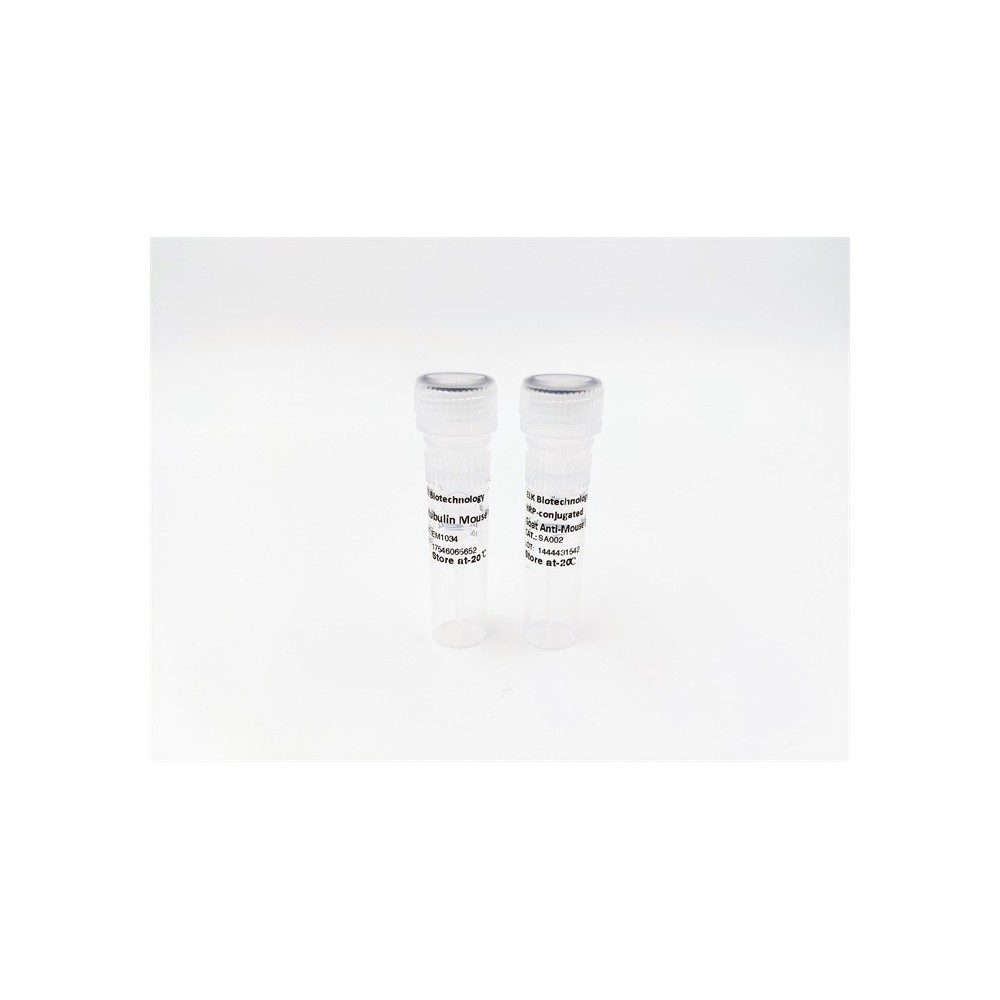

| ELK.No | ES10027 |
| Product name | KCNE2 rabbit pAb |
| Reactivity | Human;Mouse;Rat |
| Applications | WB;ELISA |
| Other name | |
| Size | 50μL |
| Unit price ($) | 148 |
| Human gene ID | 9992 |
| Human Swiss-Prot | Q9Y6J6 |
| Source | Rabbit |
| Isotype | IgG |
| Target | KCNE2 |
| Fields | >>Gastric acid secretion |
| Gene name | KCNE2 |
| Protein name | Potassium voltage-gated channel subfamily E member 2 (MinK-related peptide 1) (Minimum potassium ion channel-related peptide 1) (Potassium channel subunit beta MiRP1) |
| Human gene link | |
| Human Swiss link | View Human Swiss-Prot |
| Mouse gene ID | |
| Mouse gene link | |
| Mouse Swiss-Prot | Q9D808 |
| Mouse Swiss link | View Mouse Swiss-Prot |
| Rat gene ID | |
| Rat gene link | |
| Rat Swiss-Prot | P63161 |
| Rat Swiss link | View Rat Swiss-Prot |
| Immunogen | Synthesized peptide derived from human protein . at AA range: 30-110 |
| Specificity | KCNE2 Polyclonal Antibody detects endogenous levels of protein. |
| Formulation | Liquid in PBS containing 50% glycerol, and 0.02% sodium azide. |
| Clonality | Polyclonal |
| Dilution | WB 1:500-2000 ELISA 1:5000-20000 |
| Purification | The antibody was affinity-purified from rabbit antiserum by affinity-chromatography using epitope-specific immunogen. |
| Concentration | 1 mg/ml |
| Storage stability | -20°C/1 year |
| Molecular Weight (Da) | |
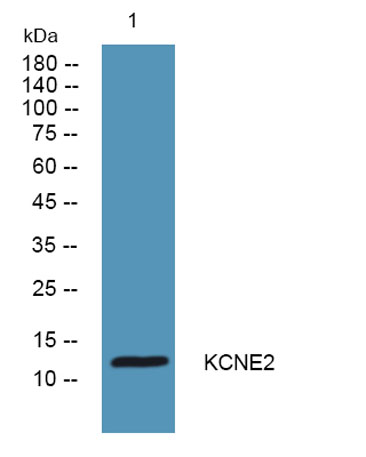
| Observed band (KD) | 13kD |
| Background | potassium voltage-gated channel subfamily E regulatory subunit 2(KCNE2) Homo sapiens Voltage-gated potassium (Kv) channels represent the most complex class of voltage-gated ion channels from both functional and structural standpoints. Their diverse functions include regulating neurotransmitter release, heart rate, insulin secretion, neuronal excitability, epithelial electrolyte transport, smooth muscle contraction, and cell volume. This gene encodes a member of the potassium channel, voltage-gated, isk-related subfamily. This member is a small integral membrane subunit that assembles with the KCNH2 gene product, a pore-forming protein, to alter its function. This gene is expressed in heart and muscle and the gene mutations are associated with cardiac arrhythmia. [provided by RefSeq, Jul 2008], |
| Function | disease:Defects in KCNE2 are the cause of familial atrial fibrillation type 4 (ATFB4) [MIM:611493]. Atrial fibrillation is a common disorder of cardiac rhythm that is hereditary in a small subgroup of patients. It is characterized by disorganized atrial electrical activity, progressive deterioration of atrial electromechanical function and ineffective pumping of blood into the ventricles. It can be associated with palpitations, syncope, thromboembolic stroke, and congestive heart failure.,disease:Defects in KCNE2 are the cause of long QT syndrome type 6 (LQT6) [MIM:603796]. Long QT syndromes are heart disorders characterized by a prolonged QT interval on the ECG and polymorphic ventricular arrhythmias. They cause syncope and sudden death in response to exercise or emotional stress. KCNE2 mutants form channels that open slowly and close rapidly, thereby diminishing potassium currents.,fun |
| Subcellular location | Cell membrane ; Single-pass type I membrane protein . Colocalizes with KCNB1 at the plasma membrane. . |
| Expression | Highly expressed in brain, heart, skeletal muscle, pancreas, placenta, kidney, colon and thymus. A small but significant expression is found in liver, ovary, testis, prostate, small intestine and leukocytes. Very low expression, nearly undetectable, in lung and spleen. |

Use collapsible tabs for more detailed information that will help customers make a purchasing decision.
Ex: Shipping and return policies, size guides, and other common questions.