 Français
 English
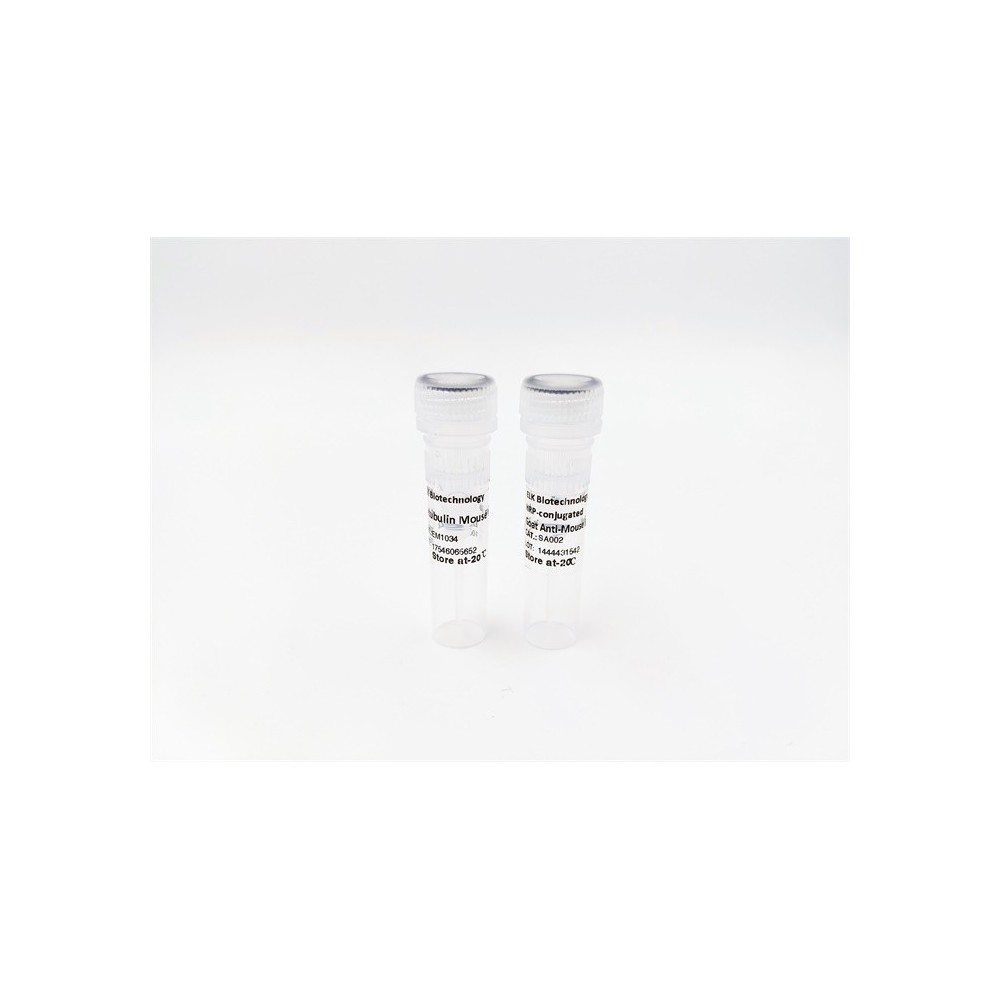

| ELK.No | ES10139 |
| Product name | PTPRB rabbit pAb |
| Reactivity | Human;Rat;Mouse; |
| Applications | WB;ELISA |
| Other name | |
| Size | 100μL |
| Unit price ($) | 248 |
| Human gene ID | 5787 |
| Human Swiss-Prot | P23467 |
| Source | Rabbit |
| Isotype | IgG |
| Target | PTPRB |
| Fields | >>Adherens junction |
| Gene name | PTPRB PTPB |
| Protein name | Receptor-type tyrosine-protein phosphatase beta (Protein-tyrosine phosphatase beta) (R-PTP-beta) (EC 3.1.3.48) (Vascular endothelial protein tyrosine phosphatase) (VE-PTP) |
| Human gene link | |
| Human Swiss link | View Human Swiss-Prot |
| Mouse gene ID | |
| Mouse gene link | |
| Mouse Swiss-Prot | B2RU80 |
| Mouse Swiss link | View Mouse Swiss-Prot |
| Rat gene ID | |
| Rat gene link | |
| Rat Swiss-Prot | |
| Rat Swiss link | |
| Immunogen | Synthesized peptide derived from human protein . at AA range: 280-360 |
| Specificity | PTPRB Polyclonal Antibody detects endogenous levels of protein. |
| Formulation | Liquid in PBS containing 50% glycerol, and 0.02% sodium azide. |
| Clonality | Polyclonal |
| Dilution | WB 1:500-2000 ELISA 1:5000-20000 |
| Purification | The antibody was affinity-purified from rabbit antiserum by affinity-chromatography using epitope-specific immunogen. |
| Concentration | 1 mg/ml |
| Storage stability | -20°C/1 year |
| Molecular Weight (Da) | |
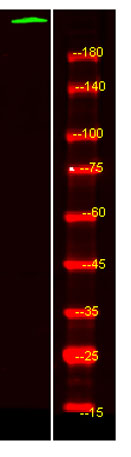
| Observed band (KD) | 219kD |
| Background | The protein encoded by this gene is a member of the protein tyrosine phosphatase (PTP) family. PTPs are known to be signaling molecules that regulate a variety of cellular processes including cell growth, differentiation, mitotic cycle, and oncogenic transformation. This PTP contains an extracellular domain, a single transmembrane segment and one intracytoplasmic catalytic domain, thus belongs to receptor type PTP. The extracellular region of this PTP is composed of multiple fibronectin type_III repeats, which was shown to interact with neuronal receptor and cell adhesion molecules, such as contactin and tenascin C. This protein was also found to interact with sodium channels, and thus may regulate sodium channels by altering tyrosine phosphorylation status. The functions of the interaction partners of this protein implicate the roles of this PTP in cell adhesion, neurite gro |
| Function | catalytic activity:Protein tyrosine phosphate + H(2)O = protein tyrosine + phosphate.,similarity:Belongs to the protein-tyrosine phosphatase family. Receptor class 3 subfamily.,similarity:Contains 1 tyrosine-protein phosphatase domain.,similarity:Contains 17 fibronectin type-III domains.,subunit:Interacts with MAGI3., |
| Subcellular location | Membrane ; Single-pass type I membrane protein . |
| Expression | Endometrium,Epithelium,Human fetal kidney,Placenta,Spleen,T |

Use collapsible tabs for more detailed information that will help customers make a purchasing decision.
Ex: Shipping and return policies, size guides, and other common questions.