 Français
 English
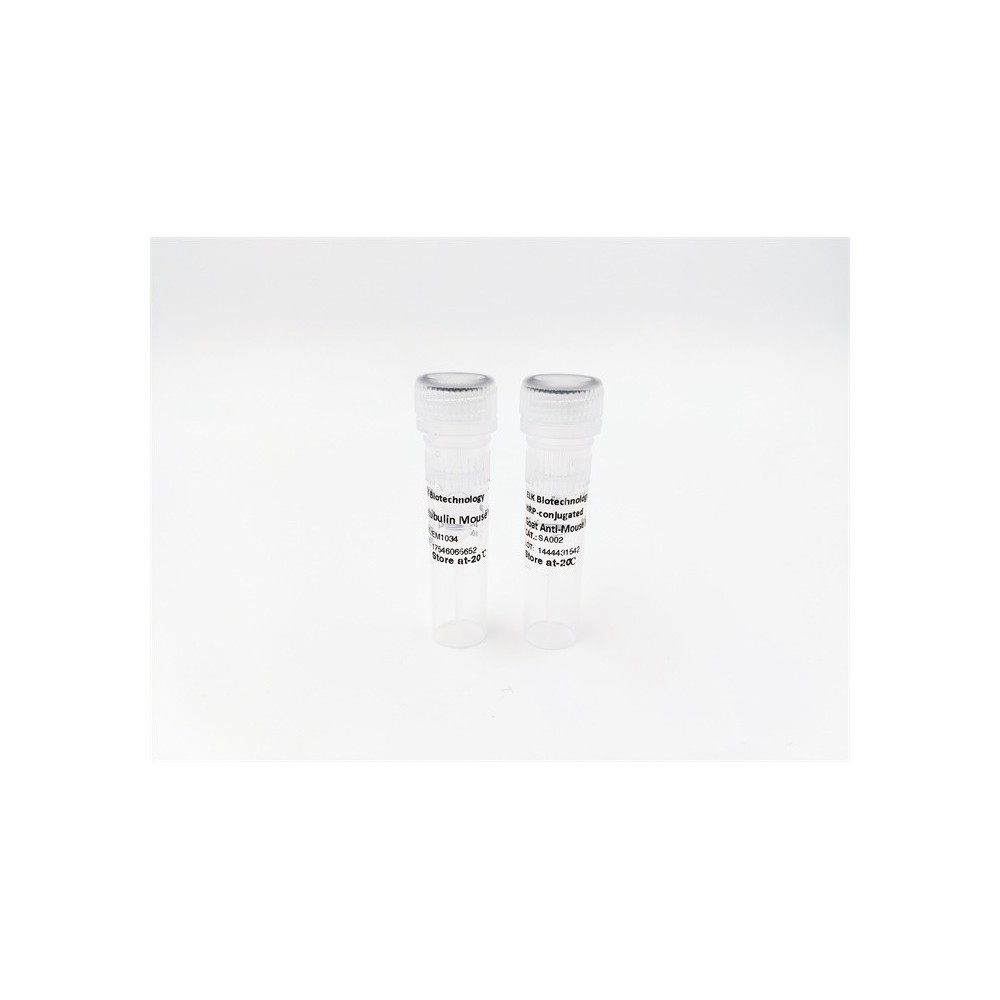

| ELK.No | ES10359 |
| Product name | TM2D1 rabbit pAb |
| Reactivity | Human;Mouse |
| Applications | WB;ELISA |
| Other name | |
| Size | 50μL |
| Unit price ($) | 148 |
| Human gene ID | 83941 |
| Human Swiss-Prot | Q9BX74 |
| Source | Rabbit |
| Isotype | IgG |
| Target | TM2D1 |
| Fields | |
| Gene name | TM2D1 BBP |
| Protein name | TM2 domain-containing protein 1 (Beta-amyloid-binding protein) (hBBP) |
| Human gene link | |
| Human Swiss link | View Human Swiss-Prot |
| Mouse gene ID | |
| Mouse gene link | |
| Mouse Swiss-Prot | Q99MB3 |
| Mouse Swiss link | View Mouse Swiss-Prot |
| Rat gene ID | |
| Rat gene link | |
| Rat Swiss-Prot | |
| Rat Swiss link | |
| Immunogen | Synthesized peptide derived from part region of human protein |
| Specificity | TM2D1 Polyclonal Antibody detects endogenous levels of protein. |
| Formulation | Liquid in PBS containing 50% glycerol, and 0.02% sodium azide. |
| Clonality | Polyclonal |
| Dilution | WB 1:500-2000 ELISA 1:5000-20000 |
| Purification | The antibody was affinity-purified from rabbit antiserum by affinity-chromatography using epitope-specific immunogen. |
| Concentration | 1 mg/ml |
| Storage stability | -20°C/1 year |
| Molecular Weight (Da) | |
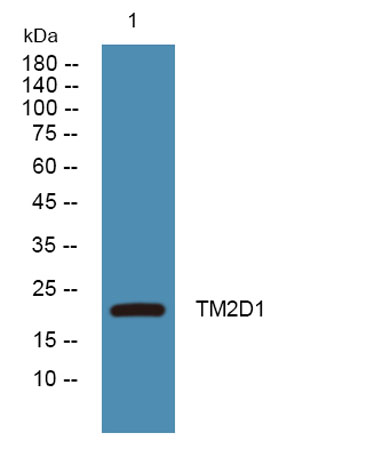
| Observed band (KD) | 22kD |
| Background | The protein encoded by this gene is a beta-amyloid peptide-binding protein. It contains a structural module related to that of the seven transmembrane domain G protein-coupled receptor superfamily and known to be important in heterotrimeric G protein activation. Beta-amyloid peptide has been established to be a causative factor in neuron death and the consequent diminution of cognitive abilities observed in Alzheimer's disease. This protein may be a target of neurotoxic beta-amyloid peptide, and may mediate cellular vulnerability to beta-amyloid peptide toxicity through a G protein-regulated program of cell death. Several transcript variants have been found for this gene. [provided by RefSeq, Feb 2016], |
| Function | caution:Was initially thought (PubMed:11278849) to modulate beta-amyloid toxicity by coupling to G protein. However, PubMed:12836168 showed that this effect is not direct.,function:May participate to beta-amyloid-induced apoptosis via its interaction with beta-APP42.,PTM:N-glycosylated.,similarity:Belongs to the TM2 family.,subunit:Interacts with beta-APP42 (beta-amyloid protein 42) peptide of APP.,tissue specificity:Widely expressed., |
| Subcellular location | Membrane ; Multi-pass membrane protein . |
| Expression | Widely expressed. |

Use collapsible tabs for more detailed information that will help customers make a purchasing decision.
Ex: Shipping and return policies, size guides, and other common questions.