 Français
 English
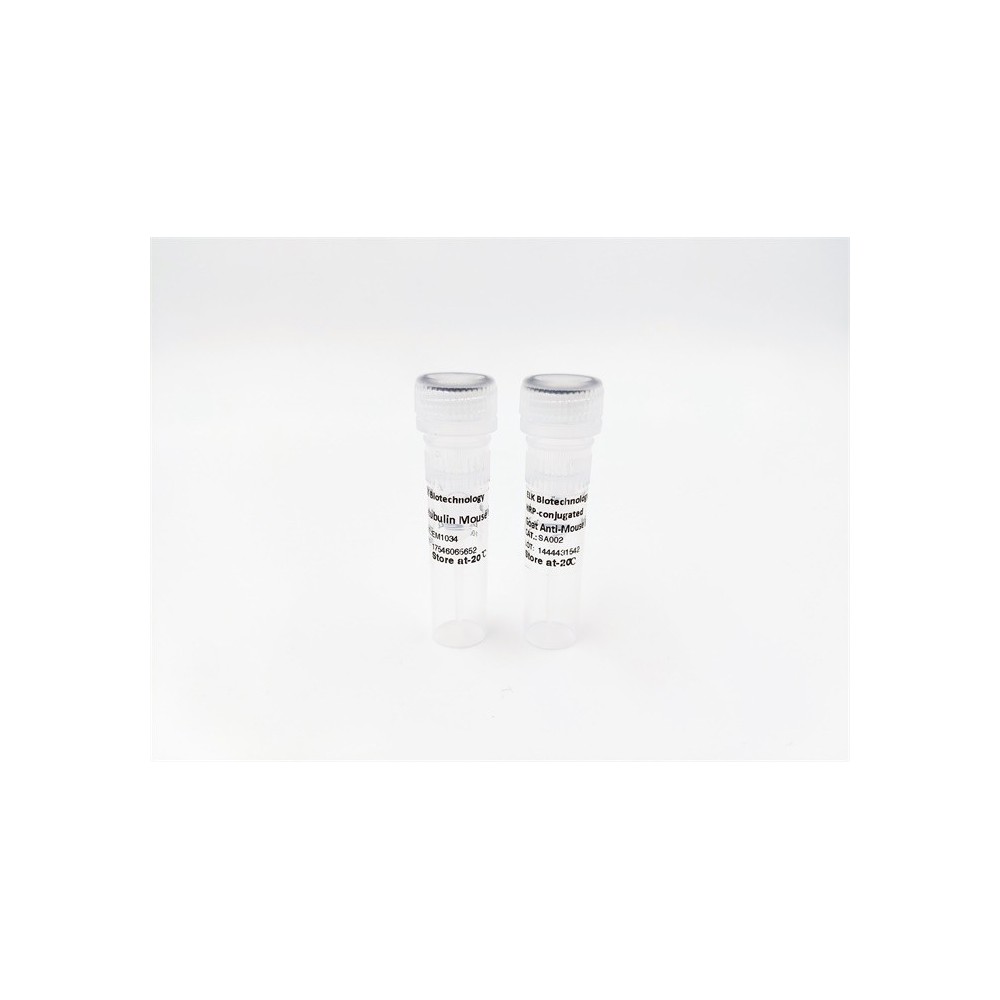
Cleaved-Factor X/ Factor X LC (A41) rabbit pAb
AO-06-ES1059-50

| ELK.No | ES1059 |
| Product name | Cleaved-Factor X/ Factor X LC (A41) rabbit pAb |
| Reactivity | Human;Rat;Mouse; |
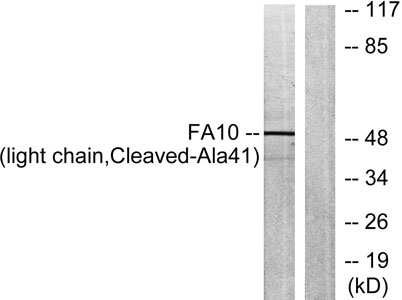
| Applications | WB;ELISA |
| Other name | F10; Coagulation factor X; Stuart factor; Stuart-Prower factor |
| Size | 50μL |
| Unit price ($) | 148 |
| Human gene ID | 2159 |
| Human Swiss-Prot | P00742 |
| Source | Rabbit |
| Isotype | IgG |
| Target | FA10 |
| Fields | >>Complement and coagulation cascades |
| Gene name | F10 |
| Protein name | Coagulation factor X |
| Human gene link | View Human Gene |
| Human Swiss link | View Human Swiss-Prot |
| Mouse gene ID | |
| Mouse gene link | |
| Mouse Swiss-Prot | O88947 |
| Mouse Swiss link | View Mouse Swiss-Prot |
| Rat gene ID | |
| Rat gene link | |
| Rat Swiss-Prot | |
| Rat Swiss link | |
| Immunogen | The antiserum was produced against synthesized peptide derived from human FA10. AA range:22-71 |
| Specificity | Cleaved-Factor X/ Factor X LC (A41) Polyclonal Antibody detects endogenous levels of fragment of activated Factor X/ Factor X LC protein resulting from cleavage adjacent to A41. |
| Formulation | Liquid in PBS containing 50% glycerol, 0.5% BSA and 0.02% sodium azide. |
| Clonality | Polyclonal |
| Dilution | Western Blot: 1/500 - 1/2000. ELISA: 1/20000. Not yet tested in other applications. |
| Purification | The antibody was affinity-purified from rabbit antiserum by affinity-chromatography using epitope-specific immunogen. |
| Concentration | 1 mg/ml |
| Storage stability | -20°C/1 year |
| Molecular Weight (Da) | |
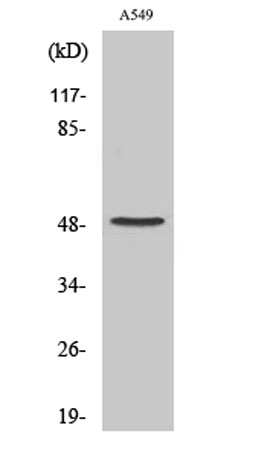
| Observed band (KD) | 50kD |
| Background | This gene encodes the vitamin K-dependent coagulation factor X of the blood coagulation cascade. This factor undergoes multiple processing steps before its preproprotein is converted to a mature two-chain form by the excision of the tripeptide RKR. Two chains of the factor are held together by 1 or more disulfide bonds; the light chain contains 2 EGF-like domains, while the heavy chain contains the catalytic domain which is structurally homologous to those of the other hemostatic serine proteases. The mature factor is activated by the cleavage of the activation peptide by factor IXa (in the intrisic pathway), or by factor VIIa (in the extrinsic pathway). The activated factor then converts prothrombin to thrombin in the presence of factor Va, Ca+2, and phospholipid during blood clotting. Mutations of this gene result in factor X deficiency, a hemorrhagic condition of variable severity. Alternative sp |
| Function | catalytic activity:Selective cleavage of Arg-|-Thr and then Arg-|-Ile bonds in prothrombin to form thrombin.,function:Factor Xa is a vitamin K-dependent glycoprotein that converts prothrombin to thrombin in the presence of factor Va, calcium and phospholipid during blood clotting.,online information:Factor X entry,PTM:N- and O-glycosylated.,PTM:The activation peptide is cleaved by factor IXa (in the intrinsic pathway), or by factor VIIa (in the extrinsic pathway).,PTM:The iron and 2-oxoglutarate dependent 3-hydroxylation of aspartate and asparagine is (R) stereospecific within EGF domains.,PTM:The vitamin K-dependent, enzymatic carboxylation of some glutamate residues allows the modified protein to bind calcium.,similarity:Belongs to the peptidase S1 family.,similarity:Contains 1 Gla (gamma-carboxy-glutamate) domain.,similarity:Contains 1 peptidase S1 domain.,similarity:Contains 2 EGF-li |
| Subcellular location | Secreted. |
| Expression | Plasma; synthesized in the liver. |

Use collapsible tabs for more detailed information that will help customers make a purchasing decision.
Ex: Shipping and return policies, size guides, and other common questions.