 Français
 English
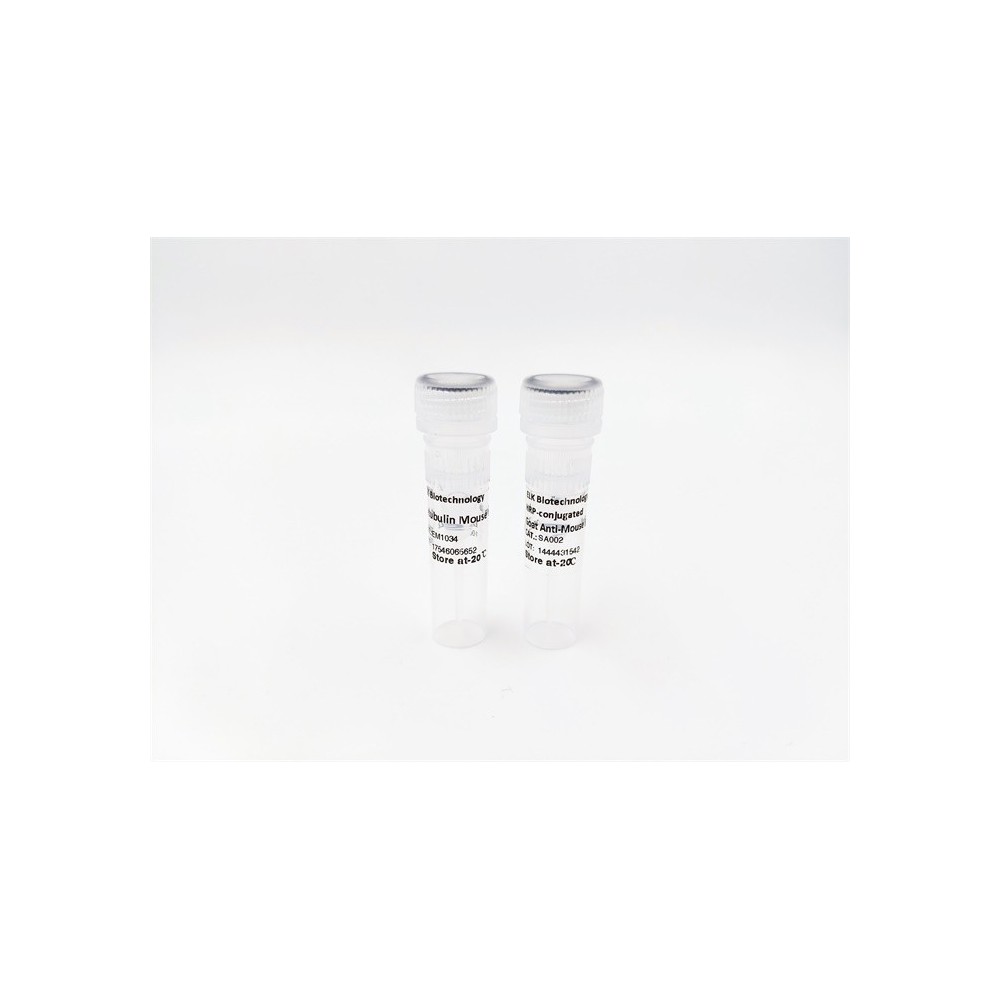

| ELK.No | ES10711 |
| Product name | IL36G rabbit pAb |
| Reactivity | Human;Rat;Mouse; |
| Applications | WB;ELISA |
| Other name | |
| Size | 100μL |
| Unit price ($) | 248 |
| Human gene ID | 56300 |
| Human Swiss-Prot | Q9NZH8 |
| Source | Rabbit |
| Isotype | IgG |
| Target | IL36G |
| Fields | >>Cytokine-cytokine receptor interaction |
| Gene name | IL36G IL1E IL1F9 IL1H1 IL1RP2 UNQ2456/PRO5737 |
| Protein name | Interleukin-36 gamma (IL-1-related protein 2) (IL-1RP2) (Interleukin-1 epsilon) (IL-1 epsilon) (Interleukin-1 family member 9) (IL-1F9) (Interleukin-1 homolog 1) (IL-1H1) |
| Human gene link | |
| Human Swiss link | View Human Swiss-Prot |
| Mouse gene ID | |
| Mouse gene link | |
| Mouse Swiss-Prot | Q8R460 |
| Mouse Swiss link | View Mouse Swiss-Prot |
| Rat gene ID | |
| Rat gene link | |
| Rat Swiss-Prot | |
| Rat Swiss link | |
| Immunogen | Synthesized peptide derived from part region of human protein AA range: 31-80 |
| Specificity | IL36G Polyclonal Antibody detects endogenous levels of protein. |
| Formulation | Liquid in PBS containing 50% glycerol, and 0.02% sodium azide. |
| Clonality | Polyclonal |
| Dilution | WB 1:500-2000 ELISA 1:5000-20000 |
| Purification | The antibody was affinity-purified from rabbit antiserum by affinity-chromatography using epitope-specific immunogen. |
| Concentration | 1 mg/ml |
| Storage stability | -20°C/1 year |
| Molecular Weight (Da) | |
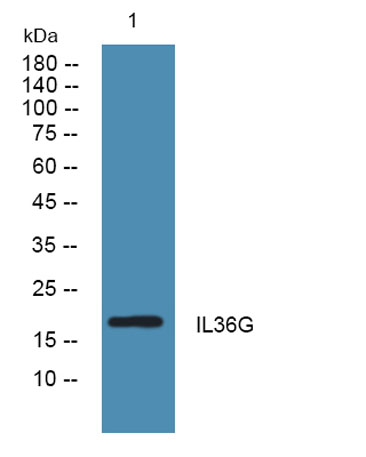
| Observed band (KD) | 18kD |
| Background | The protein encoded by this gene is a member of the interleukin 1 cytokine family. The activity of this cytokine is mediated by interleukin 1 receptor-like 2 (IL1RL2/IL1R-rp2), and is specifically inhibited by interleukin 1 family, member 5 (IL1F5/IL-1 delta). Interferon-gamma, tumor necrosis factor-alpha and interleukin 1, beta (IL1B) are reported to stimulate the expression of this cytokine in keratinocytes. The expression of this cytokine in keratinocytes can also be induced by a contact hypersensitivity reaction or herpes simplex virus infection. This gene and eight other interleukin 1 family genes form a cytokine gene cluster on chromosome 2. Two alternatively spliced transcript variants encoding different isoforms have been found for this gene. [provided by RefSeq, Jun 2013], |
| Function | function:Function as an agonist of NF-kappa B activation through the orphan IL-1-receptor-related protein 2. Could constitute part of an independent signaling system analogous to interleukin-1 alpha (IL-1A), beta (IL-1B) receptor agonist and interleukin-1 receptor type I (IL-1R1), that is present in epithelial barriers and takes part in local inflammatory response.,induction:By TNF-alpha and by IFN-gamma in keratinocytes.,online information:Interleukin-1 entry,similarity:Belongs to the IL-1 family.,tissue specificity:Highly expressed in tissues containing epithelial cells: skin, lung, stomach and esophagus. In skin is expressed only in keratinocytes but not in fibroblasts, endothelial cells or melanocytes. Up-regulated in lesional psoriasis skin., |
| Subcellular location | Cytoplasm . Secreted . The secretion is dependent on protein unfolding and facilitated by the cargo receptor TMED10; it results in protein translocation from the cytoplasm into the ERGIC (endoplasmic reticulum-Golgi intermediate compartment) followed by vesicle entry and secretion. . |
| Expression | Highly expressed in tissues containing epithelial cells: skin, lung, stomach and esophagus. Expressed in bronchial epithelial. In skin is expressed only in keratinocytes but not in fibroblasts, endothelial cells or melanocytes. Up-regulated in lesional psoriasis skin. Expressed in monocyte-derived dendritic cells and M1 macrophages. |

Use collapsible tabs for more detailed information that will help customers make a purchasing decision.
Ex: Shipping and return policies, size guides, and other common questions.