 Français
 English
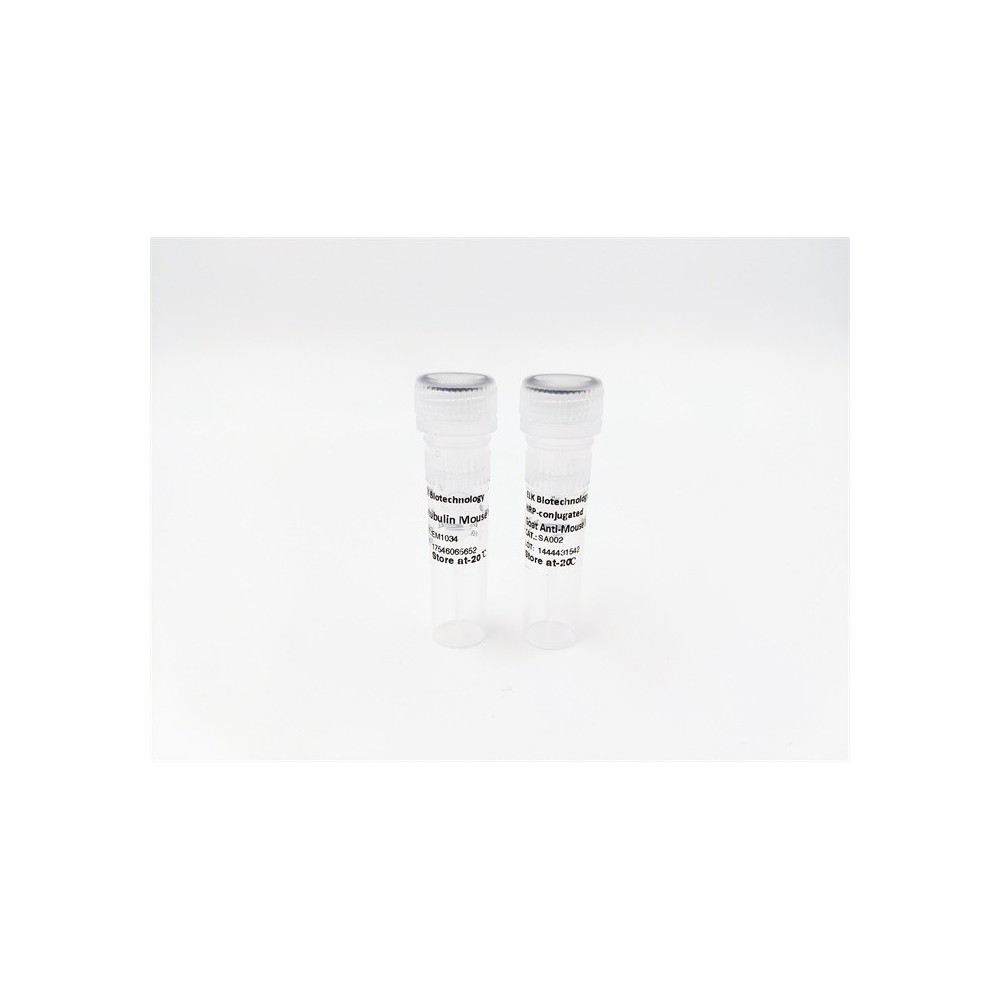

| ELK.No | ES11015 |
| Product name | MXI1 rabbit pAb |
| Reactivity | Human;Rat;Mouse |
| Applications | WB;ELISA |
| Other name | |
| Size | 50μL |
| Unit price ($) | 148 |
| Human gene ID | 4601 |
| Human Swiss-Prot | P50539 |
| Source | Rabbit |
| Isotype | IgG |
| Target | MXI1 |
| Fields | |
| Gene name | MXI1 BHLHC11 |
| Protein name | Max-interacting protein 1 (Max interactor 1) (Class C basic helix-loop-helix protein 11) (bHLHc11) |
| Human gene link | |
| Human Swiss link | View Human Swiss-Prot |
| Mouse gene ID | |
| Mouse gene link | |
| Mouse Swiss-Prot | P50540 |
| Mouse Swiss link | View Mouse Swiss-Prot |
| Rat gene ID | |
| Rat gene link | |
| Rat Swiss-Prot | O09015 |
| Rat Swiss link | View Rat Swiss-Prot |
| Immunogen | Synthesized peptide derived from part region of human protein |
| Specificity | MXI1 Polyclonal Antibody detects endogenous levels of protein. |
| Formulation | Liquid in PBS containing 50% glycerol, and 0.02% sodium azide. |
| Clonality | Polyclonal |
| Dilution | WB 1:500-2000 ELISA 1:5000-20000 |
| Purification | The antibody was affinity-purified from rabbit antiserum by affinity-chromatography using epitope-specific immunogen. |
| Concentration | 1 mg/ml |
| Storage stability | -20°C/1 year |
| Molecular Weight (Da) | |
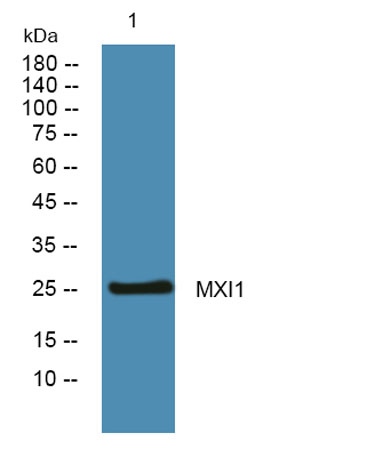
| Observed band (KD) | 25kD |
| Background | Expression of the c-myc gene, which produces an oncogenic transcription factor, is tightly regulated in normal cells but is frequently deregulated in human cancers. The protein encoded by this gene is a transcriptional repressor thought to negatively regulate MYC function, and is therefore a potential tumor suppressor. This protein inhibits the transcriptional activity of MYC by competing for MAX, another basic helix-loop-helix protein that binds to MYC and is required for its function. Defects in this gene are frequently found in patients with prostate tumors. Three alternatively spliced transcripts encoding different isoforms have been described. Additional alternatively spliced transcripts may exist but the products of these transcripts have not been verified experimentally. [provided by RefSeq, Jul 2008], |
| Function | disease:Defects in MXI1 are found in some patients with prostate cancer (CaP) [MIM:176807].,function:Transcriptional repressor. MXI1 binds with MAX to form a sequence-specific DNA-binding protein complex which recognizes the core sequence 5'-CAC[GA]TG-3'. MXI1 thus antagonizes MYC transcriptional activity by competing for MAX.,similarity:Contains 1 basic helix-loop-helix (bHLH) domain.,subunit:Interacts with SMC3 (By similarity). Efficient DNA binding requires dimerization with another bHLH protein. Binds DNA as a heterodimer with MAX. Interacts with RNF17.,tissue specificity:High levels found in the brain, heart and lung while lower levels are seen in the liver, kidney and skeletal muscle., |
| Subcellular location | Nucleus. |
| Expression | High levels found in the brain, heart and lung while lower levels are seen in the liver, kidney and skeletal muscle. |

Use collapsible tabs for more detailed information that will help customers make a purchasing decision.
Ex: Shipping and return policies, size guides, and other common questions.