 Français
 English
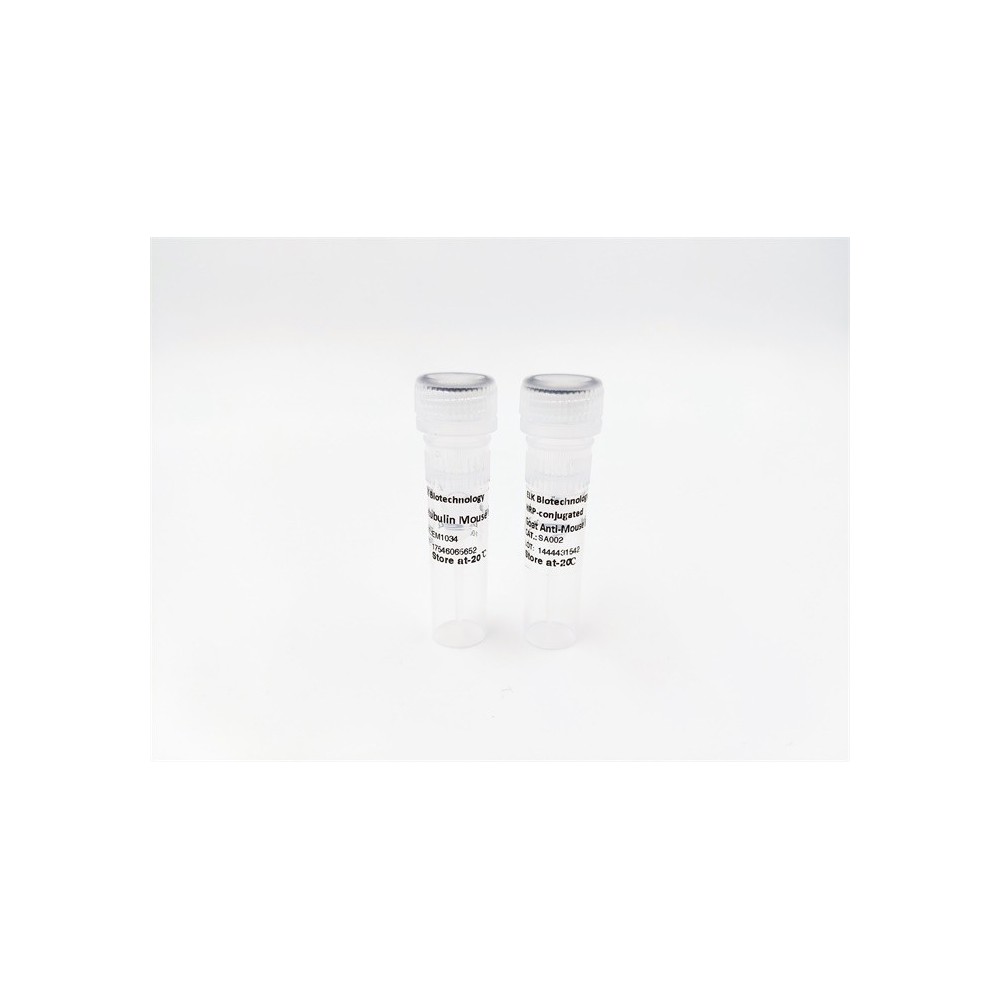

| ELK.No | ES11017 |
| Product name | N2DL2 rabbit pAb |
| Reactivity | Human;Rat;Mouse; |
| Applications | WB;ELISA |
| Other name | |
| Size | 100μL |
| Unit price ($) | 248 |
| Human gene ID | 80328 |
| Human Swiss-Prot | Q9BZM5 |
| Source | Rabbit |
| Isotype | IgG |
| Target | N2DL2 |
| Fields | >>Natural killer cell mediated cytotoxicity |
| Gene name | ULBP2 N2DL2 RAET1H UNQ463/PRO791 |
| Protein name | NKG2D ligand 2 (N2DL-2) (NKG2DL2) (ALCAN-alpha) (Retinoic acid early transcript 1H) (UL16-binding protein 2) |
| Human gene link | |
| Human Swiss link | View Human Swiss-Prot |
| Mouse gene ID | |
| Mouse gene link | |
| Mouse Swiss-Prot | |
| Mouse Swiss link | |
| Rat gene ID | |
| Rat gene link | |
| Rat Swiss-Prot | |
| Rat Swiss link | |
| Immunogen | Synthesized peptide derived from part region of human protein |
| Specificity | N2DL2 Polyclonal Antibody detects endogenous levels of protein. |
| Formulation | Liquid in PBS containing 50% glycerol, and 0.02% sodium azide. |
| Clonality | Polyclonal |
| Dilution | WB 1:500-2000 ELISA 1:5000-20000 |
| Purification | The antibody was affinity-purified from rabbit antiserum by affinity-chromatography using epitope-specific immunogen. |
| Concentration | 1 mg/ml |
| Storage stability | -20°C/1 year |
| Molecular Weight (Da) | |
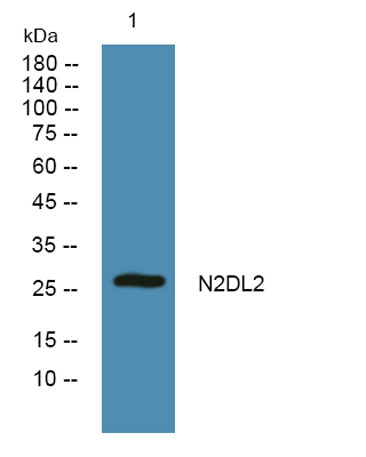
| Observed band (KD) | 27kD |
| Background | This gene encodes a major histocompatibility complex (MHC) class I-related molecule that binds to the NKG2D receptor on natural killer (NK) cells to trigger release of multiple cytokines and chemokines that in turn contribute to the recruitment and activation of NK cells. The encoded protein undergoes further processing to generate the mature protein that is either anchored to membrane via a glycosylphosphatidylinositol moiety, or secreted. Many malignant cells secrete the encoded protein to evade immunosurveillance by NK cells. This gene is located in a cluster of multiple MHC class I-related genes on chromosome 6. [provided by RefSeq, Jul 2015], |
| Function | function:Ligand for the NKG2D receptor, together with at least ULBP1 and ULBP3. ULBPs activate multiple signaling pathways in primary NK cells, resulting in the production of cytokines and chemokines. Binding of ULBPs ligands to NKG2D induces calcium mobilization and activation of the JAK2, STAT5, ERK and PI3K kinase/Akt signal transduction pathway. In CMV infected cells, interacts with soluble CMV glycoprotein UL16. The interaction with UL16 blocked the interaction with the NKG2D receptor, providing a mechanism by which CMV infected cells might escape the immune system. UL16 also causes ULBP2 to be retained in the ER and cis-Golgi apparatus so that it does not reach the cell surface.,miscellaneous:The ULBPs are unusual members of the extended MHC class I superfamily, because they do not contain the alpha 3 domain and they lack a transmembrane domain. They are unlikely to present peptide |
| Subcellular location | Cell membrane ; Lipid-anchor, GPI-anchor . Endoplasmic reticulum . Secreted . In CMV-infected fibroblasts, detected in the endoplasmic reticulum/cis-Golgi. . |
| Expression | Expressed in various types of cancer cell lines and in the fetus, but not in normal tissues. |

Use collapsible tabs for more detailed information that will help customers make a purchasing decision.
Ex: Shipping and return policies, size guides, and other common questions.