 Français
 English
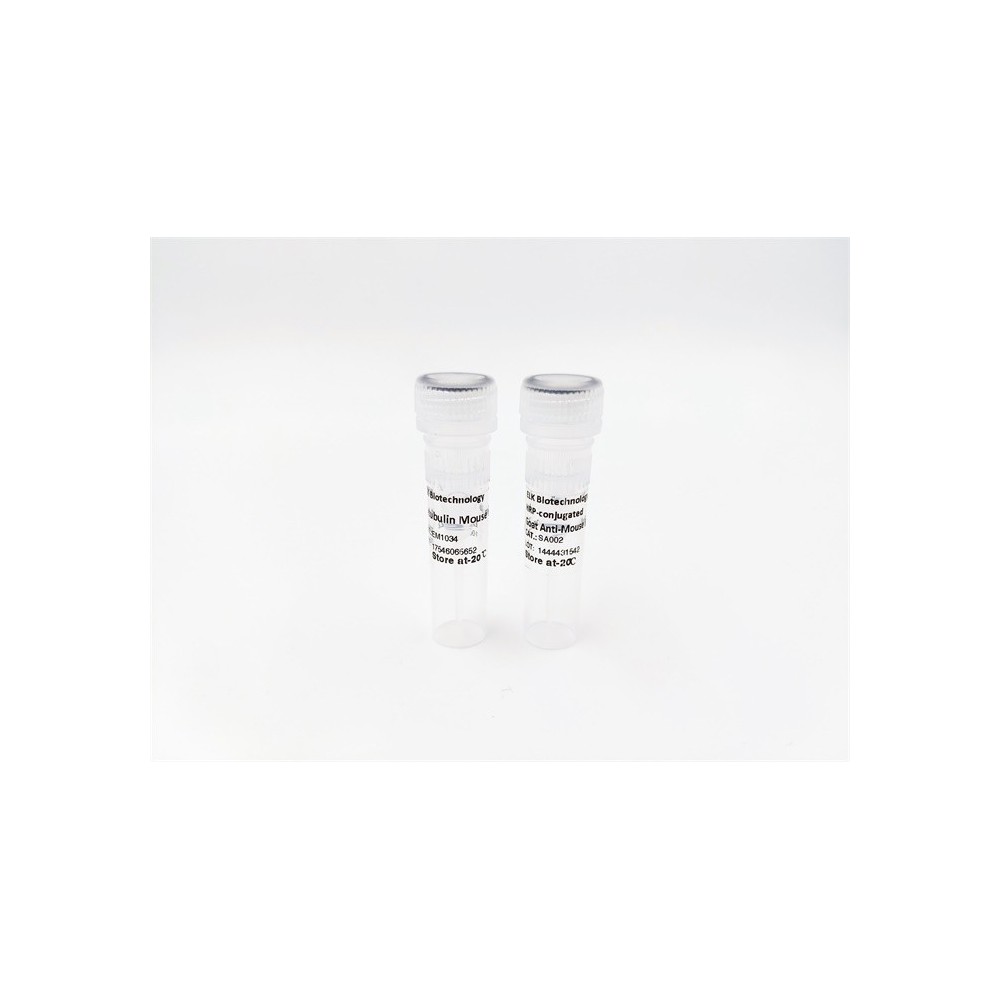

| ELK.No | ES11184 |
| Product name | ITLN1 rabbit pAb |
| Reactivity | Human;Rat;Mouse; |
| Applications | WB;ELISA |
| Other name | |
| Size | 100μL |
| Unit price ($) | 248 |
| Human gene ID | 55600 |
| Human Swiss-Prot | Q8WWA0 |
| Source | Rabbit |
| Isotype | IgG |
| Target | ITLN1 |
| Fields | |
| Gene name | ITLN1 INTL ITLN LFR UNQ640/PRO1270 |
| Protein name | Intelectin-1 (ITLN-1) (Endothelial lectin HL-1) (Galactofuranose-binding lectin) (Intestinal lactoferrin receptor) (Omentin) |
| Human gene link | |
| Human Swiss link | View Human Swiss-Prot |
| Mouse gene ID | |
| Mouse gene link | |
| Mouse Swiss-Prot | |
| Mouse Swiss link | |
| Rat gene ID | |
| Rat gene link | |
| Rat Swiss-Prot | |
| Rat Swiss link | |
| Immunogen | Synthesized peptide derived from human protein . at AA range: 110-190 |
| Specificity | ITLN1 Polyclonal Antibody detects endogenous levels of protein. |
| Formulation | Liquid in PBS containing 50% glycerol, and 0.02% sodium azide. |
| Clonality | Polyclonal |
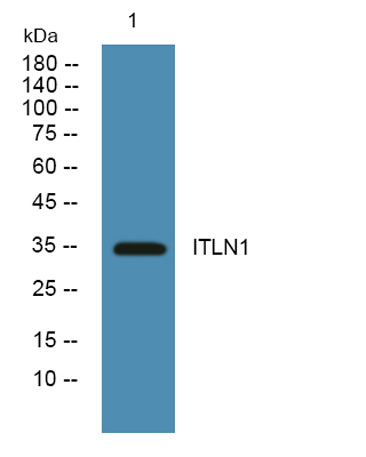
| Dilution | WB 1:500-2000 ELISA 1:5000-20000 |
| Purification | The antibody was affinity-purified from rabbit antiserum by affinity-chromatography using epitope-specific immunogen. |
| Concentration | 1 mg/ml |
| Storage stability | -20°C/1 year |
| Molecular Weight (Da) | |
| Observed band (KD) | 34kD |
| Background | developmental stage:Found in fetal small intestine and thymus.,function:Has no effect on basal glucose uptake but enhances insulin-stimulated glucose uptake in adipocytes. Increases AKT phosphorylation in the absence and presence of insulin. May play a role in the defense system against microorganisms. May specifically recognize carbohydrate chains of pathogens and bacterial components containing galactofuranosyl residues, in a calcium-dependent manner. May be involved in iron metabolism.,mass spectrometry: PubMed:17621593,PTM:N-glycosylated.,similarity:Contains 1 fibrinogen C-terminal domain.,subcellular location:Enriched in lipid rafts.,subunit:Homotrimer; disulfide-linked.,tissue specificity:Highly expressed in omental adipose tissue where it is found in stromal vascular cells but not in fat cells but is barely detectable in subcutaneous adipose tissue (at protein level). Highly expressed in the small intestine. Also found in the heart, testis, colon, salivary gland, skeletal muscle, pancreas and thyroid and, to a lesser degree, in the uterus, spleen, prostate, lymph node and thymus., |
| Function | developmental stage:Found in fetal small intestine and thymus.,function:Has no effect on basal glucose uptake but enhances insulin-stimulated glucose uptake in adipocytes. Increases AKT phosphorylation in the absence and presence of insulin. May play a role in the defense system against microorganisms. May specifically recognize carbohydrate chains of pathogens and bacterial components containing galactofuranosyl residues, in a calcium-dependent manner. May be involved in iron metabolism.,mass spectrometry: PubMed:17621593,PTM:N-glycosylated.,similarity:Contains 1 fibrinogen C-terminal domain.,subcellular location:Enriched in lipid rafts.,subunit:Homotrimer; disulfide-linked.,tissue specificity:Highly expressed in omental adipose tissue where it is found in stromal vascular cells but not in fat cells but is barely detectable in subcutaneous adipose tissue (at protein level). Highly expre |
| Subcellular location | Cell membrane ; Lipid-anchor, GPI-anchor . Secreted . Enriched in lipid rafts. . |
| Expression | Highly expressed in omental adipose tissue where it is found in stromal vascular cells but not in fat cells but is barely detectable in subcutaneous adipose tissue (at protein level) (PubMed:16531507). Highly expressed in the small intestine. Also found in the heart, testis, colon, salivary gland, skeletal muscle, pancreas and thyroid and, to a lesser degree, in the uterus, spleen, prostate, lymph node and thymus. |

Use collapsible tabs for more detailed information that will help customers make a purchasing decision.
Ex: Shipping and return policies, size guides, and other common questions.