 Français
 English
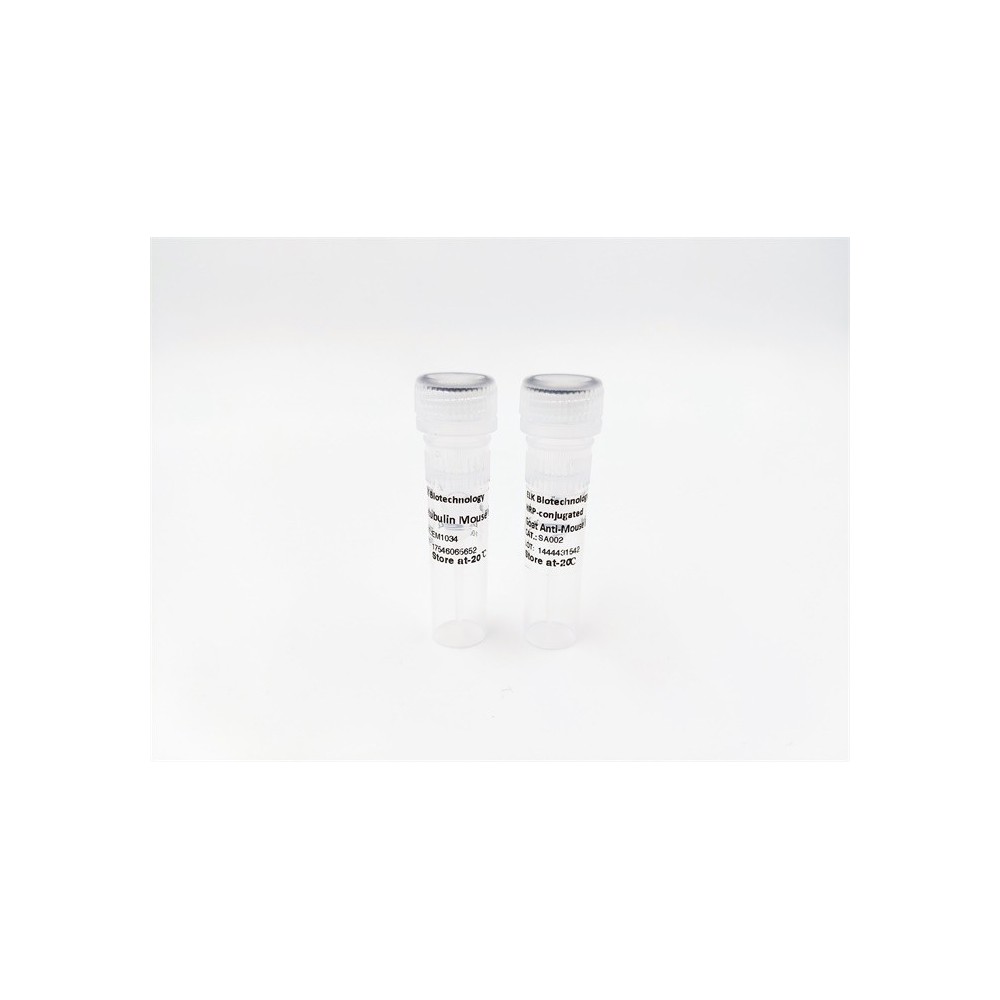

| ELK.No | ES11226 |
| Product name | TNR14 rabbit pAb |
| Reactivity | Human;Rat;Mouse; |
| Applications | WB;ELISA |
| Other name | |
| Size | 100μL |
| Unit price ($) | 248 |
| Human gene ID | 8764 |
| Human Swiss-Prot | Q92956 |
| Source | Rabbit |
| Isotype | IgG |
| Target | TNR14 |
| Fields | >>Cytokine-cytokine receptor interaction;>>Viral protein interaction with cytokine and cytokine receptor;>>Herpes simplex virus 1 infection |
| Gene name | TNFRSF14 HVEA HVEM UNQ329/PRO509 |
| Protein name | Tumor necrosis factor receptor superfamily member 14 (Herpes virus entry mediator A) (Herpesvirus entry mediator A) (HveA) (Tumor necrosis factor receptor-like 2) (TR2) (CD antigen CD270) |
| Human gene link | |
| Human Swiss link | View Human Swiss-Prot |
| Mouse gene ID | |
| Mouse gene link | |
| Mouse Swiss-Prot | |
| Mouse Swiss link | |
| Rat gene ID | |
| Rat gene link | |
| Rat Swiss-Prot | |
| Rat Swiss link | |
| Immunogen | Synthesized peptide derived from human protein . at AA range: 190-270 |
| Specificity | TNR14 Polyclonal Antibody detects endogenous levels of protein. |
| Formulation | Liquid in PBS containing 50% glycerol, and 0.02% sodium azide. |
| Clonality | Polyclonal |
| Dilution | WB 1:500-2000 ELISA 1:5000-20000 |
| Purification | The antibody was affinity-purified from rabbit antiserum by affinity-chromatography using epitope-specific immunogen. |
| Concentration | 1 mg/ml |
| Storage stability | -20°C/1 year |
| Molecular Weight (Da) | |
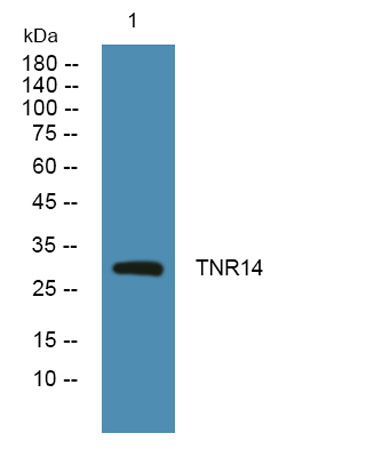
| Observed band (KD) | 31kD |
| Background | This gene encodes a member of the TNF (tumor necrosis factor) receptor superfamily. The encoded protein functions in signal transduction pathways that activate inflammatory and inhibitory T-cell immune response. It binds herpes simplex virus (HSV) viral envelope glycoprotein D (gD), mediating its entry into cells. Alternative splicing results in multiple transcript variants. [provided by RefSeq, Jul 2014], |
| Function | function:Receptor for BTLA. Receptor for TNFSF14/LIGHT and homotrimeric TNFSF1/lymphotoxin-alpha. Involved in lymphocyte activation. Plays an important role in HSV pathogenesis because it enhanced the entry of several wild-type HSV strains of both serotypes into CHO cells, and mediated HSV entry into activated human T-cells.,PTM:N-glycosylated.,similarity:Contains 3 TNFR-Cys repeats.,subunit:Interacts with TRAF2, TRAF3 and TRAF5.,tissue specificity:Widely expressed, with the highest expression in lung, spleen and thymus., |
| Subcellular location | Cell membrane ; Single-pass type I membrane protein . |
| Expression | Widely expressed, with the highest expression in lung, spleen and thymus. Expressed in a subpopulation of B cells and monocytes (PubMed:18193050). Expressed in naive T cells (PubMed:19915044). |

Use collapsible tabs for more detailed information that will help customers make a purchasing decision.
Ex: Shipping and return policies, size guides, and other common questions.