 Français
 English
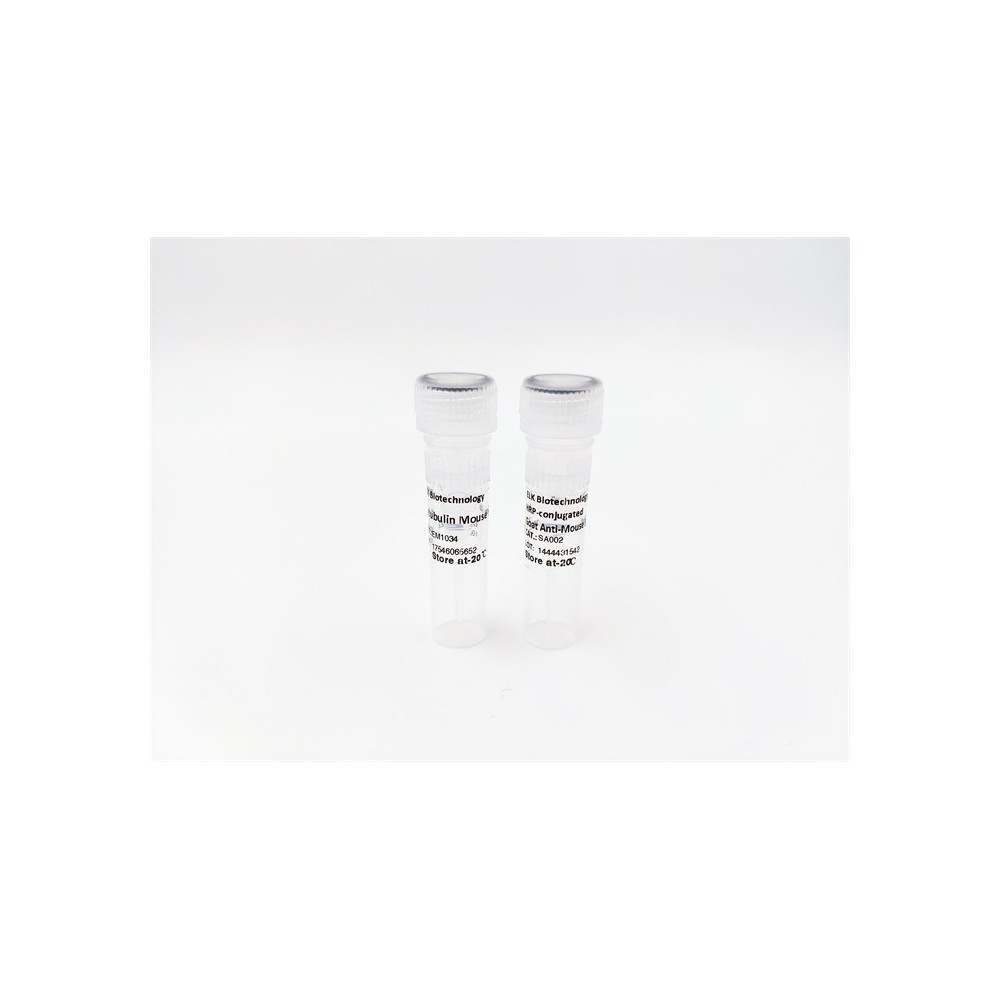

| ELK.No | ES11280 |
| Product name | TPP1 rabbit pAb |
| Reactivity | Human;Rat;Mouse |
| Applications | WB;ELISA |
| Other name | |
| Size | 50μL |
| Unit price ($) | 148 |
| Human gene ID | 1200 |
| Human Swiss-Prot | O14773 |
| Source | Rabbit |
| Isotype | IgG |
| Target | TPP1 |
| Fields | >>Lysosome |
| Gene name | TPP1 CLN2 GIG1 UNQ267/PRO304 |
| Protein name | Tripeptidyl-peptidase 1 (TPP-1) (EC 3.4.14.9) (Cell growth-inhibiting gene 1 protein) (Lysosomal pepstatin-insensitive protease) (LPIC) (Tripeptidyl aminopeptidase) (Tripeptidyl-peptidase I) (TPP-I) |
| Human gene link | |
| Human Swiss link | View Human Swiss-Prot |
| Mouse gene ID | |
| Mouse gene link | |
| Mouse Swiss-Prot | O89023 |
| Mouse Swiss link | View Mouse Swiss-Prot |
| Rat gene ID | |
| Rat gene link | |
| Rat Swiss-Prot | Q9EQV6 |
| Rat Swiss link | View Rat Swiss-Prot |
| Immunogen | Synthesized peptide derived from human protein . at AA range: 10-90 |
| Specificity | TPP1 Polyclonal Antibody detects endogenous levels of protein. |
| Formulation | Liquid in PBS containing 50% glycerol, and 0.02% sodium azide. |
| Clonality | Polyclonal |
| Dilution | WB 1:500-2000 ELISA 1:5000-20000 |
| Purification | The antibody was affinity-purified from rabbit antiserum by affinity-chromatography using epitope-specific immunogen. |
| Concentration | 1 mg/ml |
| Storage stability | -20°C/1 year |
| Molecular Weight (Da) | |
| Observed band (KD) | 61kD |
| Background | This gene encodes a member of the sedolisin family of serine proteases. The protease functions in the lysosome to cleave N-terminal tripeptides from substrates, and has weaker endopeptidase activity. It is synthesized as a catalytically-inactive enzyme which is activated and auto-proteolyzed upon acidification. Mutations in this gene result in late-infantile neuronal ceroid lipofuscinosis, which is associated with the failure to degrade specific neuropeptides and a subunit of ATP synthase in the lysosome. [provided by RefSeq, Jul 2008], |
| Function | catalytic activity:Release of an N-terminal tripeptide from a polypeptide, but also has endopeptidase activity.,caution:Ref.3 sequence is wrongly reported to originate from bovine.,disease:Defects in TPP1 are the cause of classical late-infantile neuronal ceroid lipofuscinosis (LINCL) [MIM:204500]; also known as ceroid lipofuscinosis neuronal 2 (CLN2). LINCL is a fatal childhood neurodegenerative disease characterized by progressive visual and mental decline, motor disturbance, epilepsy and behavioral changes. The three main subtypes of childhood NCLs defined by the age of onset, clinical features, and ultrastructural morphology are infantile NCL (INCL), classical late-infantile NCL (LINCL), or juvenile NCL (JNCL), although a number of other distinct variants forms have been described.,function:Lysosomal serine protease with tripeptidyl-peptidase I activity. May act as a non-specific lys |
| Subcellular location | Lysosome . Melanosome . Identified by mass spectrometry in melanosome fractions from stage I to stage IV. . |
| Expression | Detected in all tissues examined with highest levels in heart and placenta and relatively similar levels in other tissues. |

Use collapsible tabs for more detailed information that will help customers make a purchasing decision.
Ex: Shipping and return policies, size guides, and other common questions.