 Français
 English
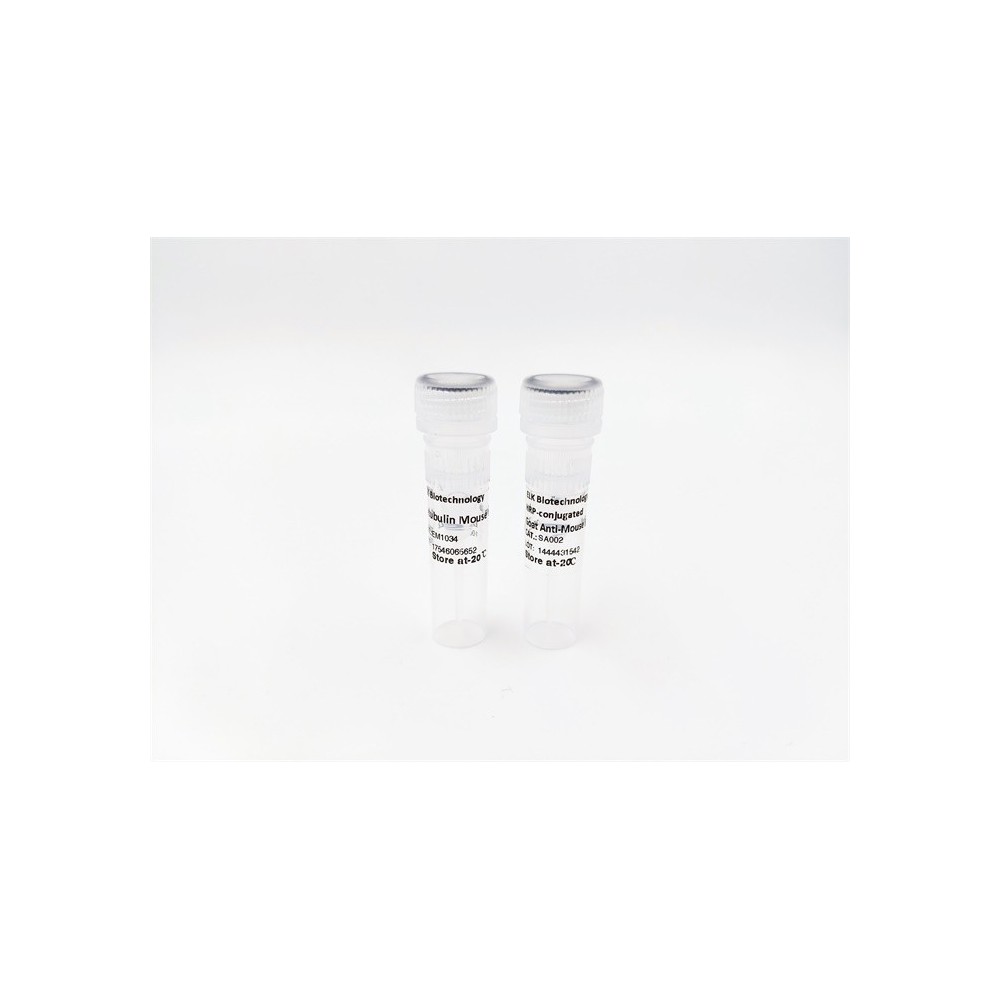

| ELK.No | ES11427 |
| Product name | OREX rabbit pAb |
| Reactivity | Human;Mouse;Rat |
| Applications | WB;ELISA |
| Other name | |
| Size | 50μL |
| Unit price ($) | 148 |
| Human gene ID | 3060 |
| Human Swiss-Prot | O43612 |
| Source | Rabbit |
| Isotype | IgG |
| Target | OREX |
| Fields | >>Neuroactive ligand-receptor interaction |
| Gene name | HCRT OX PPORX PPOX |
| Protein name | Orexin (Hypocretin) (Hcrt) [Cleaved into: Orexin-A (Hypocretin-1) (Hcrt1); Orexin-B (Hypocretin-2) (Hcrt2)] |
| Human gene link | |
| Human Swiss link | View Human Swiss-Prot |
| Mouse gene ID | |
| Mouse gene link | |
| Mouse Swiss-Prot | O55241 |
| Mouse Swiss link | View Mouse Swiss-Prot |
| Rat gene ID | |
| Rat gene link | |
| Rat Swiss-Prot | O55232 |
| Rat Swiss link | View Rat Swiss-Prot |
| Immunogen | Synthesized peptide derived from human protein . at AA range: 21-70 |
| Specificity | OREX Polyclonal Antibody detects endogenous levels of protein. |
| Formulation | Liquid in PBS containing 50% glycerol, and 0.02% sodium azide. |
| Clonality | Polyclonal |
| Dilution | WB 1:500-2000 ELISA 1:5000-20000 |
| Purification | The antibody was affinity-purified from rabbit antiserum by affinity-chromatography using epitope-specific immunogen. |
| Concentration | 1 mg/ml |
| Storage stability | -20°C/1 year |
| Molecular Weight (Da) | |
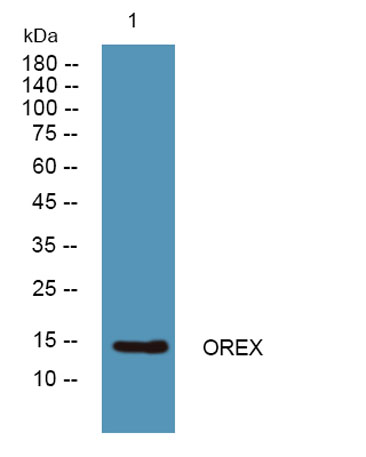
| Observed band (KD) | 14kD |
| Background | hypocretin neuropeptide precursor(HCRT) Homo sapiens This gene encodes a hypothalamic neuropeptide precursor protein that gives rise to two mature neuropeptides, orexin A and orexin B, by proteolytic processing. Orexin A and orexin B, which bind to orphan G-protein coupled receptors HCRTR1 and HCRTR2, function in the regulation of sleep and arousal. This neuropeptide arrangement may also play a role in feeding behavior, metabolism, and homeostasis. [provided by RefSeq, Jan 2010], |
| Function | disease:Defects in HCRT are a cause of narcolepsy [MIM:161400]. Narcolepsy is a neurological disabling sleep disorder, characterized by excessive daytime sleepiness, sleep fragmentation, symptoms of abnormal rapid-eye-movement (REM) sleep, such as cataplexy, hypnagogic hallucinations, and sleep paralysis. Cataplexy is a sudden loss of muscle tone triggered by emotions, which is the most valuable clinical feature used to diagnose narcolepsy. Human narcolepsy is associated with a deficient orexin system. Orexins are absent and/or greatly diminished in the brain and cerebrospinal fluid (CSF) of most narcoleptic patients. Human narcolepsy is primarily a sporadically occurring disorder but familial clustering has been observed.,function:Neuropeptides that play a significant role in the regulation of food intake and sleep-wakefulness, possibly by coordinating the complex behavioral and physiol |
| Subcellular location | Rough endoplasmic reticulum . Cytoplasmic vesicle . Cell junction, synapse . Associated with perikaryal rough endoplasmic reticulum as well as cytoplasmic large granular vesicles at synapses. . |
| Expression | Abundantly expressed in subthalamic nucleus but undetectable in other brain regions tested (hypothalamus was not tested) and in heart, placenta, lung, liver, skeletal muscle, kidney and pancreas. |

Use collapsible tabs for more detailed information that will help customers make a purchasing decision.
Ex: Shipping and return policies, size guides, and other common questions.