 Français
 English
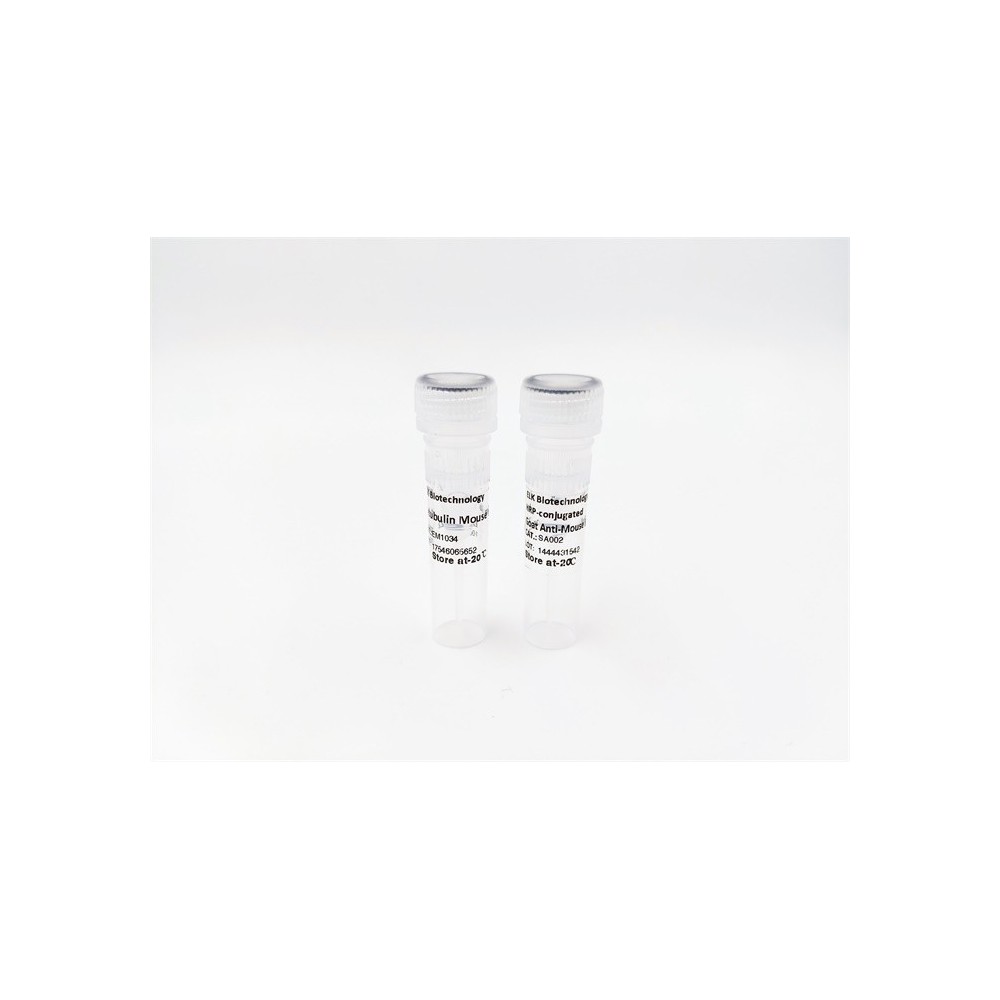

| ELK.No | ES11633 |
| Product name | RXFP1 rabbit pAb |
| Reactivity | Human;Rat;Mouse |
| Applications | WB;ELISA |
| Other name | |
| Size | 50μL |
| Unit price ($) | 148 |
| Human gene ID | 59350 |
| Human Swiss-Prot | Q9HBX9 |
| Source | Rabbit |
| Isotype | IgG |
| Target | RXFP1 |
| Fields | >>Neuroactive ligand-receptor interaction;>>Relaxin signaling pathway |
| Gene name | RXFP1 LGR7 |
| Protein name | Relaxin receptor 1 (Leucine-rich repeat-containing G-protein coupled receptor 7) (Relaxin family peptide receptor 1) |
| Human gene link | |
| Human Swiss link | View Human Swiss-Prot |
| Mouse gene ID | |
| Mouse gene link | |
| Mouse Swiss-Prot | Q6R6I7 |
| Mouse Swiss link | View Mouse Swiss-Prot |
| Rat gene ID | |
| Rat gene link | |
| Rat Swiss-Prot | Q6R6I6 |
| Rat Swiss link | View Rat Swiss-Prot |
| Immunogen | Synthesized peptide derived from human protein . at AA range: 240-320 |
| Specificity | RXFP1 Polyclonal Antibody detects endogenous levels of protein. |
| Formulation | Liquid in PBS containing 50% glycerol, and 0.02% sodium azide. |
| Clonality | Polyclonal |
| Dilution | WB 1:500-2000 ELISA 1:5000-20000 |
| Purification | The antibody was affinity-purified from rabbit antiserum by affinity-chromatography using epitope-specific immunogen. |
| Concentration | 1 mg/ml |
| Storage stability | -20°C/1 year |
| Molecular Weight (Da) | |
| Observed band (KD) | 83kD |
| Background | This gene encodes a member of the leucine-rich repeat-containing subgroup of the G protein-coupled 7-transmembrane receptor superfamily. The encoded protein plays a critical role in sperm motility, pregnancy and parturition as a receptor for the protein hormone relaxin. Decreased expression of this gene may play a role in endometriosis. Alternatively spliced transcript variants encoding multiple isoforms have been observed for this gene. [provided by RefSeq, Dec 2011], |
| Function | function:Receptor for relaxins. The activity of this receptor is mediated by G proteins leading to stimulation of adenylate cyclase and an increase of cAMP. Binding of the ligand may also activate a tyrosine kinase pathway that inhibits the activity of a phosphodiesterase that degrades cAMP.,similarity:Belongs to the G-protein coupled receptor 1 family.,similarity:Contains 1 LDL-receptor class A domain.,similarity:Contains 10 LRR (leucine-rich) repeats.,tissue specificity:Expressed in the brain, kidney, testis, placenta, uterus, ovary, adrenal, prostate, skin and heart. Not detected in spleen., |
| Subcellular location | Cell membrane ; Multi-pass membrane protein . |
| Expression | Expressed in the brain, kidney, testis, placenta, uterus, ovary, adrenal, prostate, skin and heart. Not detected in spleen. |

Use collapsible tabs for more detailed information that will help customers make a purchasing decision.
Ex: Shipping and return policies, size guides, and other common questions.