 Français
 English
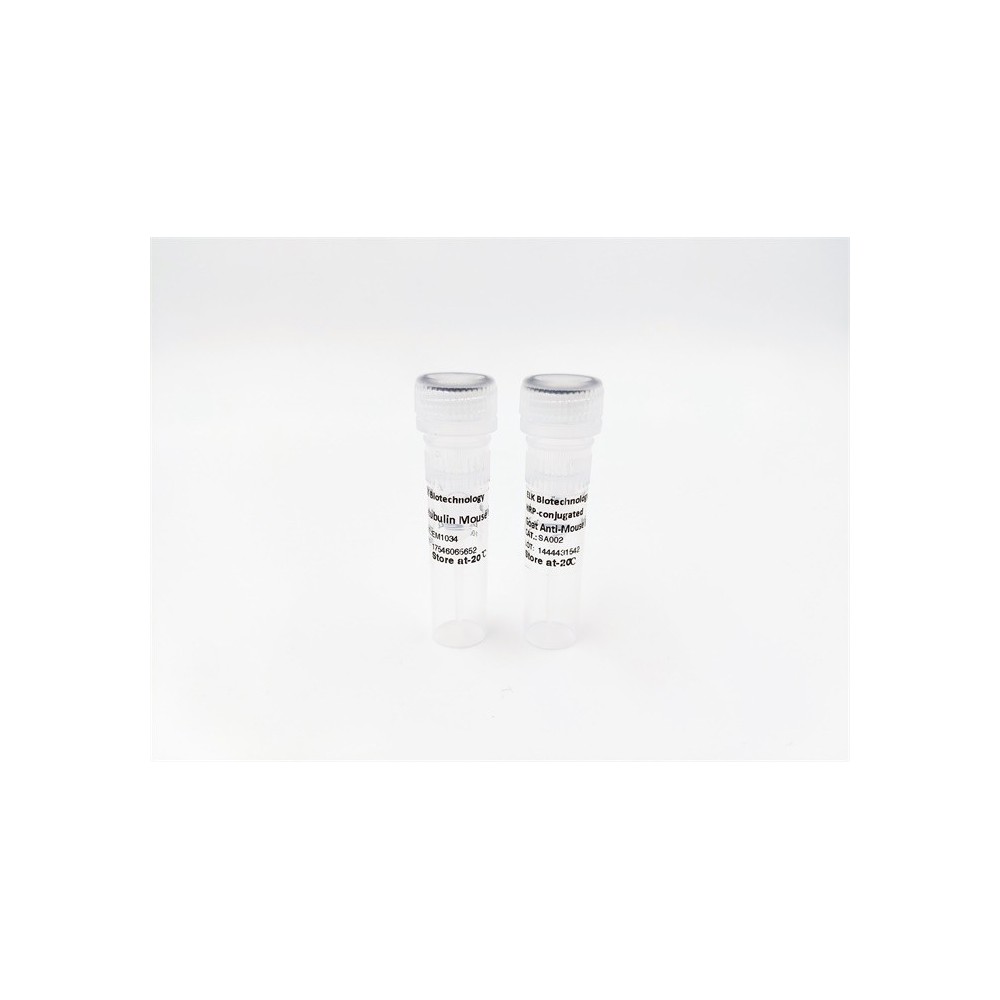

| ELK.No | ES11962 |
| Product name | GLI2 rabbit pAb |
| Reactivity | Human;Mouse |
| Applications | WB;ELISA |
| Other name | |
| Size | 50μL |
| Unit price ($) | 148 |
| Human gene ID | 2736 |
| Human Swiss-Prot | P10070 |
| Source | Rabbit |
| Isotype | IgG |
| Target | GLI2 |
| Fields | >>Hedgehog signaling pathway;>>Hippo signaling pathway;>>Pathways in cancer;>>Basal cell carcinoma |
| Gene name | GLI2 THP |
| Protein name | Zinc finger protein GLI2 (Tax helper protein) |
| Human gene link | |
| Human Swiss link | View Human Swiss-Prot |
| Mouse gene ID | |
| Mouse gene link | |
| Mouse Swiss-Prot | Q0VGT2 |
| Mouse Swiss link | View Mouse Swiss-Prot |
| Rat gene ID | |
| Rat gene link | |
| Rat Swiss-Prot | |
| Rat Swiss link | |
| Immunogen | Synthesized peptide derived from part region of human protein |
| Specificity | GLI2 Polyclonal Antibody detects endogenous levels of protein. |
| Formulation | Liquid in PBS containing 50% glycerol, and 0.02% sodium azide. |
| Clonality | Polyclonal |
| Dilution | WB 1:500-2000 ELISA 1:5000-20000 |
| Purification | The antibody was affinity-purified from rabbit antiserum by affinity-chromatography using epitope-specific immunogen. |
| Concentration | 1 mg/ml |
| Storage stability | -20°C/1 year |
| Molecular Weight (Da) | |
| Observed band (KD) | 174kD |
| Background | This gene encodes a protein which belongs to the C2H2-type zinc finger protein subclass of the Gli family. Members of this subclass are characterized as transcription factors which bind DNA through zinc finger motifs. These motifs contain conserved H-C links. Gli family zinc finger proteins are mediators of Sonic hedgehog (Shh) signaling and they are implicated as potent oncogenes in the embryonal carcinoma cell. The protein encoded by this gene localizes to the cytoplasm and activates patched Drosophila homolog (PTCH) gene expression. It is also thought to play a role during embryogenesis. The encoded protein is associated with several phenotypes- Greig cephalopolysyndactyly syndrome, Pallister-Hall syndrome, preaxial polydactyly type IV, postaxial polydactyly types A1 and B. [provided by RefSeq, Jul 2008], |
| Function | disease:Defects in GLI2 are the cause of holoprosencephaly type 9 (HPE9) [MIM:610829]; also called pituitary anomalies with holoprosencephaly-like features. The primary features of this disease include defective anterior pituitary formation and pan-hypopituitarism, with or without overt forebrain cleavage abnormalities, and holoprosencephaly-like midfacial hypoplasia. Holoprosencephaly is the most common structural anomaly of the brain, in which the developing forebrain fails to correctly separate into right and left hemispheres. Holoprosencephaly is genetically heterogeneous and associated with several distinct facies and phenotypic variability.,function:May play a role during embryogenesis. Binds to the DNA sequence 5'-GAACCACCCA-3' which is part of the TRE-2S regulatory element that augments the Tax-dependent enhancer of human T-cell leukemia virus type 1. Implicated in the transducti |
| Subcellular location | Nucleus . Cytoplasm . Cell projection, cilium . STK36 promotes translocation to the nucleus. In keratinocytes, it is sequestered in the cytoplasm by SUFU. In the absence of SUFU, it translocates to the nucleus. .; [Isoform 1]: Nucleus .; [Isoform 2]: Nucleus . |
| Expression | Expressed in breast cancers (at protein level) (PubMed:26565916). Isoform 1 and isoform 4 are expressed in HTLV-1-infected T-cell lines (at protein level) (PubMed:9557682). Isoform 1 and isoform 2 are strongly expressed in HTLV-1-infected T-cell lines (PubMed:9557682). Isoform 3 and isoform 4 are weakly expressed in HTLV-1-infected T-cell lines (PubMed:9557682). |

Use collapsible tabs for more detailed information that will help customers make a purchasing decision.
Ex: Shipping and return policies, size guides, and other common questions.