 Français
 English
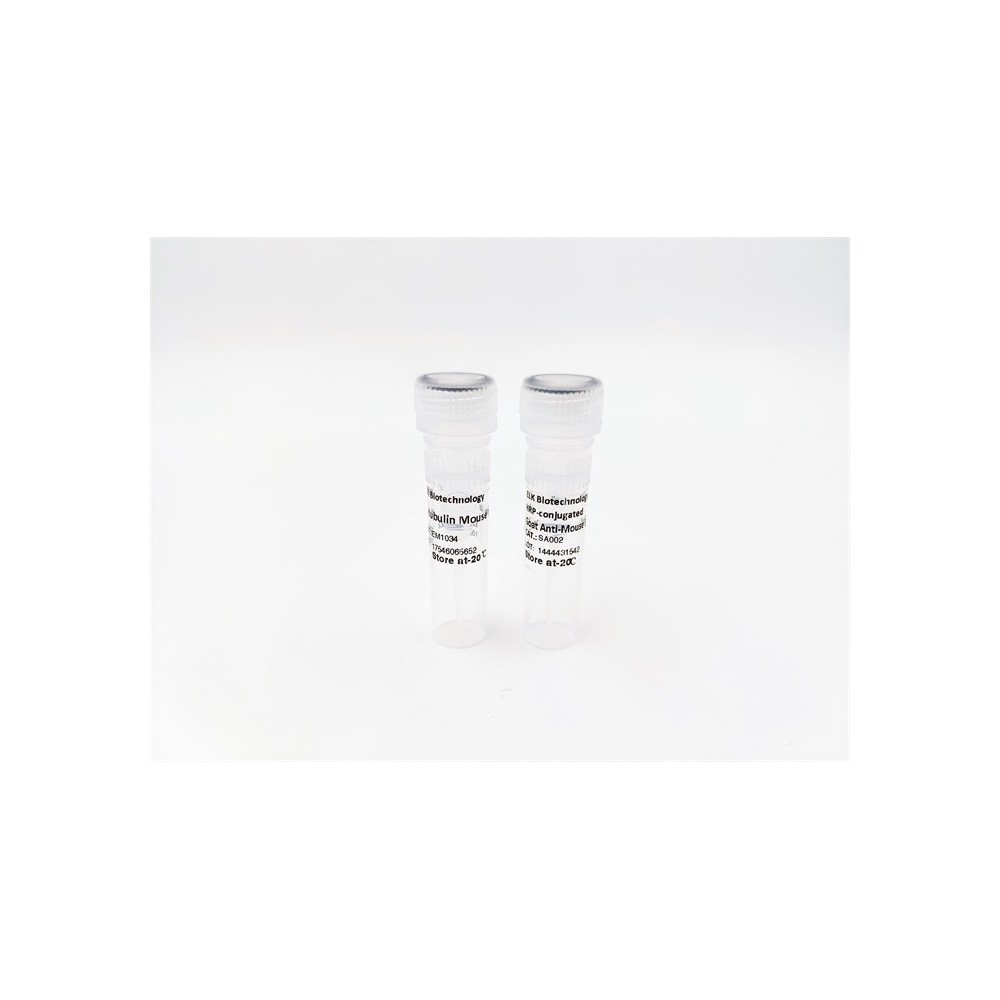

| ELK.No | ES12799 |
| Product name | TBCD rabbit pAb |
| Reactivity | Human; Mouse |
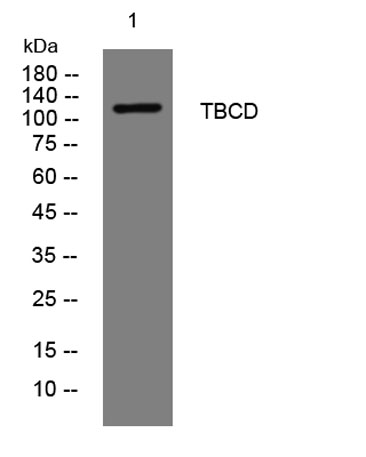
| Applications | WB |
| Other name | |
| Size | 100μL |
| Unit price ($) | 248 |
| Human gene ID | 6904 |
| Human Swiss-Prot | Q9BTW9 |
| Source | Rabbit |
| Isotype | IgG |
| Target | TBCD |
| Fields | |
| Gene name | TBCD KIAA0988 SSD1 TFCD PP1096 |
| Protein name | TBCD |
| Human gene link | View Human Gene |
| Human Swiss link | View Human Swiss-Prot |
| Mouse gene ID | 108903 |
| Mouse gene link | View Mouse Gene |
| Mouse Swiss-Prot | Q8BYA0 |
| Mouse Swiss link | View Mouse Swiss-Prot |
| Rat gene ID | |
| Rat gene link | |
| Rat Swiss-Prot | |
| Rat Swiss link | |
| Immunogen | Synthesized peptide derived from human TBCD AA range: 419-469 |
| Specificity | This antibody detects endogenous levels of TBCD at Human/Mouse |
| Formulation | Liquid in PBS containing 50% glycerol, 0.5% BSA and 0.02% sodium azide. |
| Clonality | Polyclonal |
| Dilution | WB 1:500-2000 |
| Purification | The antibody was affinity-purified from rabbit serum by affinity-chromatography using specific immunogen. |
| Concentration | 1 mg/ml |
| Storage stability | -20°C/1 year |
| Molecular Weight (Da) | 131kD |
| Observed band (KD) | |
| Background | Cofactor D is one of four proteins (cofactors A, D, E, and C) involved in the pathway leading to correctly folded beta-tubulin from folding intermediates. Cofactors A and D are believed to play a role in capturing and stabilizing beta-tubulin intermediates in a quasi-native confirmation. Cofactor E binds to the cofactor D/beta-tubulin complex; interaction with cofactor C then causes the release of beta-tubulin polypeptides that are committed to the native state. [provided by RefSeq, Jul 2008], |
| Function | function:Tubulin-folding protein; involved in the first step of the tubulin folding pathway. Modulates microtubule dynamics by capturing GTP-bound beta-tubulin (TUBB).,induction:Down-regulated by shear stress.,similarity:Belongs to the TBCD family.,similarity:Contains 3 HEAT repeats.,subunit:Supercomplex made of cofactors A to E. Cofactors A and D function by capturing and stabilizing tubulin in a quasi-native conformation. Cofactor E binds to the cofactor D-tubulin complex; interaction with cofactor C then causes the release of tubulin polypeptides that are committed to the native state.,tissue specificity:Ubiquitously expressed., |
| Subcellular location | Cell junction, tight junction . Lateral cell membrane . Cytoplasm . Cell junction, adherens junction . Cytoplasm, cytoskeleton, microtubule organizing center, centrosome . Localized in cell-cell contacts. . |
| Expression | Ubiquitously expressed. |

Use collapsible tabs for more detailed information that will help customers make a purchasing decision.
Ex: Shipping and return policies, size guides, and other common questions.