 Français
 English



| ELK.No | ES12970 |
| Product name | SPTN2 rabbit pAb |
| Reactivity | Human;Rat |
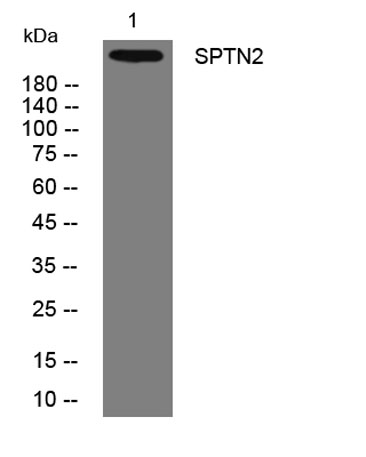
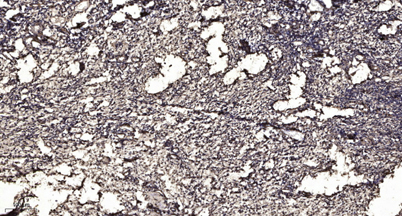
| Applications | WB;IHC |
| Other name | |
| Size | 100μL |
| Unit price ($) | 248 |
| Human gene ID | 6712 |
| Human Swiss-Prot | O15020 |
| Source | Rabbit |
| Isotype | IgG |
| Target | SPTN2 |
| Fields | >>Spinocerebellar ataxia;>>Pathways of neurodegeneration - multiple diseases |
| Gene name | SPTBN2 KIAA0302 SCA5 |
| Protein name | SPTN2 |
| Human gene link | View Human Gene |
| Human Swiss link | View Human Swiss-Prot |
| Mouse gene ID | |
| Mouse gene link | |
| Mouse Swiss-Prot | |
| Mouse Swiss link | |
| Rat gene ID | 29211 |
| Rat gene link | View Rat Gene |
| Rat Swiss-Prot | Q9QWN8 |
| Rat Swiss link | View Rat Swiss-Prot |
| Immunogen | Synthesized peptide derived from human SPTN2 AA range: 644-694 |
| Specificity | This antibody detects endogenous levels of SPTN2 at Human/Rat |
| Formulation | Liquid in PBS containing 50% glycerol, 0.5% BSA and 0.02% sodium azide. |
| Clonality | Polyclonal |
| Dilution | WB 1:500-2000;IHC-p 1:50-300 |
| Purification | The antibody was affinity-purified from rabbit serum by affinity-chromatography using specific immunogen. |
| Concentration | 1 mg/ml |
| Storage stability | -20°C/1 year |
| Molecular Weight (Da) | 263kD |
| Observed band (KD) | |
| Background | Spectrins are principle components of a cell's membrane-cytoskeleton and are composed of two alpha and two beta spectrin subunits. The protein encoded by this gene (SPTBN2), is called spectrin beta non-erythrocytic 2 or beta-III spectrin. It is related to, but distinct from, the beta-II spectrin gene which is also known as spectrin beta non-erythrocytic 1 (SPTBN1). SPTBN2 regulates the glutamate signaling pathway by stabilizing the glutamate transporter EAAT4 at the surface of the plasma membrane. Mutations in this gene cause a form of spinocerebellar ataxia, SCA5, that is characterized by neurodegeneration, progressive locomotor incoordination, dysarthria, and uncoordinated eye movements. [provided by RefSeq, Dec 2009], |
| Function | disease:Defects in SPTBN2 are the cause of spinocerebellar ataxia type 5 (SCA5) [MIM:600224]. Spinocerebellar ataxia is a clinically and genetically heterogeneous group of cerebellar disorders. Patients show progressive incoordination of gait and often poor coordination of hands, speech and eye movements, due to degeneration of the cerebellum with variable involvement of the brainstem and spinal cord. SCA5 is an autosomal dominant cerebellar ataxia (ADCA). It is a slowly progressive disorder with variable age at onset, ranging between 10 and 50 years.,function:Probably plays an important role in neuronal membrane skeleton.,similarity:Belongs to the spectrin family.,similarity:Contains 1 PH domain.,similarity:Contains 17 spectrin repeats.,similarity:Contains 2 CH (calponin-homology) domains.,tissue specificity:Highly expressed in brain, kidney, pancreas, and liver, and at lower levels in |
| Subcellular location | Cytoplasm, cytoskeleton. Cytoplasm, cell cortex. |
| Expression | Highly expressed in brain, kidney, pancreas, and liver, and at lower levels in lung and placenta. |

Use collapsible tabs for more detailed information that will help customers make a purchasing decision.
Ex: Shipping and return policies, size guides, and other common questions.