 Français
 English
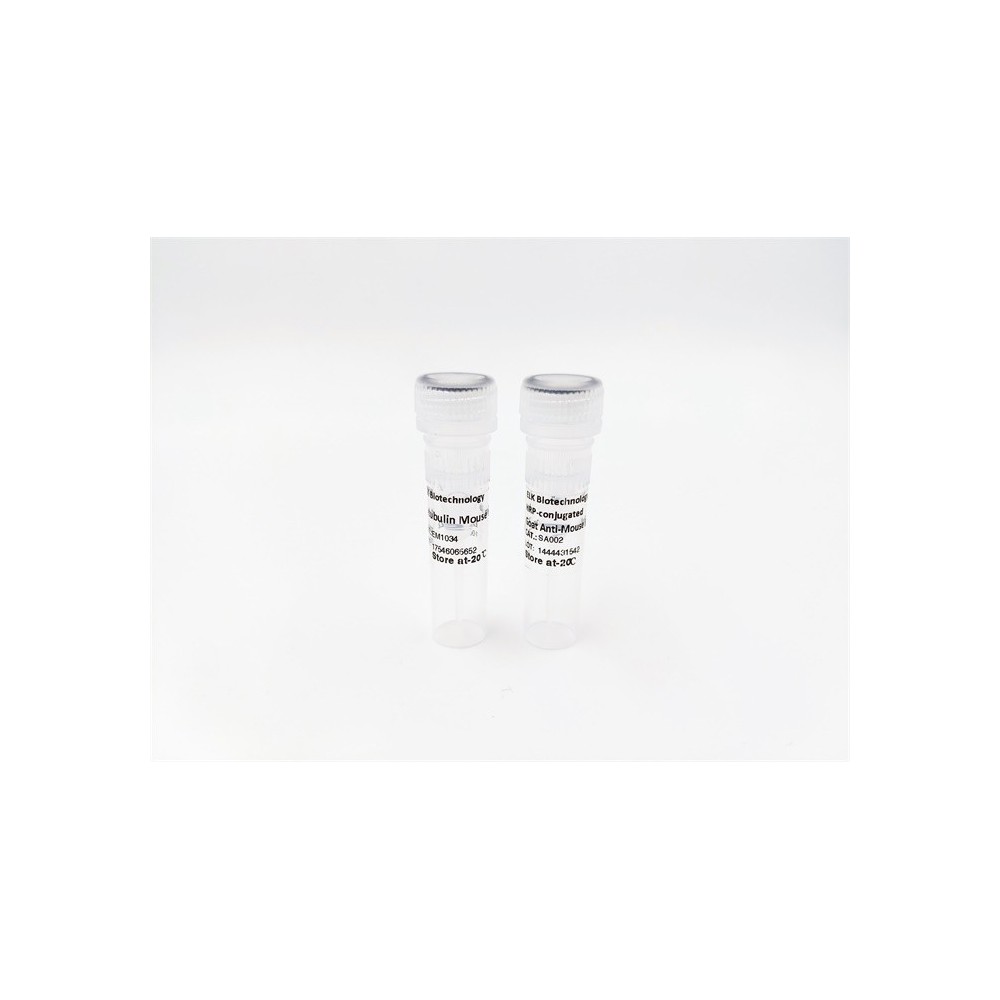

| ELK.No | ES13122 |
| Product name | Shh rabbit pAb |
| Reactivity | Human; Mouse; Rat |
| Applications | IHC;IF;WB |
| Other name | Sonic hedgehog protein (SHH;HHG-1) [Cleaved into: Sonic hedgehog protein N-product; Sonic hedgehog protein C-product] |
| Size | 100μL |
| Unit price ($) | 248 |
| Human gene ID | 6469 |
| Human Swiss-Prot | Q15465 |
| Source | Rabbit |
| Isotype | IgG |
| Target | Shh |
| Fields | >>Hedgehog signaling pathway;>>Axon guidance;>>Pathways in cancer;>>Proteoglycans in cancer;>>Basal cell carcinoma;>>Gastric cancer |
| Gene name | SHH |
| Protein name | Shh |
| Human gene link | |
| Human Swiss link | View Human Swiss-Prot |
| Mouse gene ID | |
| Mouse gene link | |
| Mouse Swiss-Prot | |
| Mouse Swiss link | |
| Rat gene ID | |
| Rat gene link | |
| Rat Swiss-Prot | |
| Rat Swiss link | |
| Immunogen | Synthesized peptide derived from human Shh |
| Specificity | This antibody detects endogenous levels of human Shh |
| Formulation | Liquid in PBS containing 50% glycerol, 0.5% BSA and 0.02% sodium azide. |
| Clonality | Polyclonal |
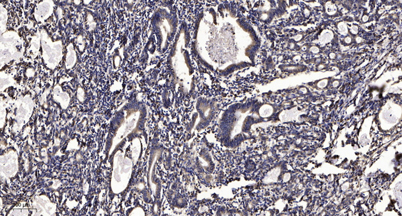
| Dilution | IHC-p 1:50-200, WB 1:500-2000 |
| Purification | The antibody was affinity-purified from rabbit serum by affinity-chromatography using specific immunogen. |
| Concentration | 1 mg/ml |
| Storage stability | -20°C/1 year |
| Molecular Weight (Da) | |
| Observed band (KD) | 40kD |
| Background | This gene encodes a protein that is instrumental in patterning the early embryo. It has been implicated as the key inductive signal in patterning of the ventral neural tube, the anterior-posterior limb axis, and the ventral somites. Of three human proteins showing sequence and functional similarity to the sonic hedgehog protein of Drosophila, this protein is the most similar. The protein is made as a precursor that is autocatalytically cleaved; the N-terminal portion is soluble and contains the signalling activity while the C-terminal portion is involved in precursor processing. More importantly, the C-terminal product covalently attaches a cholesterol moiety to the N-terminal product, restricting the N-terminal product to the cell surface and preventing it from freely diffusing throughout the developing embryo. Defects in this protein or in its signalling pathway are a cause of holoprosencephaly (HPE), a d |
| Function | disease:Defects in SHH are a cause of solitary median maxillary central incisor (SMMCI) [MIM:147250]. SMMCI is a rare dental anomaly characterized by the congenital absence of one maxillary central incisor.,disease:Defects in SHH are the cause of holoprosencephaly type 3 (HPE3) [MIM:142945]. Holoprosencephaly (HPE) [MIM:236100] is the most common structural anomaly of the brain, in which the developing forebrain fails to correctly separate into right and left hemispheres. Holoprosencephaly is genetically heterogeneous and associated with several distinct facies and phenotypic variability. The majority of HPE3 cases are apparently sporadic, although clear exemples of autosomal dominant inheritance have been described. Interestingly, up to 30% of obligate carriers of HPE3 gene in autosomal dominant pedigrees are clinically unaffected.,disease:Defects in SHH are the cause of microphthalmia |
| Subcellular location | Endoplasmic reticulum membrane . Golgi apparatus membrane . Co-localizes with HHAT in the ER and Golgi membrane. .; [Sonic hedgehog protein N-product]: Cell membrane ; Lipid-anchor . The dual-lipidated sonic hedgehog protein N-product (ShhNp) is firmly tethered to the cell membrane where it forms multimers (PubMed:24522195). Further solubilization and release from the cell surface seem to be achieved through different mechanisms, including the interaction with DISP1 and SCUBE2, movement by lipoprotein particles, transport by cellular extensions called cytonemes or by the proteolytic removal of both terminal lipidated peptides (PubMed:26875496, PubMed:24522195). . |
| Expression | Fetal lung,Plasma, |


Use collapsible tabs for more detailed information that will help customers make a purchasing decision.
Ex: Shipping and return policies, size guides, and other common questions.