 Français
 English
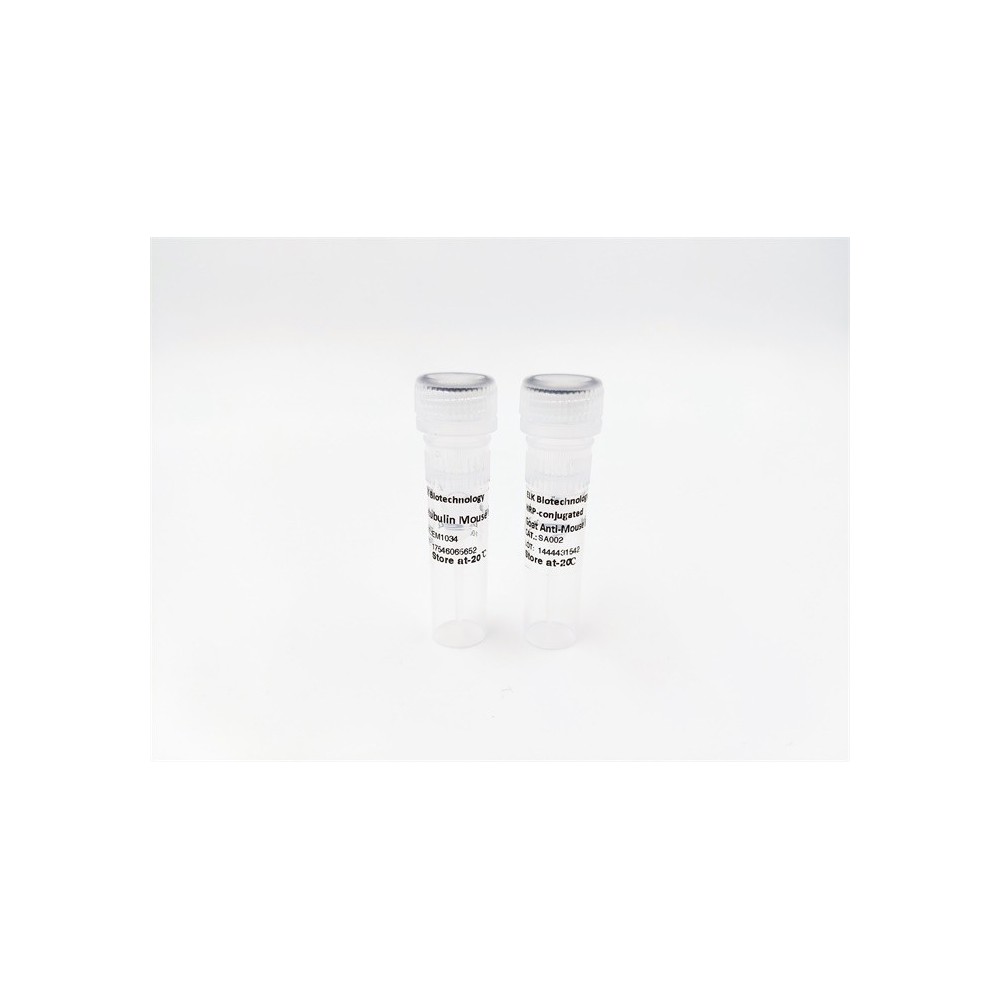

| ELK.No | ES13181 |
| Product name | SCOT1 rabbit pAb |
| Reactivity | Human; Mouse;Rat |
| Applications | WB;ELISA;IHC |
| Other name | |
| Size | 50μL |
| Unit price ($) | 148 |
| Human gene ID | 5019 |
| Human Swiss-Prot | P55809 |
| Source | Rabbit |
| Isotype | IgG |
| Target | SCOT1 |
| Fields | >>Valine, leucine and isoleucine degradation;>>Butanoate metabolism;>>Metabolic pathways |
| Gene name | OXCT1 OXCT SCOT |
| Protein name | SCOT1 |
| Human gene link | View Human Gene |
| Human Swiss link | View Human Swiss-Prot |
| Mouse gene ID | 67041 |
| Mouse gene link | View Mouse Gene |
| Mouse Swiss-Prot | Q9D0K2 |
| Mouse Swiss link | View Mouse Swiss-Prot |
| Rat gene ID | 690163 |
| Rat gene link | View Rat Gene |
| Rat Swiss-Prot | B2GV06 |
| Rat Swiss link | View Rat Swiss-Prot |
| Immunogen | Synthesized peptide derived from human SCOT1 AA range: 105-155 |
| Specificity | This antibody detects endogenous levels of SCOT1 at Human/Mouse/Rat |
| Formulation | Liquid in PBS containing 50% glycerol, 0.5% BSA and 0.02% sodium azide. |
| Clonality | Polyclonal |
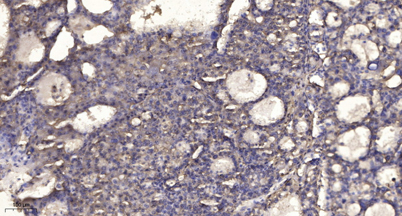
| Dilution | WB 1:500-2000;IHC-p 1:50-300; ELISA 2000-20000 |
| Purification | The antibody was affinity-purified from rabbit serum by affinity-chromatography using specific immunogen. |
| Concentration | 1 mg/ml |
| Storage stability | -20°C/1 year |
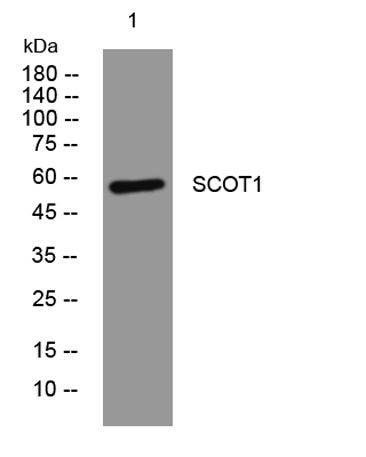
| Molecular Weight (Da) | 57kD |
| Observed band (KD) | |
| Background | This gene encodes a member of the 3-oxoacid CoA-transferase gene family. The encoded protein is a homodimeric mitochondrial matrix enzyme that plays a central role in extrahepatic ketone body catabolism by catalyzing the reversible transfer of coenzyme A from succinyl-CoA to acetoacetate. Mutations in this gene are associated with succinyl CoA:3-oxoacid CoA transferase deficiency. [provided by RefSeq, Jul 2008], |
| Function | catalytic activity:Succinyl-CoA + a 3-oxo acid = succinate + a 3-oxoacyl-CoA.,disease:Defects in OXCT1 are a cause of ketoacidosis [MIM:245050].,function:Key enzyme for ketone body catabolism. Transfers the CoA moiety from succinate to acetoacetate. Formation of the enzyme-CoA intermediate proceeds via an unstable anhydride species formed between the carboxylate groups of the enzyme and substrate.,pathway:Ketone metabolism; succinyl-CoA degradation; acetoacetyl-CoA from succinyl-CoA: step 1/1.,similarity:Belongs to the 3-oxoacid CoA-transferase family.,subunit:Homodimer.,tissue specificity:Abundant in heart, followed in order by kidney, brain, and muscle, whereas in liver it is undetectable; also detectable in leukocytes and fibroblasts., |
| Subcellular location | Mitochondrion . |
| Expression | Abundant in heart, followed in order by brain, kidney, skeletal muscle, and lung, whereas in liver it is undetectable. Expressed (at protein level) in all tissues (except in liver), most abundant in myocardium, then brain, kidney, adrenal glands, skeletal muscle and lung; also detectable in leukocytes and fibroblasts. |

Use collapsible tabs for more detailed information that will help customers make a purchasing decision.
Ex: Shipping and return policies, size guides, and other common questions.