 Français
 English
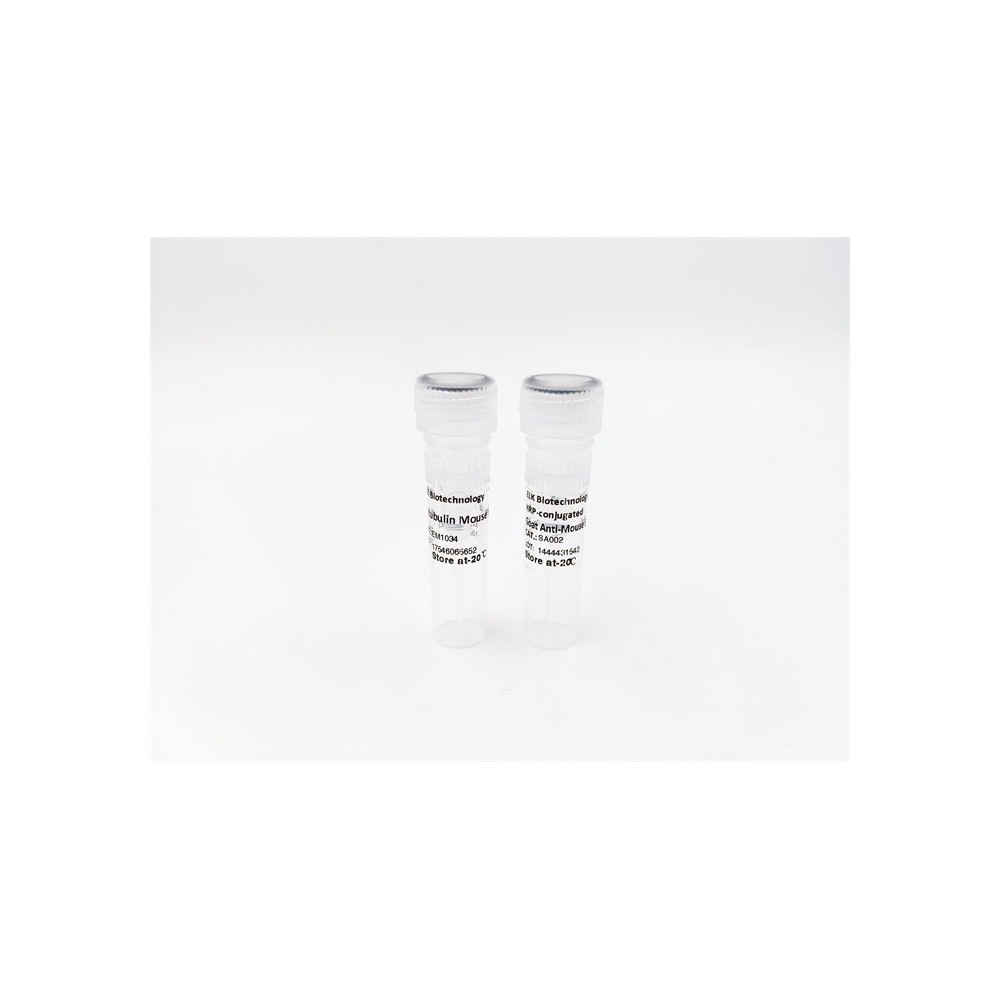
Rad50 (phospho-Ser635) rabbit pAb
AO-06-ES13473-100

| ELK.No | ES13473 |
| Product name | Rad50 (phospho-Ser635) rabbit pAb |
| Reactivity | Human;Rat;Mouse; |
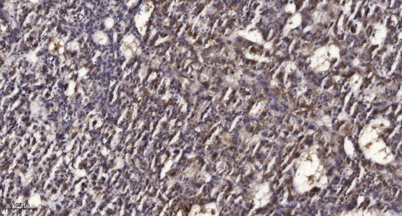
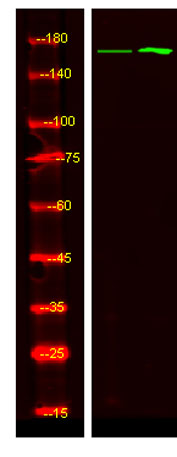
| Applications | WB;IHC |
| Other name | DNA repair protein RAD50 (hRAD50) (EC 3.6.-.-) |
| Size | 100μL |
| Unit price ($) | 248 |
| Human gene ID | 10111 |
| Human Swiss-Prot | Q92878 |
| Source | Rabbit |
| Isotype | IgG |
| Target | Rad50 |
| Fields | >>Homologous recombination;>>Non-homologous end-joining;>>Cellular senescence |
| Gene name | RAD50 |
| Protein name | Rad50 (Ser635) |
| Human gene link | View Human Gene |
| Human Swiss link | View Human Swiss-Prot |
| Mouse gene ID | |
| Mouse gene link | |
| Mouse Swiss-Prot | P70388 |
| Mouse Swiss link | View Mouse Swiss-Prot |
| Rat gene ID | 64012 |
| Rat gene link | View Rat Gene |
| Rat Swiss-Prot | Q9JIL8 |
| Rat Swiss link | View Rat Swiss-Prot |
| Immunogen | Synthesized phosho peptide around human Rad50 (Ser635) |
| Specificity | This antibody detects endogenous levels of Human Rad50 (phospho-Ser635) |
| Formulation | Liquid in PBS containing 50% glycerol, 0.5% BSA and 0.02% sodium azide. |
| Clonality | Polyclonal |
| Dilution | WB 1:500-2000;IHC-p 1:50-300 |
| Purification | The antibody was affinity-purified from rabbit serum by affinity-chromatography using specific immunogen. |
| Concentration | 1 mg/ml |
| Storage stability | -20°C/1 year |
| Molecular Weight (Da) | |
| Observed band (KD) | 153kD |
| Background | RAD50 double strand break repair protein(RAD50) Homo sapiens The protein encoded by this gene is highly similar to Saccharomyces cerevisiae Rad50, a protein involved in DNA double-strand break repair. This protein forms a complex with MRE11 and NBS1. The protein complex binds to DNA and displays numerous enzymatic activities that are required for nonhomologous joining of DNA ends. This protein, cooperating with its partners, is important for DNA double-strand break repair, cell cycle checkpoint activation, telomere maintenance, and meiotic recombination. Knockout studies of the mouse homolog suggest this gene is essential for cell growth and viability. Mutations in this gene are the cause of Nijmegen breakage syndrome-like disorder.[provided by RefSeq, Apr 2010], |
| Function | cofactor:Binds 1 zinc ion per homodimer.,domain:The zinc-hook, which separates the large intramolecular coiled coil regions, contains 2 Cys residues that coordinate one molecule of zinc with the help of the 2 Cys residues of the zinc-hook of another RAD50 molecule, thereby forming a V-shaped homodimer. The two heads of the homodimer, which constitute the ATP-binding domain, interact with the MRE11A homodimer.,function:Component of the MRN complex, which plays a central role in double-strand break (DSB) repair, DNA recombination, maintenance of telomere integrity and meiosis. The complex possesses single-strand endonuclease activity and double-strand-specific 3'-5' exonuclease activity, which are provided by MRE11A. RAD50 may be required to bind DNA ends and hold them in close proximity. This could facilitate searches for short or long regions of sequence homology in the recombining DNA t |
| Subcellular location | Nucleus . Chromosome, telomere . Chromosome . Localizes to discrete nuclear foci after treatment with genotoxic agents. . |
| Expression | Expressed at very low level in most tissues, except in testis where it is expressed at higher level. Expressed in fibroblasts. |

Use collapsible tabs for more detailed information that will help customers make a purchasing decision.
Ex: Shipping and return policies, size guides, and other common questions.