 Français
 English

| ELK.No | ES13938 |
| Product name | Prokineticin-1 Rabbit pAb |
| Reactivity | Human; Mouse; Rat |
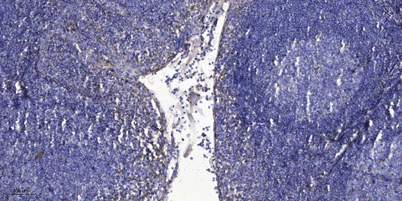
| Applications | IHC; ELISA |
| Other name | Prokineticin-1 (Endocrine-gland-derived vascular endothelial growth factor;EG-VEGF;Mambakine) |
| Size | 50μL |
| Unit price ($) | 148 |
| Human gene ID | 84432 |
| Human Swiss-Prot | P58294 |
| Source | Rabbit |
| Isotype | IgG |
| Target | Prokineticin-1 |
| Fields | |
| Gene name | PROK1 UNQ600/PRO1186 |
| Protein name | Prokineticin-1 |
| Human gene link | |
| Human Swiss link | View Human Swiss-Prot |
| Mouse gene ID | |
| Mouse gene link | |
| Mouse Swiss-Prot | |
| Mouse Swiss link | |
| Rat gene ID | |
| Rat gene link | |
| Rat Swiss-Prot | |
| Rat Swiss link | |
| Immunogen | Synthesized peptide derived from human Prokineticin-1 AA range: 1-50 |
| Specificity | This antibody detects endogenous levels of human Prokineticin-1 |
| Formulation | Liquid in PBS containing 50% glycerol, 0.5% BSA and 0.02% sodium azide. |
| Clonality | Polyclonal |
| Dilution | IHC-p 1:50-200, ELISA(peptide)1:5000-20000 |
| Purification | The antibody was affinity-purified from mouse ascites by affinity-chromatography using specific immunogen. |
| Concentration | 1 mg/ml |
| Storage stability | -20°C/1 year |
| Molecular Weight (Da) | |
| Observed band (KD) | |
| Background | The protein encoded by this gene induces proliferation, migration, and fenestration (the formation of membrane discontinuities) in capillary endothelial cells derived from endocrine glands. It has little or no effect on a variety of other endothelial and non-endothelial cell types. Its expression is restricted to the steroidogenic glands (ovary, testis, adrenal, and placenta), is induced by hypoxia, and often complementary to the expression of vascular endothelial growth factor (VEGF), suggesting that these molecules function in a coordinated manner. [provided by RefSeq, Sep 2011], |
| Function | developmental stage:In adult testis, is strongly expressed only in Leydig cells. In testicular tumors, expressed specifically in Leydig cell tumors (at protein level). Expressed from 14 weeks until birth in fetal testis.,function:Potently contracts gastrointestinal (GI) smooth muscle. Induces proliferation, migration and fenestration (the formation of membrane discontinuities) in capillary endothelial cells derived from endocrine glands. Has little or no effect on a variety of other endothelial and non-endothelial cell types. Induces proliferation and differentiation, but not migration, of enteric neural crest cells. Directly influences neuroblastoma progression by promoting the proliferation and migration of neuroblastoma cells. Positively regulates PTGS2 expression and prostaglandin synthesis. May play a role in placentation. May play a role in normal and pathological testis angiogenes |
| Subcellular location | Secreted. |
| Expression | Localizes to glandular epithelium, stroma and vascular epithelial cells of first trimester decidua (at protein level). Up-regulated in first trimester decidua when compared with non-pregnant endometrium. Expressed in the steroidogenic glands, ovary, testis, adrenal and placenta. |

Use collapsible tabs for more detailed information that will help customers make a purchasing decision.
Ex: Shipping and return policies, size guides, and other common questions.