 Français
 English
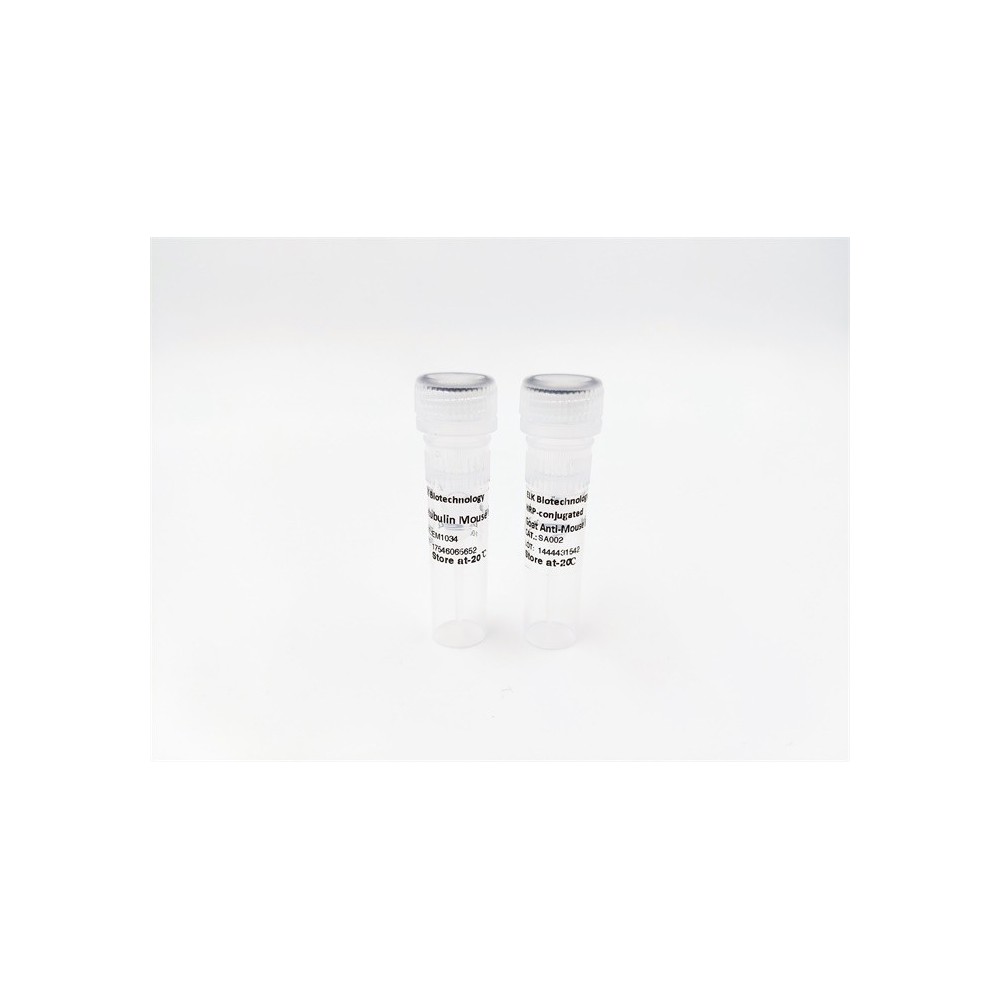

| ELK.No | ES14362 |
| Product name | OSGI1 rabbit pAb |
| Reactivity | Human;Rat;Mouse; |
| Applications | WB |
| Other name | Oxidative stress-induced growth inhibitor 1 (Ovary, kidney and liver protein 38) (huOKL38) (Pregnancy-induced growth inhibitor OKL38) |
| Size | 50μL |
| Unit price ($) | 148 |
| Human gene ID | 29948 |
| Human Swiss-Prot | Q9UJX0 |
| Source | Rabbit |
| Isotype | IgG |
| Target | OSGI1 |
| Fields | |
| Gene name | OSGIN1 OKL38 |
| Protein name | OSGI1 |
| Human gene link | View Human Gene |
| Human Swiss link | View Human Swiss-Prot |
| Mouse gene ID | |
| Mouse gene link | |
| Mouse Swiss-Prot | |
| Mouse Swiss link | |
| Rat gene ID | |
| Rat gene link | |
| Rat Swiss-Prot | |
| Rat Swiss link | |
| Immunogen | Synthesized peptide derived from human OSGI1 AA range: 276-326 |
| Specificity | This antibody detects endogenous levels of OSGI1 at Human |
| Formulation | Liquid in PBS containing 50% glycerol, 0.5% BSA and 0.77% sodium azide. |
| Clonality | Polyclonal |
| Dilution | WB 1:500-2000 |
| Purification | The antibody was affinity-purified from rabbit serum by affinity-chromatography using specific immunogen. |
| Concentration | 1 mg/ml |
| Storage stability | -20°C/1 year |
| Molecular Weight (Da) | |
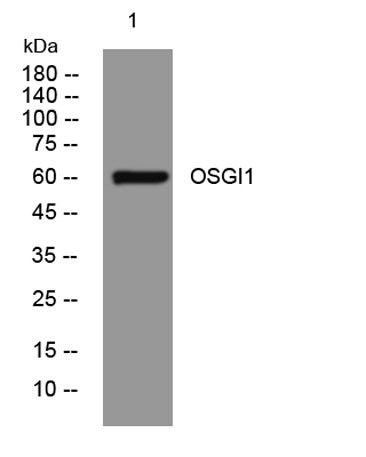
| Observed band (KD) | 60kD |
| Background | This gene encodes an oxidative stress response protein that regulates cell death. Expression of the gene is regulated by p53 and is induced by DNA damage. The protein regulates apoptosis by inducing cytochrome c release from mitochondria. It also appears to be a key regulator of both inflammatory and anti-inflammatory molecules. The loss of this protein correlates with uncontrolled cell growth and tumor formation. Naturally occurring read-through transcription exists between this gene and the neighboring upstream malonyl-CoA decarboxylase (MLYCD) gene, but the read-through transcripts are unlikely to produce a protein product. [provided by RefSeq, Aug 2011], |
| Function | function:Regulates the differentiation and proliferation of normal cells through the regulation of cell death.,induction:By pregnancy.,miscellaneous:Loss of OSGIN1 protein disturbs the balance between cell growth, differentiation, and cell death in normal tissue, resulting in uncontrolled growth and formation of tumors.,similarity:Belongs to the OKL38 family.,tissue specificity:Ubiquitous. Highest expression in the ovary, testis, kidney, and liver., |
| Subcellular location | |
| Expression | Ubiquitous. Highest expression in the ovary, testis, kidney, skeletal muscle and liver (PubMed:11459809, PubMed:14570898, PubMed:15569677). Weakly expressed in spleen, heart, kidney, and pancreas (PubMed:15569677). Highly expressed in tumor cells (at protein level) (PubMed:15569677). |

Use collapsible tabs for more detailed information that will help customers make a purchasing decision.
Ex: Shipping and return policies, size guides, and other common questions.