 Français
 English

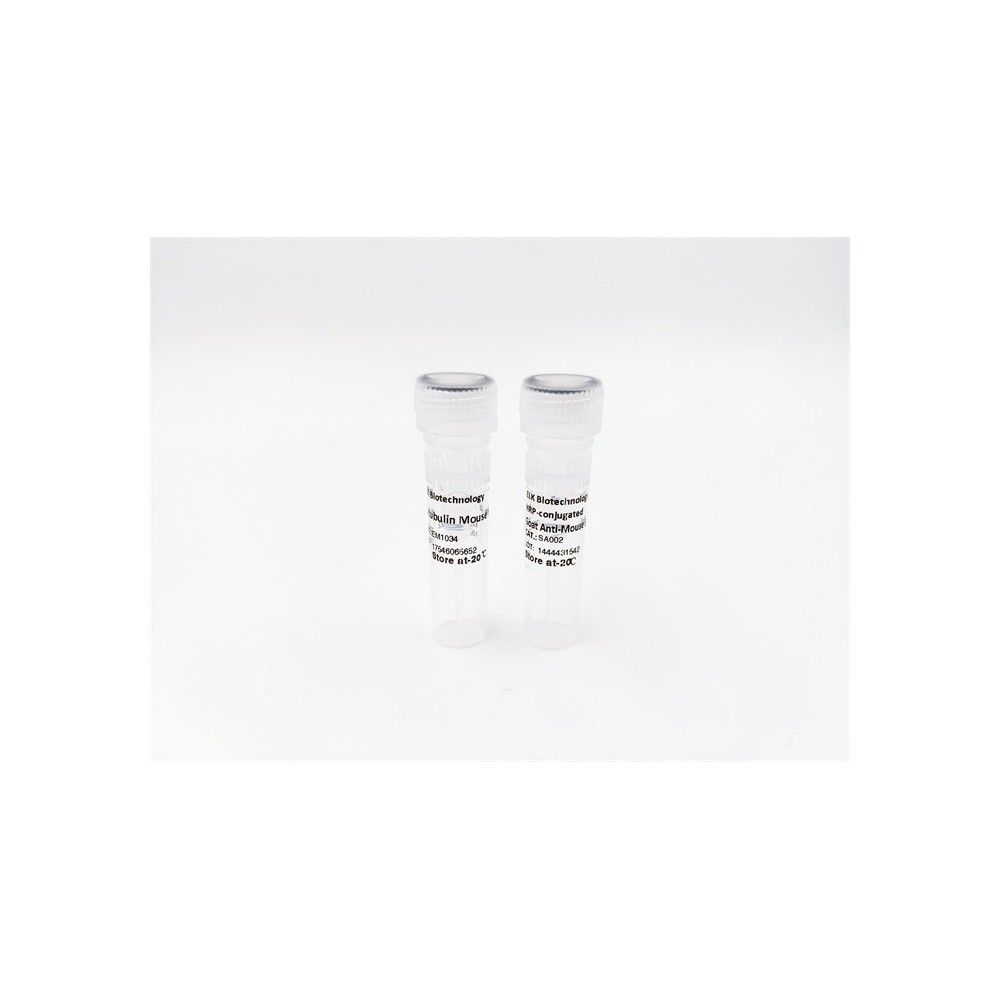

| ELK.No | ES14461 |
| Product name | NPHP3 rabbit pAb |
| Reactivity | Human; Mouse |
| Applications | WB |
| Other name | |
| Size | 100μL |
| Unit price ($) | 248 |
| Human gene ID | 27031 |
| Human Swiss-Prot | Q7Z494 |
| Source | Rabbit |
| Isotype | IgG |
| Target | NPHP3 |
| Fields | |
| Gene name | NPHP3 KIAA2000 |
| Protein name | NPHP3 |
| Human gene link | View Human Gene |
| Human Swiss link | View Human Swiss-Prot |
| Mouse gene ID | 74025 |
| Mouse gene link | View Mouse Gene |
| Mouse Swiss-Prot | Q7TNH6 |
| Mouse Swiss link | View Mouse Swiss-Prot |
| Rat gene ID | |
| Rat gene link | |
| Rat Swiss-Prot | |
| Rat Swiss link | |
| Immunogen | Synthesized peptide derived from human NPHP3 AA range: 1092-1142 |
| Specificity | This antibody detects endogenous levels of NPHP3 at Human/Mouse |
| Formulation | Liquid in PBS containing 50% glycerol, 0.5% BSA and 0.02% sodium azide. |
| Clonality | Polyclonal |
| Dilution | WB 1:500-2000 |
| Purification | The antibody was affinity-purified from rabbit serum by affinity-chromatography using specific immunogen. |
| Concentration | 1 mg/ml |
| Storage stability | -20°C/1 year |
| Molecular Weight (Da) | 146kD |
| Observed band (KD) | |
| Background | This gene encodes a protein containing a coiled-coil (CC) domain, a tubulin-tyrosine ligase (TTL) domain, and a tetratrico peptide repeat (TPR) domain. The encoded protein interacts with nephrocystin, it is required for normal ciliary development, and it functions in renal tubular development. Mutations in this gene are associated with nephronophthisis type 3, and also with renal-hepatic-pancreatic dysplasia, and Meckel syndrome type 7. Naturally occurring read-through transcripts exist between this gene and the downstream ACAD11 (acyl-CoA dehydrogenase family, member 11) gene. [provided by RefSeq, Feb 2011], |
| Function | alternative products:Additional isoforms seem to exist,disease:Defects in NPHP3 are a cause of renal-hepatic-pancreatic dysplasia (RHPD) [MIM:208540]. RHPD is an autosomal recessive disorder with variable expression, and patients surviving the neonatal period progress to renal and hepatic failure which can be treated successfully with combined liver-kidney transplantation.,disease:Defects in NPHP3 are the cause of nephronophthisis type 3 (NPHP3) [MIM:604387]; also known as adolescent nephronophthisis. NPHP3 is a autosomal recessive disorder resulting in end-stage renal disease. It is characterized by polyuria, polydipsia, anemia. Onset of terminal renal failure occurr significantly later (median age, 19 years) than in juvenile nephronophthisis. Renal pathology is characterized by alterations of tubular basement membranes, tubular atrophy and dilatation, sclerosing tubulointerstitial neph |
| Subcellular location | Cell projection, cilium . Localization to cilium is mediated via interaction with UNC119 and UNC119B, which bind to the myristoyl moiety of the N-terminus. |
| Expression | Widely expressed at low level. Expressed in heart, placenta, liver, skeletal muscle, kidney and pancreas. Expressed at very low level in brain and lung. |


Use collapsible tabs for more detailed information that will help customers make a purchasing decision.
Ex: Shipping and return policies, size guides, and other common questions.