 Français
 English

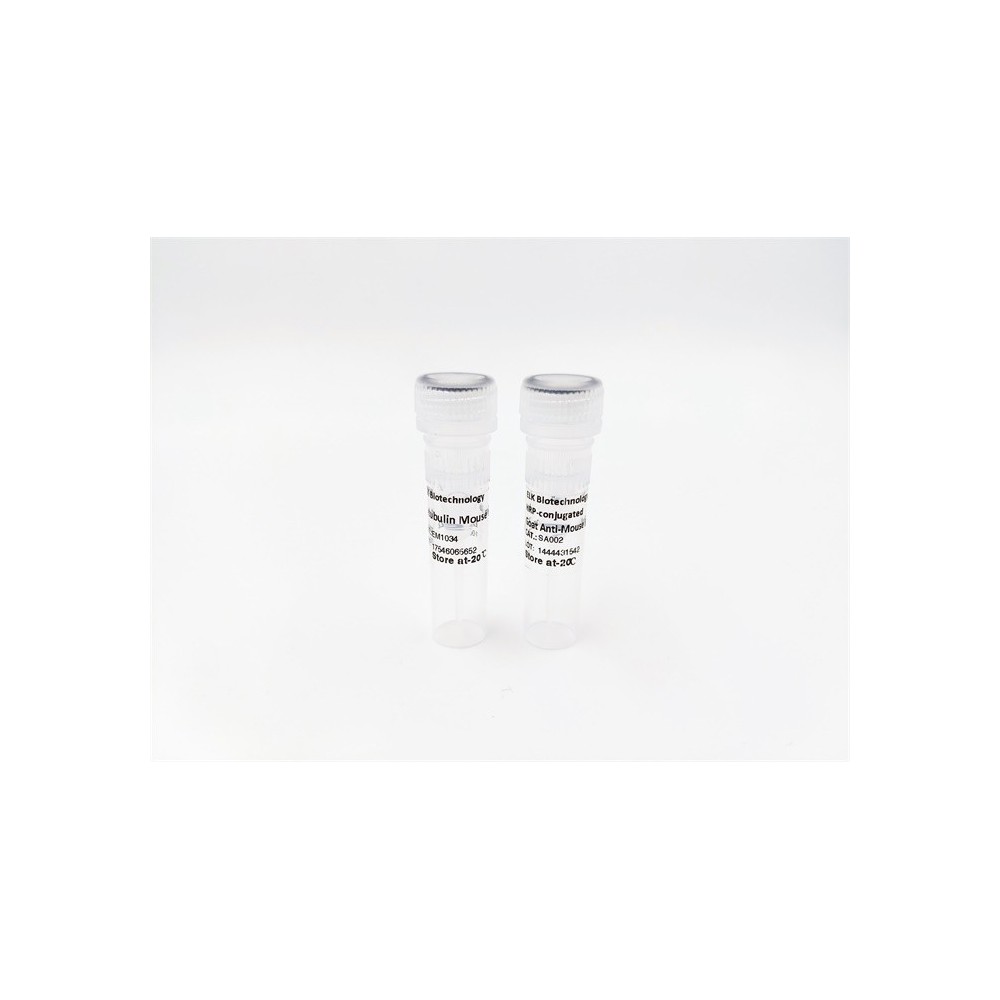

| ELK.No | ES14526 |
| Product name | NEO1 rabbit pAb |
| Reactivity | Human; Mouse;Rat |
| Applications | WB |
| Other name | |
| Size | 100μL |
| Unit price ($) | 248 |
| Human gene ID | 4756 |
| Human Swiss-Prot | Q92859 |
| Source | Rabbit |
| Isotype | IgG |
| Target | NEO1 |
| Fields | >>TGF-beta signaling pathway;>>Axon guidance;>>Cell adhesion molecules |
| Gene name | NEO1 IGDCC2 NGN |
| Protein name | NEO1 |
| Human gene link | View Human Gene |
| Human Swiss link | View Human Swiss-Prot |
| Mouse gene ID | |
| Mouse gene link | |
| Mouse Swiss-Prot | P97798 |
| Mouse Swiss link | View Mouse Swiss-Prot |
| Rat gene ID | |
| Rat gene link | |
| Rat Swiss-Prot | P97603 |
| Rat Swiss link | View Rat Swiss-Prot |
| Immunogen | Synthesized peptide derived from human NEO1 AA range: 82-132 |
| Specificity | This antibody detects endogenous levels of NEO1 at Human/Mouse/Rat |
| Formulation | Liquid in PBS containing 50% glycerol, 0.5% BSA and 0.02% sodium azide. |
| Clonality | Polyclonal |
| Dilution | WB 1:500-2000 |
| Purification | The antibody was affinity-purified from rabbit serum by affinity-chromatography using specific immunogen. |
| Concentration | 1 mg/ml |
| Storage stability | -20°C/1 year |
| Molecular Weight (Da) | 161kD |
| Observed band (KD) | |
| Background | This gene encodes a cell surface protein that is a member of the immunoglobulin superfamily. The encoded protein consists of four N-terminal immunoglobulin-like domains, six fibronectin type III domains, a transmembrane domain and a C-terminal internal domain that shares homology with the tumor suppressor candidate gene DCC. This protein may be involved in cell growth and differentiation and in cell-cell adhesion. Defects in this gene are associated with cell proliferation in certain cancers. Alternate splicing results in multiple transcript variants. [provided by RefSeq, Feb 2010], |
| Function | alternative products:Additional isoforms seem to exist,function:May be involved as a regulatory protein in the transition of undifferentiated proliferating cells to their differentiated state. May also function as a cell adhesion molecule in a broad spectrum of embryonic and adult tissues.,similarity:Belongs to the immunoglobulin superfamily. DCC family.,similarity:Contains 4 Ig-like C2-type (immunoglobulin-like) domains.,similarity:Contains 6 fibronectin type-III domains.,tissue specificity:Widely expressed and also in cancer cell lines., |
| Subcellular location | Cell membrane; Single-pass type I membrane protein. |
| Expression | Widely expressed and also in cancer cell lines. |


Use collapsible tabs for more detailed information that will help customers make a purchasing decision.
Ex: Shipping and return policies, size guides, and other common questions.