 Français
 English

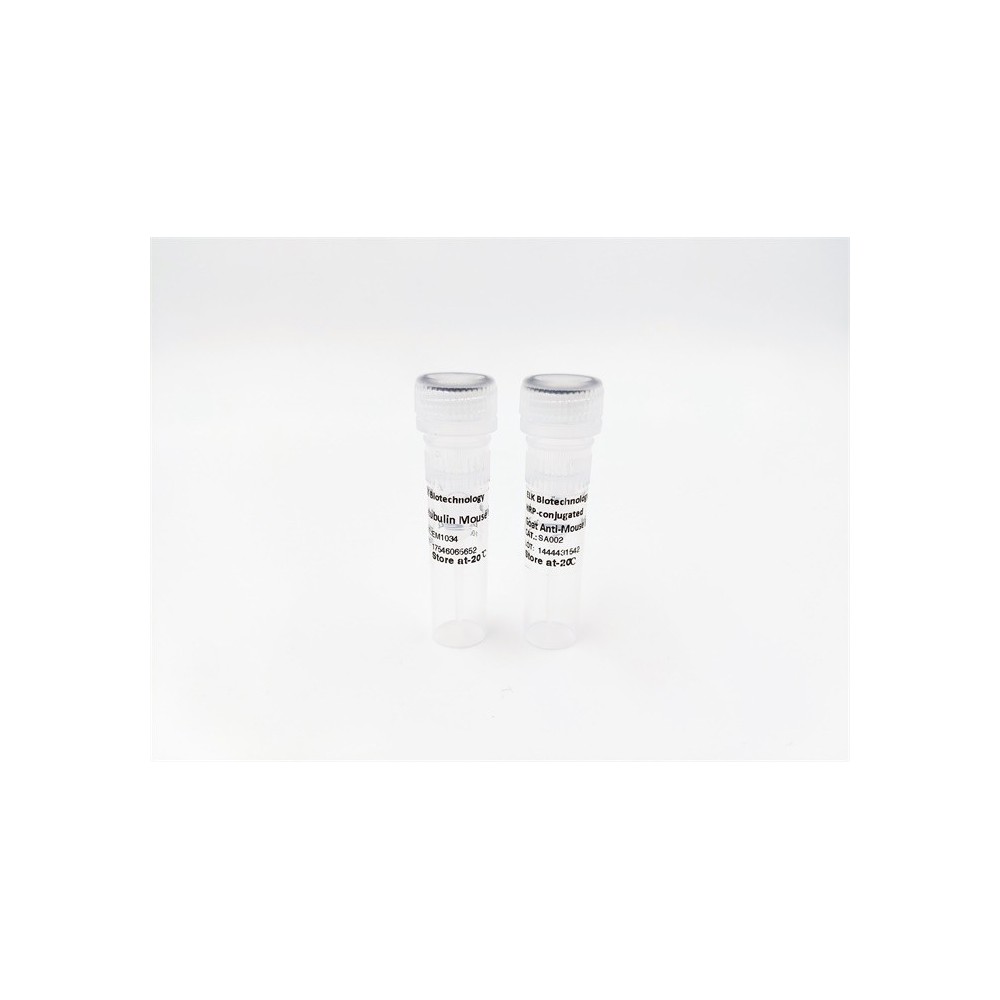

| ELK.No | ES15106 |
| Product name | LRP5 rabbit pAb |
| Reactivity | Human; Mouse |
| Applications | WB |
| Other name | |
| Size | 100μL |
| Unit price ($) | 248 |
| Human gene ID | 4041 |
| Human Swiss-Prot | O75197 |
| Source | Rabbit |
| Isotype | IgG |
| Target | LRP5 |
| Fields | >>mTOR signaling pathway;>>Wnt signaling pathway;>>Parathyroid hormone synthesis, secretion and action;>>Alzheimer disease;>>Pathways of neurodegeneration - multiple diseases;>>Pathways in cancer;>>Breast cancer;>>Hepatocellular carcinoma;>>Gastric cancer |
| Gene name | LRP5 LR3 LRP7 |
| Protein name | LRP5 |
| Human gene link | View Human Gene |
| Human Swiss link | View Human Swiss-Prot |
| Mouse gene ID | 16973 |
| Mouse gene link | View Mouse Gene |
| Mouse Swiss-Prot | Q91VN0 |
| Mouse Swiss link | View Mouse Swiss-Prot |
| Rat gene ID | |
| Rat gene link | |
| Rat Swiss-Prot | |
| Rat Swiss link | |
| Immunogen | Synthesized peptide derived from human LRP5 AA range: 1047-1097 |
| Specificity | This antibody detects endogenous levels of LRP5 at Human/Mouse |
| Formulation | Liquid in PBS containing 50% glycerol, 0.5% BSA and 0.02% sodium azide. |
| Clonality | Polyclonal |
| Dilution | WB 1:500-2000 |
| Purification | The antibody was affinity-purified from rabbit serum by affinity-chromatography using specific immunogen. |
| Concentration | 1 mg/ml |
| Storage stability | -20°C/1 year |
| Molecular Weight (Da) | 178kD |
| Observed band (KD) | |
| Background | This gene encodes a transmembrane low-density lipoprotein receptor that binds and internalizes ligands in the process of receptor-mediated endocytosis. This protein also acts as a co-receptor with Frizzled protein family members for transducing signals by Wnt proteins and was originally cloned on the basis of its association with type 1 diabetes mellitus in humans. This protein plays a key role in skeletal homeostasis and many bone density related diseases are caused by mutations in this gene. Mutations in this gene also cause familial exudative vitreoretinopathy. Alternative splicing results in multiple transcript variants. [provided by RefSeq, May 2014], |
| Function | disease:Defects in LRP5 are a cause of endosteal hyperostosis Worth type (WENHY) [MIM:144750]; also known as autosomal dominant osteosclerosis. WENHY is an autosomal dominant sclerosing bone dysplasia clinically characterizd by elongation of the mandible, increased gonial angle, flattened forehead, and the presence of a slowly enlarging osseous prominence of the hard palate (torus palatinus). Serum calcium, phosphorus and alkaline phosphatase levels are normal. Radiologically, it is characterized by early thickening of the endosteum of long bones, the skull and of the mandible. With advancing age, the trabeculae of the metaphysis become thickened. WENHY becomes clinically and radiologically evident by adolescence, does not cause deformity except in the skull and mandible, and is not associated with bone pain or fracture. Affected patients have normal height, proportion, intelligence and |
| Subcellular location | Membrane ; Single-pass type I membrane protein . Endoplasmic reticulum . Chaperoned to the plasma membrane by MESD. . |
| Expression | Widely expressed, with the highest level of expression in the liver and in aorta. |


Use collapsible tabs for more detailed information that will help customers make a purchasing decision.
Ex: Shipping and return policies, size guides, and other common questions.