 Français
 English

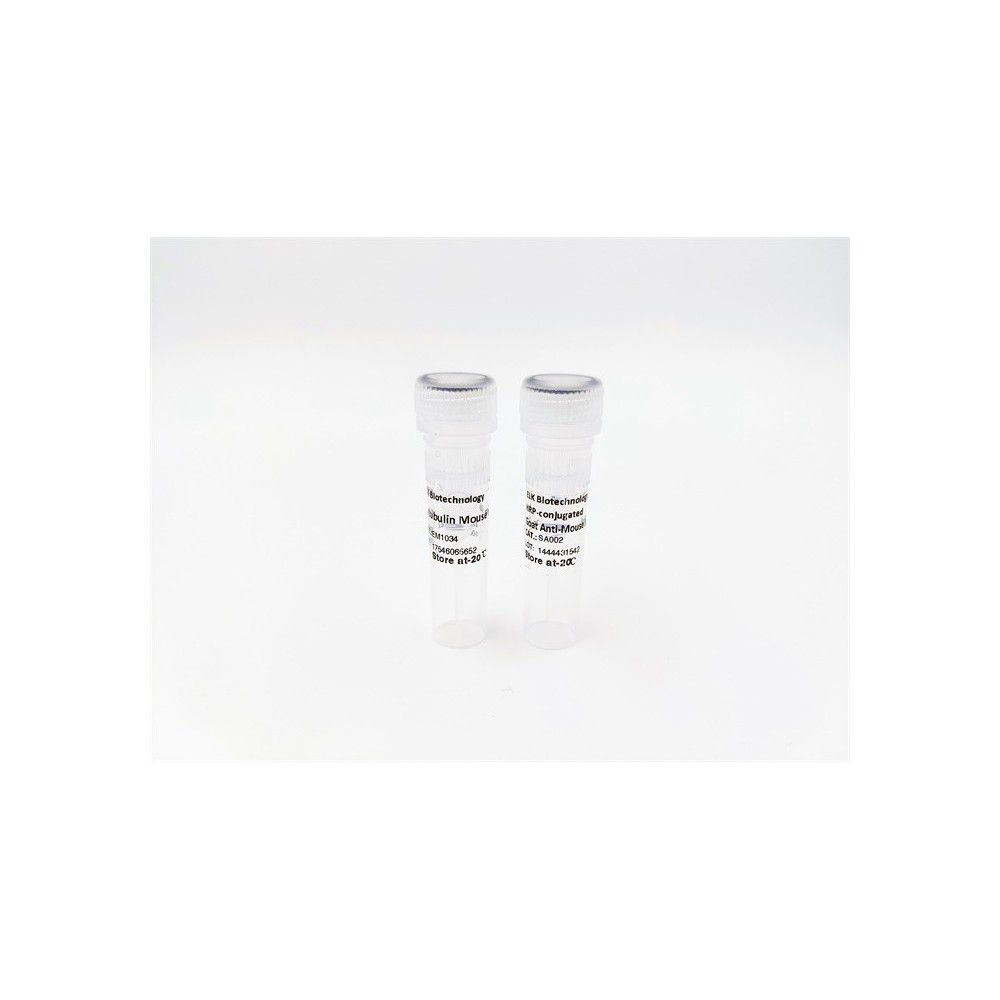

| ELK.No | ES15186 |
| Product name | LCAT rabbit pAb |
| Reactivity | Human; Mouse;Rat |
| Applications | WB;ELISA;IHC |
| Other name | |
| Size | 50μL |
| Unit price ($) | 148 |
| Human gene ID | 3931 |
| Human Swiss-Prot | P04180 |
| Source | Rabbit |
| Isotype | IgG |
| Target | LCAT |
| Fields | >>Glycerophospholipid metabolism;>>Cholesterol metabolism |
| Gene name | LCAT |
| Protein name | LCAT |
| Human gene link | View Human Gene |
| Human Swiss link | View Human Swiss-Prot |
| Mouse gene ID | 16816 |
| Mouse gene link | View Mouse Gene |
| Mouse Swiss-Prot | P16301 |
| Mouse Swiss link | View Mouse Swiss-Prot |
| Rat gene ID | |
| Rat gene link | |
| Rat Swiss-Prot | P18424 |
| Rat Swiss link | View Rat Swiss-Prot |
| Immunogen | Synthesized peptide derived from human LCAT AA range: 6-56 |
| Specificity | This antibody detects endogenous levels of LCAT at Human/Mouse/Rat |
| Formulation | Liquid in PBS containing 50% glycerol, 0.5% BSA and 0.02% sodium azide. |
| Clonality | Polyclonal |
| Dilution | WB 1:500-2000;IHC-p 1:50-300; ELISA 2000-20000 |
| Purification | The antibody was affinity-purified from rabbit serum by affinity-chromatography using specific immunogen. |
| Concentration | 1 mg/ml |
| Storage stability | -20°C/1 year |
| Molecular Weight (Da) | 48kD |
| Observed band (KD) | |
| Background | This gene encodes the extracellular cholesterol esterifying enzyme, lecithin-cholesterol acyltransferase. The esterification of cholesterol is required for cholesterol transport. Mutations in this gene have been found to cause fish-eye disease as well as LCAT deficiency. [provided by RefSeq, Jul 2008], |
| Function | catalytic activity:Phosphatidylcholine + a sterol = 1-acylglycerophosphocholine + a sterol ester.,disease:Defects in LCAT are a cause of fish-eye disease (FED) [MIM:136120]; also known as dyslipoproteinemic corneal dystrophy or alpha-LCAT deficiency. FED is due to a partial LCAT deficiency that affects only alpha-LCAT activity. It is characterized by low plasma HDL and corneal opacities due to accumulation of cholesterol deposits in the cornea ('fish-eye').,disease:Defects in LCAT are the cause of lecithin-cholesterol acyltransferase deficiency (LCATD) [MIM:245900]; also called Norum disease. LCATD is a disorder of lipoprotein metabolism characterized by inadequate esterification of plasmatic cholesterol. Two clinical forms are recognized: familial LCAT deficiency and fish-eye disease. Familial LCAT deficiency is associated with a complete absence of alpha and beta LCAT activities and re |
| Subcellular location | Secreted . Secreted into blood plasma (PubMed:3458198, PubMed:8820107, PubMed:10222237). Produced in astrocytes and secreted into cerebral spinal fluid (CSF) (PubMed:10222237). . |
| Expression | Detected in blood plasma (PubMed:3458198, PubMed:8820107, PubMed:10222237). Detected in cerebral spinal fluid (at protein level) (PubMed:10222237). Detected in liver (PubMed:3797244, PubMed:3458198). Expressed mainly in brain, liver and testes. |



Use collapsible tabs for more detailed information that will help customers make a purchasing decision.
Ex: Shipping and return policies, size guides, and other common questions.