 Français
 English

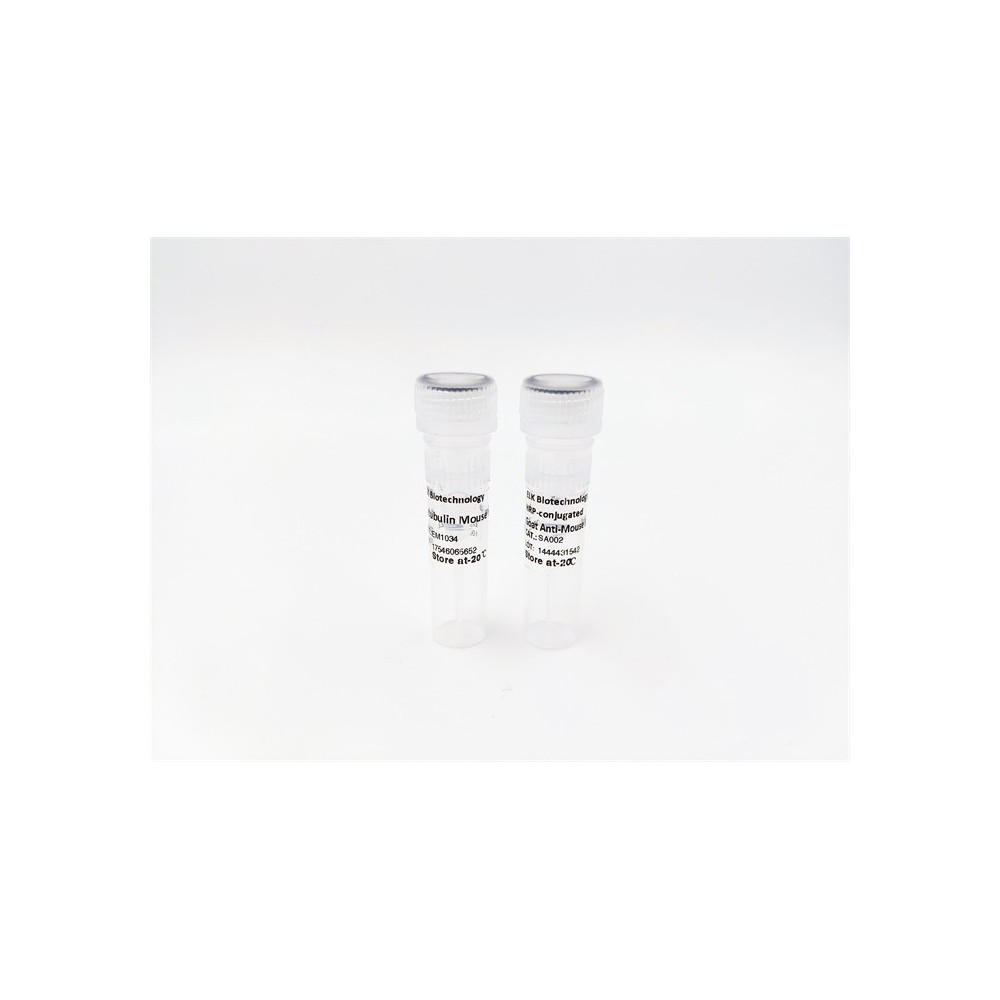

| ELK.No | ES15276 |
| Product name | KMO rabbit pAb |
| Reactivity | Human; Mouse;Rat |
| Applications | WB;ELISA;IHC |
| Other name | |
| Size | 50μL |
| Unit price ($) | 148 |
| Human gene ID | 8564 |
| Human Swiss-Prot | O15229 |
| Source | Rabbit |
| Isotype | IgG |
| Target | KMO |
| Fields | >>Tryptophan metabolism;>>Metabolic pathways;>>Biosynthesis of cofactors |
| Gene name | KMO |
| Protein name | KMO |
| Human gene link | View Human Gene |
| Human Swiss link | View Human Swiss-Prot |
| Mouse gene ID | 98256 |
| Mouse gene link | View Mouse Gene |
| Mouse Swiss-Prot | Q91WN4 |
| Mouse Swiss link | View Mouse Swiss-Prot |
| Rat gene ID | 59113 |
| Rat gene link | View Rat Gene |
| Rat Swiss-Prot | O88867 |
| Rat Swiss link | View Rat Swiss-Prot |
| Immunogen | Synthesized peptide derived from human KMO AA range: 413-463 |
| Specificity | This antibody detects endogenous levels of KMO at Human/Mouse/Rat |
| Formulation | Liquid in PBS containing 50% glycerol, 0.5% BSA and 0.02% sodium azide. |
| Clonality | Polyclonal |
| Dilution | WB 1:500-2000;IHC-p 1:50-300; ELISA 2000-20000 |
| Purification | The antibody was affinity-purified from rabbit serum by affinity-chromatography using specific immunogen. |
| Concentration | 1 mg/ml |
| Storage stability | -20°C/1 year |
| Molecular Weight (Da) | 53kD |
| Observed band (KD) | |
| Background | This gene encodes a mitochondrion outer membrane protein that catalyzes the hydroxylation of L-tryptophan metabolite, L-kynurenine, to form L-3-hydroxykynurenine. Studies in yeast identified this gene as a therapeutic target for Huntington disease. [provided by RefSeq, Oct 2011], |
| Function | catalytic activity:L-kynurenine + NADPH + O(2) = 3-hydroxy-L-kynurenine + NADP(+) + H(2)O.,cofactor:FAD.,function:Catalyzes the hydroxylation of L-kynurenine (L-Kyn) to form 3-hydroxy-L-kynurenine (L-3OHKyn). Required for synthesis of quinolinic acid, a neurotoxic NMDA receptor antagonist and potential endogenous inhibitor of NMDA receptor signaling in axonal targeting, synaptogenesis and apoptosis during brain development. Quinolinic acid may also affect NMDA receptor signaling in pancreatic beta cells, osteoblasts, myocardial cells, and the gastrointestinal tract.,miscellaneous:Increased in neuroinflammatory conditions. Inhibitors are investigated as potential neuroprotective drugs since they lead to an increased level of kynurenic acid, a neuroprotective NMDA receptor agonist.,pathway:Cofactor biosynthesis; NAD(+) biosynthesis; pyridine-2,3-dicarboxylate from L-kynurenine: step 1/3.,s |
| Subcellular location | Mitochondrion outer membrane ; Multi-pass membrane protein . |
| Expression | Highest levels in placenta and liver. Detectable in kidney. |



Use collapsible tabs for more detailed information that will help customers make a purchasing decision.
Ex: Shipping and return policies, size guides, and other common questions.