 Français
 English

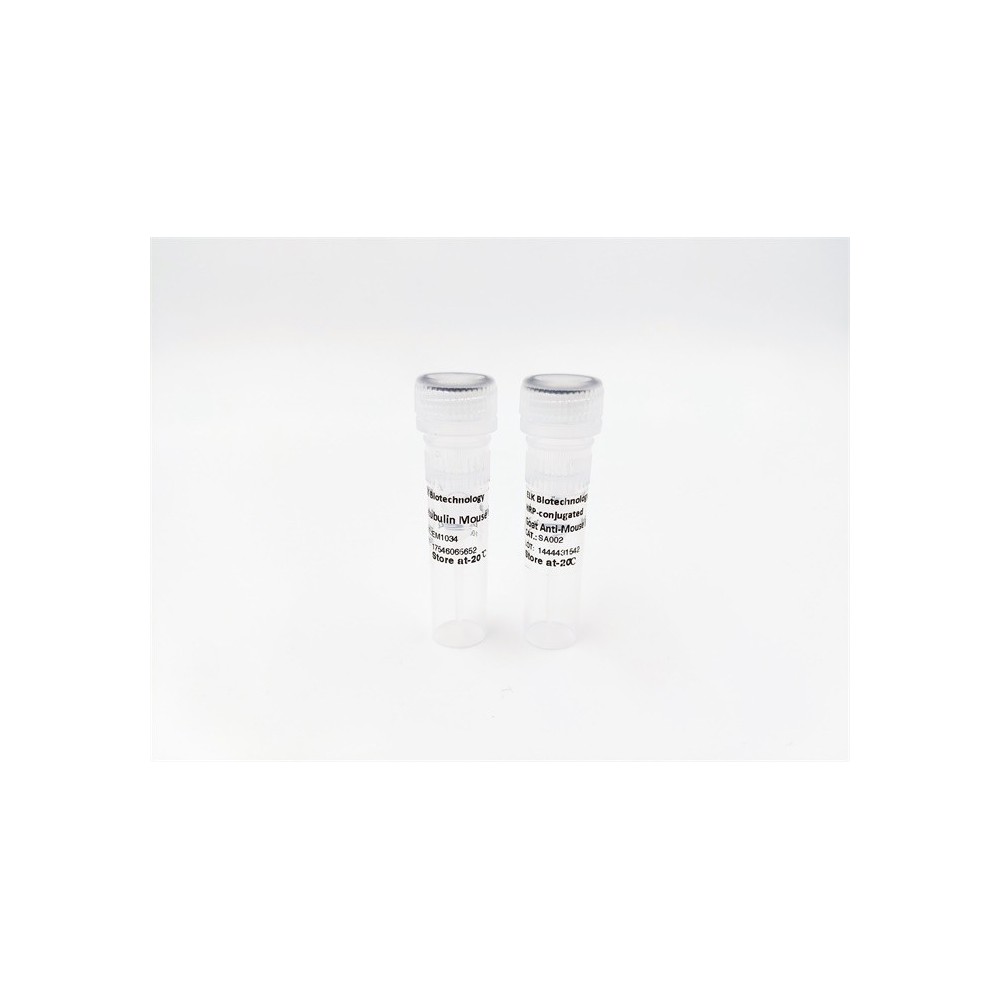

| ELK.No | ES15483 |
| Product name | IL1AP rabbit pAb |
| Reactivity | Human; Mouse;Rat |
| Applications | WB |
| Other name | Interleukin-1 receptor accessory protein (IL-1 receptor accessory protein) (IL-1RAcP) (Interleukin-1 receptor 3) (IL-1R-3) (IL-1R3) |
| Size | 50μL |
| Unit price ($) | 148 |
| Human gene ID | 3556 |
| Human Swiss-Prot | Q9NPH3 |
| Source | Rabbit |
| Isotype | IgG |
| Target | IL1AP |
| Fields | >>MAPK signaling pathway;>>Cytokine-cytokine receptor interaction;>>Th17 cell differentiation;>>Inflammatory mediator regulation of TRP channels |
| Gene name | IL1RAP C3orf13 IL1R3 |
| Protein name | IL1AP |
| Human gene link | View Human Gene |
| Human Swiss link | View Human Swiss-Prot |
| Mouse gene ID | 16180 |
| Mouse gene link | View Mouse Gene |
| Mouse Swiss-Prot | Q61730 |
| Mouse Swiss link | View Mouse Swiss-Prot |
| Rat gene ID | 25466 |
| Rat gene link | View Rat Gene |
| Rat Swiss-Prot | Q63621 |
| Rat Swiss link | View Rat Swiss-Prot |
| Immunogen | Synthesized peptide derived from human IL1AP AA range: 213-263 |
| Specificity | This antibody detects endogenous levels of IL1AP at Human/Mouse/Rat |
| Formulation | Liquid in PBS containing 50% glycerol, 0.5% BSA and 0.183% sodium azide. |
| Clonality | Polyclonal |
| Dilution | WB 1:500-2000 |
| Purification | The antibody was affinity-purified from rabbit serum by affinity-chromatography using specific immunogen. |
| Concentration | 1 mg/ml |
| Storage stability | -20°C/1 year |
| Molecular Weight (Da) | |
| Observed band (KD) | 65kD |
| Background | Interleukin 1 induces synthesis of acute phase and proinflammatory proteins during infection, tissue damage, or stress, by forming a complex at the cell membrane with an interleukin 1 receptor and an accessory protein. This gene encodes the interleukin 1 receptor accessory protein. The protein is a necessary part of the interleukin 1 receptor complex which initiates signalling events that result in the activation of interleukin 1-responsive genes. Alternative splicing of this gene results in two transcript variants encoding two different isoforms, one membrane-bound and one soluble. The ratio of soluble to membrane-bound forms increases during acute-phase induction or stress. [provided by RefSeq, Nov 2009], |
| Function | function:Mediates interleukin-1-dependent activation of NF-kappa-B. Isoform 1 is part of the membrane-bound form of the IL-1 receptor. Signaling involves formation of a ternary complex containing IL1R1, TOLLIP, MYD88, and IRAK1 or IRAK2. Isoform 2 modulates the response to interleukins by associating with soluble IL1R1 and enhancing interleukin-binding to the decoy receptor.,induction:Phorbol ester treatment causes down-regulation of isoform 1 and induction of isoform 2.,similarity:Belongs to the interleukin-1 receptor family.,similarity:Contains 1 TIR domain.,similarity:Contains 3 Ig-like C2-type (immunoglobulin-like) domains.,tissue specificity:Detected in liver, skin, placenta, thymus and lung., |
| Subcellular location | [Isoform 1]: Cell membrane; Single-pass type I membrane protein.; [Isoform 2]: Secreted.; [Isoform 3]: Secreted. |
| Expression | Detected in liver, skin, placenta, thymus and lung. Isoform 4 is predominantly expressed in brain. Overexpressed on candidate chronic myeloid leukemia (CML) stem cells, hematopoietic stem cells and mononuclear cells of patients with acute myeloid leukemia (AML). Overexpressed in patients with chronic obstructive pulmonary disease (COPD). Expressed in T-helper 1 (Th1) and T-helper 2 (Th2) cell subsets (PubMed:10653850). |


Use collapsible tabs for more detailed information that will help customers make a purchasing decision.
Ex: Shipping and return policies, size guides, and other common questions.