 Français
 English

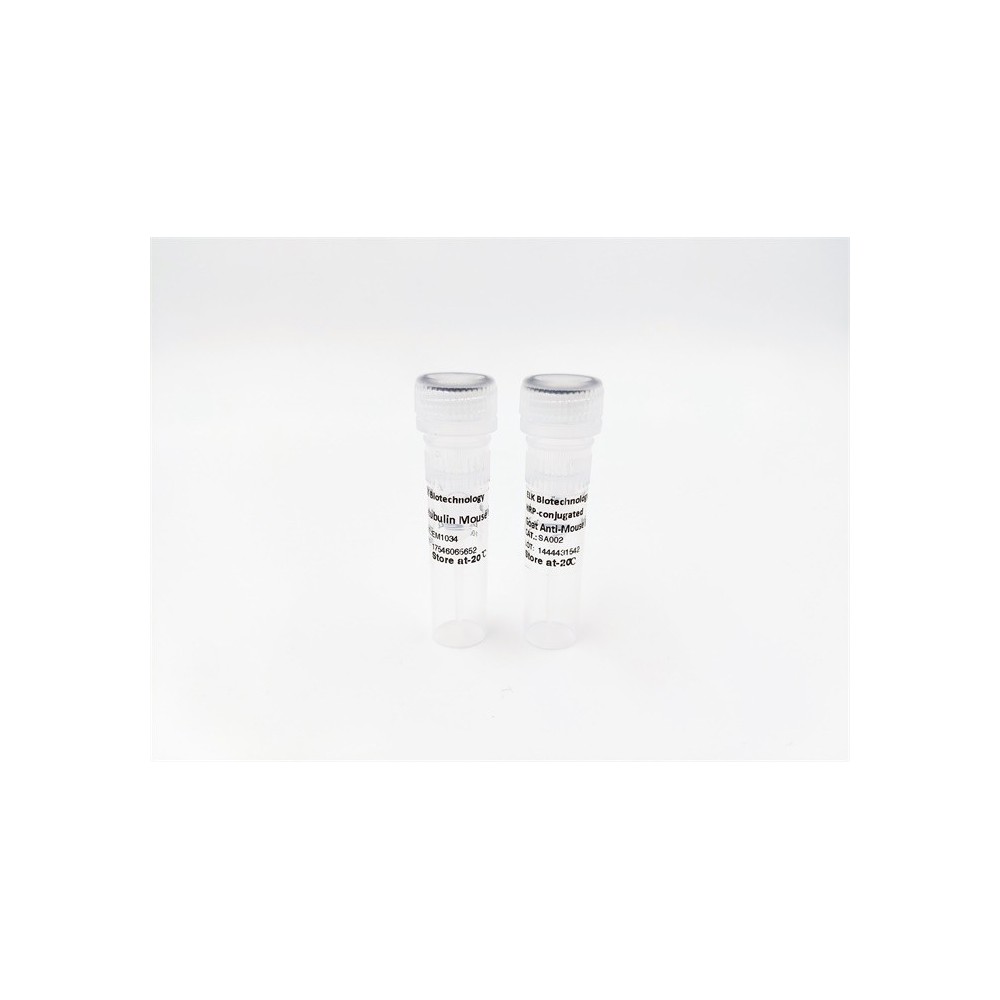

| ELK.No | ES15545 |
| Product name | HYOU1 rabbit pAb |
| Reactivity | Human; Mouse;Rat |
| Applications | WB |
| Other name | |
| Size | 50μL |
| Unit price ($) | 148 |
| Human gene ID | 10525 |
| Human Swiss-Prot | Q9Y4L1 |
| Source | Rabbit |
| Isotype | IgG |
| Target | HYOU1 |
| Fields | >>Protein processing in endoplasmic reticulum |
| Gene name | HYOU1 GRP170 ORP150 |
| Protein name | HYOU1 |
| Human gene link | View Human Gene |
| Human Swiss link | View Human Swiss-Prot |
| Mouse gene ID | 12282 |
| Mouse gene link | View Mouse Gene |
| Mouse Swiss-Prot | Q9JKR6 |
| Mouse Swiss link | View Mouse Swiss-Prot |
| Rat gene ID | 192235 |
| Rat gene link | View Rat Gene |
| Rat Swiss-Prot | Q63617 |
| Rat Swiss link | View Rat Swiss-Prot |
| Immunogen | Synthesized peptide derived from human HYOU1 AA range: 865-915 |
| Specificity | This antibody detects endogenous levels of HYOU1 at Human/Mouse/Rat |
| Formulation | Liquid in PBS containing 50% glycerol, 0.5% BSA and 0.02% sodium azide. |
| Clonality | Polyclonal |
| Dilution | WB 1:500-2000 |
| Purification | The antibody was affinity-purified from rabbit serum by affinity-chromatography using specific immunogen. |
| Concentration | 1 mg/ml |
| Storage stability | -20°C/1 year |
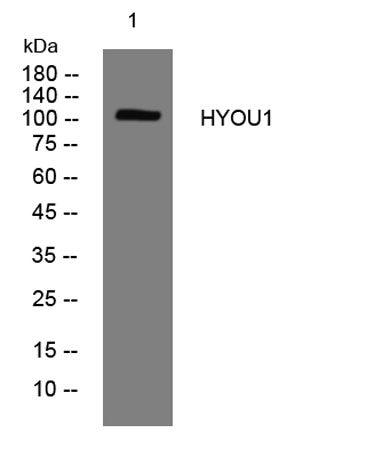
| Molecular Weight (Da) | 110kD |
| Observed band (KD) | |
| Background | The protein encoded by this gene belongs to the heat shock protein 70 family. This gene uses alternative transcription start sites. A cis-acting segment found in the 5' UTR is involved in stress-dependent induction, resulting in the accumulation of this protein in the endoplasmic reticulum (ER) under hypoxic conditions. The protein encoded by this gene is thought to play an important role in protein folding and secretion in the ER. Since suppression of the protein is associated with accelerated apoptosis, it is also suggested to have an important cytoprotective role in hypoxia-induced cellular perturbation. This protein has been shown to be up-regulated in tumors, especially in breast tumors, and thus it is associated with tumor invasiveness. This gene also has an alternative translation initiation site, resulting in a protein that lacks the N-terminal signal peptide. This signal peptide-lacking protein, which is only 3 amino acids shorter than the mature protein in the ER, is thought to have a housekeeping function in the cytosol. In rat, this protein localizes to both the ER by a carboxy-terminal peptide sequence and to mitochondria by an amino-terminal targeting signal. Alternative splicing results in multiple transcript variants. [provided by RefSeq, Mar 2014], |
| Function | function:Has a pivotal role in cytoprotective cellular mechanisms triggered by oxygen deprivation. May play a role as a molecular chaperone and participate in protein folding.,induction:By hypoxia and also by 2-deoxyglucose or tunicamycin.,similarity:Belongs to the heat shock protein 70 family.,subunit:Part a large chaperone multiprotein complex comprising CABP1, DNAJB11, HSP90B1, HSPA5, HYOU, PDIA2, PDIA4, PPIB, SDF2L1, UGT1A1 and very small amounts of ERP29, but not, or at very low levels, CALR nor CANX.,tissue specificity:Highly expressed in tissues that contain well-developed endoplasmic reticulum and synthesize large amounts of secretory proteins. Highly expressed in liver and pancreas and lower expression in brain and kidney. Also expressed in macrophages within aortic atherosclerotic plaques, and in breast cancers., |
| Subcellular location | Endoplasmic reticulum lumen. |
| Expression | Highly expressed in tissues that contain well-developed endoplasmic reticulum and synthesize large amounts of secretory proteins. Highly expressed in liver and pancreas and lower expression in brain and kidney. Also expressed in macrophages within aortic atherosclerotic plaques, and in breast cancers. |

Use collapsible tabs for more detailed information that will help customers make a purchasing decision.
Ex: Shipping and return policies, size guides, and other common questions.