 Français
 English
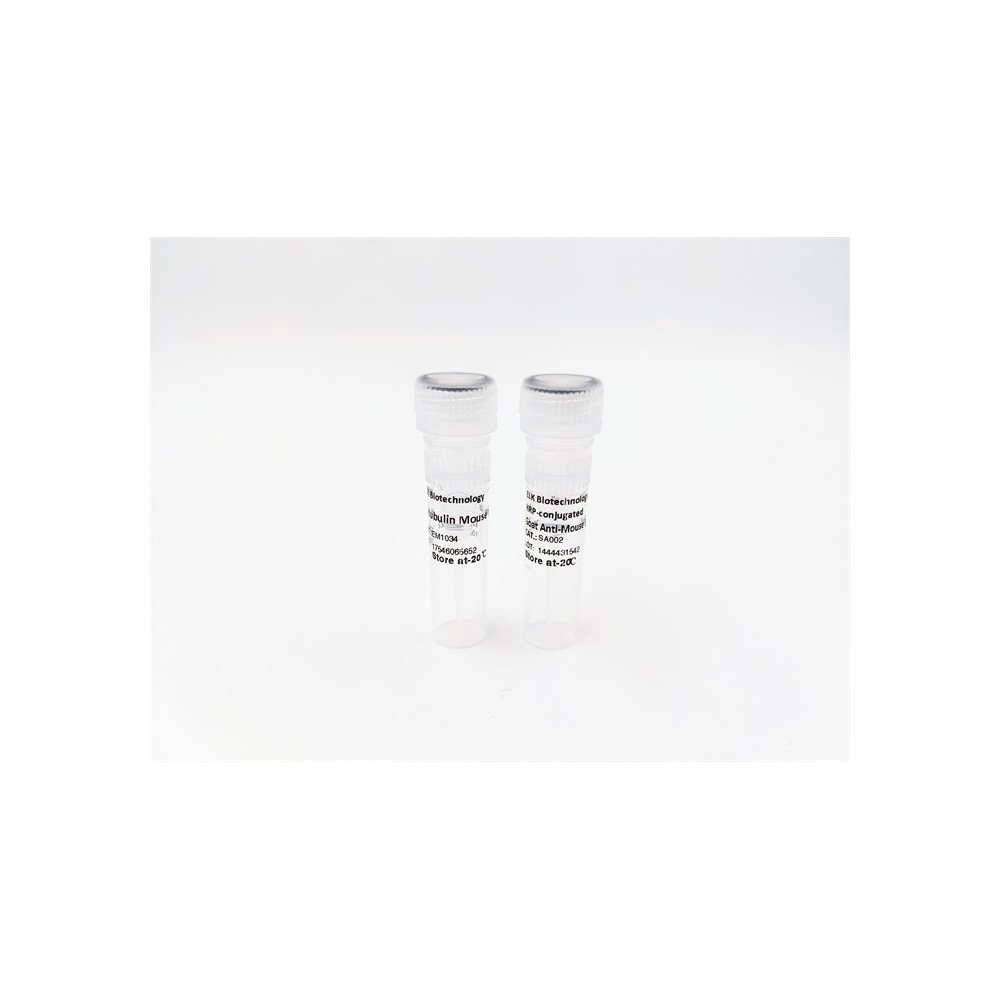

| ELK.No | ES1585 |
| Product name | ACOT8 rabbit pAb |
| Reactivity | Human;Rat;Mouse; |
| Applications | WB;IHC;IF;ELISA |
| Other name | ACOT8; ACTEIII; PTE1; PTE2; Acyl-coenzyme A thioesterase 8; Acyl-CoA thioesterase 8; Choloyl-coenzyme A thioesterase; HIV-Nef-associated acyl-CoA thioesterase; PTE-2; Peroxisomal acyl-coenzyme A thioester hydrolase 1; PTE-1; Peroxisomal lon |
| Size | 100μL |
| Unit price ($) | 248 |
| Human gene ID | 10005 |
| Human Swiss-Prot | O14734 |
| Source | Rabbit |
| Isotype | IgG |
| Target | ACOT8 |
| Fields | >>Primary bile acid biosynthesis;>>Metabolic pathways;>>Peroxisome |
| Gene name | ACOT8 |
| Protein name | Acyl-coenzyme A thioesterase 8 |
| Human gene link | View Human Gene |
| Human Swiss link | View Human Swiss-Prot |
| Mouse gene ID | |
| Mouse gene link | |
| Mouse Swiss-Prot | P58137 |
| Mouse Swiss link | View Mouse Swiss-Prot |
| Rat gene ID | |
| Rat gene link | |
| Rat Swiss-Prot | |
| Rat Swiss link | |
| Immunogen | The antiserum was produced against synthesized peptide derived from human ACOT8. AA range:131-180 |
| Specificity | ACOT8 Polyclonal Antibody detects endogenous levels of ACOT8 protein. |
| Formulation | Liquid in PBS containing 50% glycerol, 0.5% BSA and 0.02% sodium azide. |
| Clonality | Polyclonal |
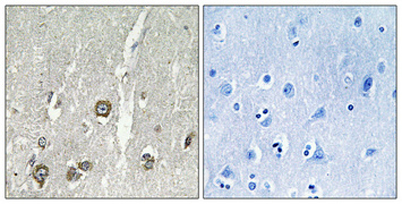
| Dilution | Western Blot: 1/500 - 1/2000. Immunohistochemistry: 1/100 - 1/300. Immunofluorescence: 1/200 - 1/1000. ELISA: 1/40000. Not yet tested in other applications. |
| Purification | The antibody was affinity-purified from rabbit antiserum by affinity-chromatography using epitope-specific immunogen. |
| Concentration | 1 mg/ml |
| Storage stability | -20°C/1 year |
| Molecular Weight (Da) | |
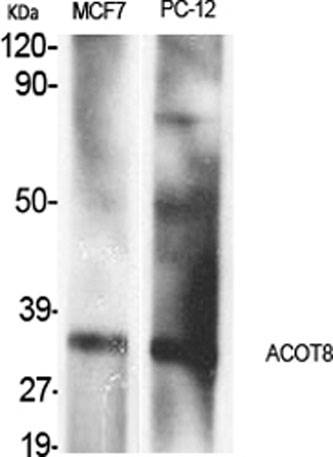
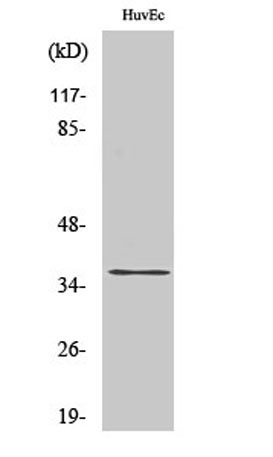
| Observed band (KD) | 36kD |
| Background | The protein encoded by this gene is a peroxisomal thioesterase that appears to be involved more in the oxidation of fatty acids rather than in their formation. The encoded protein can bind to the human immunodeficiency virus-1 protein Nef, and mediate Nef-induced down-regulation of CD4 in T-cells. [provided by RefSeq, Oct 2010], |
| Function | catalytic activity:Choloyl-CoA + H(2)O = cholate + CoA.,function:Acyl-CoA thioesterases are a group of enzymes that catalyze the hydrolysis of acyl-CoAs to the free fatty acid and coenzyme A (CoASH), providing the potential to regulate intracellular levels of acyl-CoAs, free fatty acids and CoASH. May mediate Nef-induced down-regulation of CD4. Major thioesterase in peroxisomes. Competes with BAAT (Bile acid CoA: amino acid N-acyltransferase) for bile acid-CoA substrate (such as chenodeoxycholoyl-CoA). Shows a preference for medium-length fatty acyl-CoAs (By similarity). May be involved in the metabolic regulation of peroxisome proliferation.,induction:Regulated by peroxisome proliferator (such as Clofibrate), via the peroxisome proliferator-activated receptors (PPARs).,similarity:Belongs to the C/M/P thioester hydrolase family.,subunit:Interacts with HIV-1 Nef.,tissue specificity:Detect |
| Subcellular location | Peroxisome matrix . Predominantly localized in the peroxisome but a localization to the cytosol cannot be excluded. . |
| Expression | Detected in a T-cell line (at protein level). Ubiquitous (PubMed:9153233, PubMed:9299485). |

Use collapsible tabs for more detailed information that will help customers make a purchasing decision.
Ex: Shipping and return policies, size guides, and other common questions.