 Français
 English

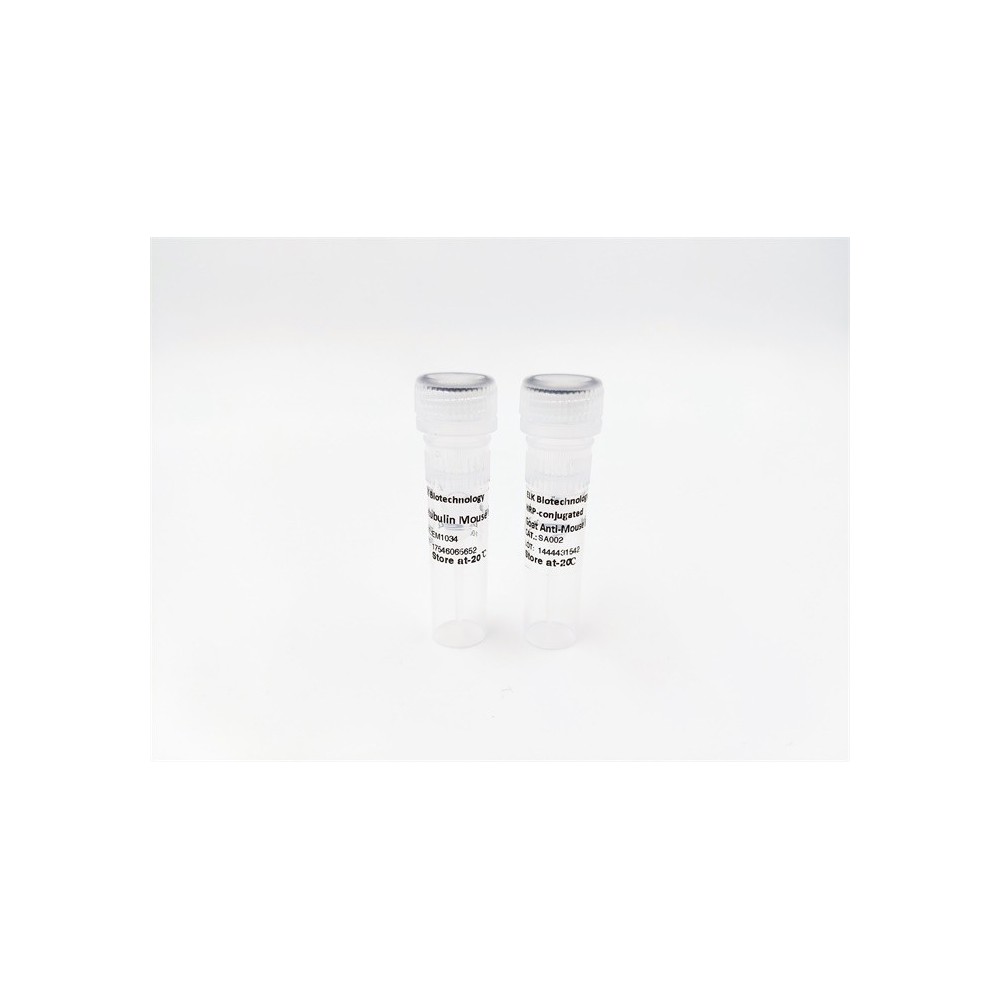

| ELK.No | ES16482 |
| Product name | FGD4 rabbit pAb |
| Reactivity | Human; Mouse;Rat |
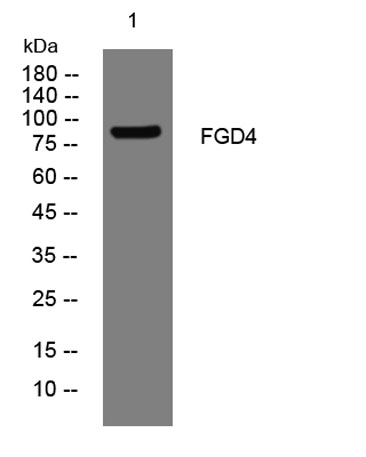
| Applications | WB |
| Other name | FYVE, RhoGEF and PH domain-containing protein 4 (Actin filament-binding protein frabin) (FGD1-related F-actin-binding protein) (Zinc finger FYVE domain-containing protein 6) |
| Size | 50μL |
| Unit price ($) | 148 |
| Human gene ID | 121512 |
| Human Swiss-Prot | Q96M96 |
| Source | Rabbit |
| Isotype | IgG |
| Target | FGD4 |
| Fields | |
| Gene name | FGD4 FRABP ZFYVE6 |
| Protein name | FGD4 |
| Human gene link | View Human Gene |
| Human Swiss link | View Human Swiss-Prot |
| Mouse gene ID | 224014 |
| Mouse gene link | View Mouse Gene |
| Mouse Swiss-Prot | Q91ZT5 |
| Mouse Swiss link | View Mouse Swiss-Prot |
| Rat gene ID | 246174 |
| Rat gene link | View Rat Gene |
| Rat Swiss-Prot | O88387 |
| Rat Swiss link | View Rat Swiss-Prot |
| Immunogen | Synthesized peptide derived from human FGD4 AA range: 291-341 |
| Specificity | This antibody detects endogenous levels of FGD4 at Human/Mouse/Rat |
| Formulation | Liquid in PBS containing 50% glycerol, 0.5% BSA and 0.315% sodium azide. |
| Clonality | Polyclonal |
| Dilution | WB 1:500-2000 |
| Purification | The antibody was affinity-purified from rabbit serum by affinity-chromatography using specific immunogen. |
| Concentration | 1 mg/ml |
| Storage stability | -20°C/1 year |
| Molecular Weight (Da) | |
| Observed band (KD) | 85kD |
| Background | This gene encodes a protein that is involved in the regulation of the actin cytoskeleton and cell shape. This protein contains an actin filament-binding domain, which together with its Dbl homology domain and one of its pleckstrin homology domains, can form microspikes. This protein can activate MAPK8 independently of the actin filament-binding domain, and it is also involved in the activation of CDC42 via the exchange of bound GDP for free GTP. The activation of CDC42 also enables this protein to play a role in mediating the cellular invasion of Cryptosporidium parvum, an intracellular parasite that infects the gastrointestinal tract. Mutations in this gene can cause Charcot-Marie-Tooth disease type 4H (CMT4H), a disorder of the peripheral nervous system. Multiple alternatively spliced transcript variants encoding different isoforms have been found for this gene. [provided by RefSeq, Jan 2015], |
| Function | alternative products:Additional isoforms seem to exist,disease:Defects in FGD4 are the cause of Charcot-Marie-Tooth disease type 4H (CMT4H) [MIM:609311]; also known as Charcot-Marie-Tooth disease neuropathy type 4H. CMT4H is a recessive demyelinating form of Charcot-Marie-Tooth disease, the most common inherited disorder of the peripheral nervous system. Charcot-Marie-Tooth disease is classified in two main groups on the basis of electrophysiologic properties and histopathology: primary peripheral demyelinating neuropathy and primary peripheral axonal neuropathy. Demyelinating CMT neuropathies are characterized by severely reduced nerve conduction velocities (less than 38 m/sec), segmental demyelination and remyelination with onion bulb formations on nerve biopsy, slowly progressive distal muscle atrophy and weakness, absent deep tendon reflexes, and hollow feet. By convention, autosomal |
| Subcellular location | Cytoplasm, cytoskeleton . Cell projection, filopodium . Concentrated in filopodia and poorly detected at lamellipodia. Binds along the sides of actin fibers (By similarity). . |
| Expression | Expressed in different tissues, including brain, cerebellum, peripheral nerve, skeletal muscle, heart, uterus, placenta and testis. |

Use collapsible tabs for more detailed information that will help customers make a purchasing decision.
Ex: Shipping and return policies, size guides, and other common questions.