 Français
 English

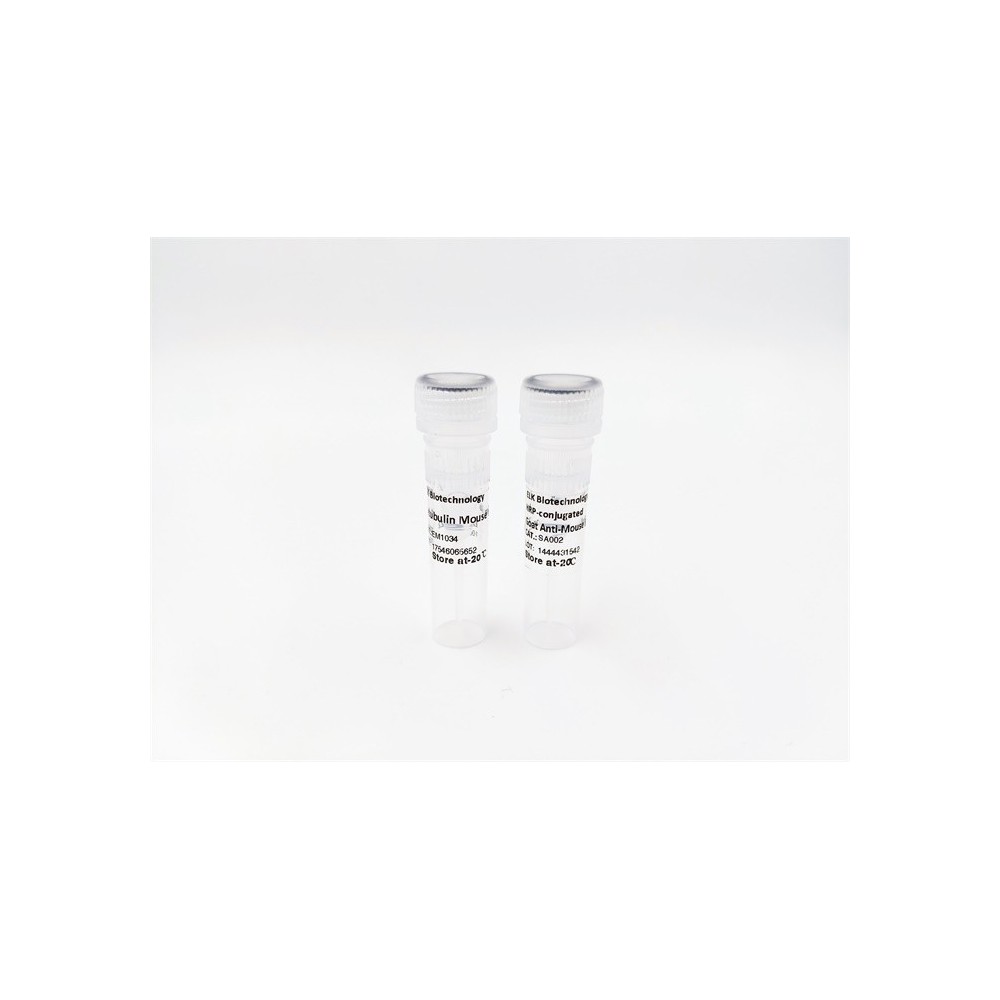

| ELK.No | ES16504 |
| Product name | FBX32 rabbit pAb |
| Reactivity | Human; Mouse;Rat |
| Applications | WB |
| Other name | F-box only protein 32 (Atrogin-1) (Muscle atrophy F-box protein) (MAFbx) |
| Size | 50μL |
| Unit price ($) | 148 |
| Human gene ID | 114907 |
| Human Swiss-Prot | Q969P5 |
| Source | Rabbit |
| Isotype | IgG |
| Target | FBX32 |
| Fields | >>FoxO signaling pathway |
| Gene name | FBXO32 |
| Protein name | FBX32 |
| Human gene link | View Human Gene |
| Human Swiss link | View Human Swiss-Prot |
| Mouse gene ID | 67731 |
| Mouse gene link | View Mouse Gene |
| Mouse Swiss-Prot | Q9CPU7 |
| Mouse Swiss link | View Mouse Swiss-Prot |
| Rat gene ID | 171043 |
| Rat gene link | View Rat Gene |
| Rat Swiss-Prot | Q91Z62 |
| Rat Swiss link | View Rat Swiss-Prot |
| Immunogen | Synthesized peptide derived from human FBX32 AA range: 217-267 |
| Specificity | This antibody detects endogenous levels of FBX32 at Human/Mouse/Rat |
| Formulation | Liquid in PBS containing 50% glycerol, 0.5% BSA and 0.66% sodium azide. |
| Clonality | Polyclonal |
| Dilution | WB 1:500-2000 |
| Purification | The antibody was affinity-purified from rabbit serum by affinity-chromatography using specific immunogen. |
| Concentration | 1 mg/ml |
| Storage stability | -20°C/1 year |
| Molecular Weight (Da) | |
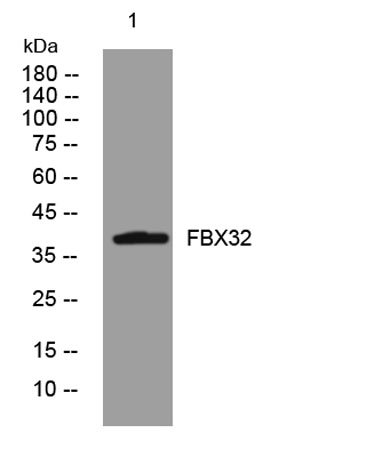
| Observed band (KD) | 38kD |
| Background | This gene encodes a member of the F-box protein family which is characterized by an approximately 40 amino acid motif, the F-box. The F-box proteins constitute one of the four subunits of the ubiquitin protein ligase complex called SCFs (SKP1-cullin-F-box), which function in phosphorylation-dependent ubiquitination. The F-box proteins are divided into 3 classes: Fbws containing WD-40 domains, Fbls containing leucine-rich repeats, and Fbxs containing either different protein-protein interaction modules or no recognizable motifs. The protein encoded by this gene belongs to the Fbxs class and contains an F-box domain. This protein is highly expressed during muscle atrophy, whereas mice deficient in this gene were found to be resistant to atrophy. This protein is thus a potential drug target for the treatment of muscle atrophy. Alternative splicing results in multiple transcript variants encoding different isoforms. [provided by RefSeq, Jun 2011], |
| Function | function:Substrate recognition component of a (SKP1-CUL1-F-box protein) E3 ubiquitin-protein ligase complex which mediates the ubiquitination and subsequent proteasomal degradation of target proteins. Probably recognizes and binds to phosphorylated target proteins during skeletal muscle atrophy. Recognizes TERF1.,pathway:Protein modification; protein ubiquitination.,similarity:Contains 1 F-box domain.,subunit:Part of the SCF (SKP1-CUL1-F-box) E3 ubiquitin-protein ligase complex SCF(FBXO32) formed of CUL1, SKP1A, RBX1 and FBXO32.,tissue specificity:Specifically expressed in cardiac and skeletal muscle., |
| Subcellular location | Cytoplasm . Nucleus . Shuttles between cytoplasm and the nucleus. |
| Expression | Specifically expressed in cardiac and skeletal muscle. |

Use collapsible tabs for more detailed information that will help customers make a purchasing decision.
Ex: Shipping and return policies, size guides, and other common questions.