 Français
 English

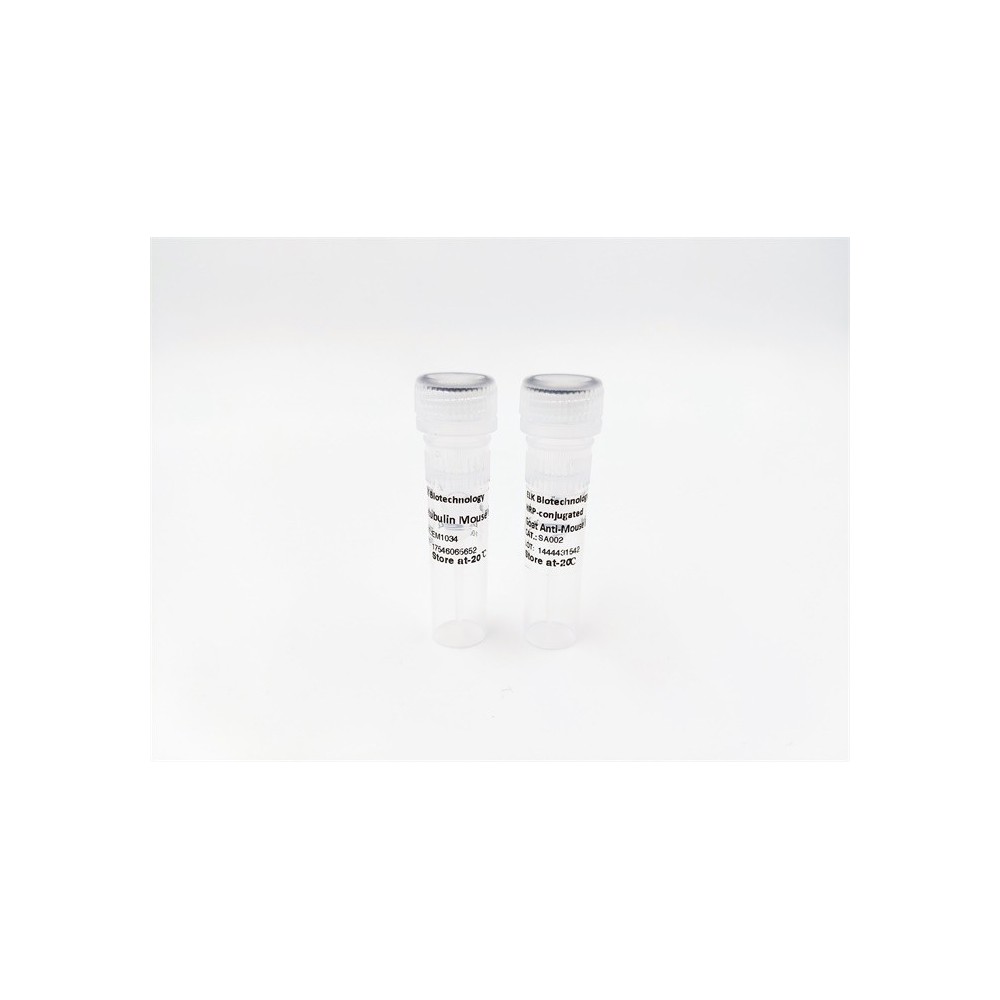

| ELK.No | ES16647 |
| Product name | EYS rabbit pAb |
| Reactivity | Human;Rat;Mouse; |
| Applications | IHC;IF |
| Other name | |
| Size | 50μL |
| Unit price ($) | 148 |
| Human gene ID | 346007 |
| Human Swiss-Prot | Q5T1H1 |
| Source | Rabbit |
| Isotype | IgG |
| Target | EYS |
| Fields | |
| Gene name | EYS C6orf178 C6orf179 C6orf180 EGFL10 EGFL11 SPAM UNQ9424/PRO34591 |
| Protein name | EYS |
| Human gene link | View Human Gene |
| Human Swiss link | View Human Swiss-Prot |
| Mouse gene ID | |
| Mouse gene link | |
| Mouse Swiss-Prot | |
| Mouse Swiss link | |
| Rat gene ID | |
| Rat gene link | |
| Rat Swiss-Prot | |
| Rat Swiss link | |
| Immunogen | Synthesized peptide derived from human EYS AA range: 2780-2830 |
| Specificity | This antibody detects endogenous levels of EYS at Human |
| Formulation | Liquid in PBS containing 50% glycerol, 0.5% BSA and 0.02% sodium azide. |
| Clonality | Polyclonal |
| Dilution | IHC-p 1:50-200 |
| Purification | The antibody was affinity-purified from rabbit serum by affinity-chromatography using specific immunogen. |
| Concentration | 1 mg/ml |
| Storage stability | -20°C/1 year |
| Molecular Weight (Da) | 348kD |
| Observed band (KD) | |
| Background | The product of this gene contains multiple epidermal growth factor (EGF)-like and LamG domains. The protein is expressed in the photoreceptor layer of the retina, and the gene is mutated in autosomal recessive retinitis pigmentosa. Multiple transcript variants encoding different isoforms have been found for this gene. [provided by RefSeq, Dec 2008], |
| Function | disease:Defects in EGFL10 are the cause of retinitis pigmentosa type 25 (RP25) [MIM:602772]. RP leads to degeneration of retinal photoreceptor cells. Patients suffer of night blindness, beginning at approximately 25 years of age, and deterioration of visual acuity (central vision), beginning at approximately 30 years of age. By age 55 to 60 years, many affected subjects had no perception of light in either eye.,function:Required to maintain the integrity of photoreceptor cells.,miscellaneous:Although the protein is conserved in Drosophila, the gene encoding the orthologous protein is inactive in rodents.,similarity:Belongs to the EYS family.,similarity:Contains 27 EGF-like domains.,similarity:Contains 5 laminin G-like domains.,subcellular location:Localizes in the photoreceptor cells layer.,tissue specificity:Present in retina., |
| Subcellular location | Cell projection, cilium, photoreceptor outer segment . Cell projection, cilium . Cytoplasm, cytoskeleton, cilium axoneme . Cytoplasm, cytoskeleton, microtubule organizing center, centrosome . Secreted, extracellular space, extracellular matrix, interphotoreceptor matrix . Localizes to discrete puncta at, or adjacent to, the photoreceptor connecting cilium (PubMed:27737822). Highly expressed in cone photoreceptor outer segments (PubMed:27737822). Weakly expressed in rod photoreceptor outer segments (By similarity). May localize to the cilium axoneme (PubMed:27846257). May also be secreted into the interphotoreceptor extracellular matrix (PubMed:27737822). . |
| Expression | Expressed in retina (at protein level) (PubMed:18976725, PubMed:18836446, PubMed:27737822, PubMed:27846257). Isoform 1: Detected in retina (PubMed:27846257). Isoform 2: Detected in retina (PubMed:27846257). Isoform 3: Strongly expressed in retina and testis (PubMed:27846257). Isoform 4: Strongly expressed in testis, and weakly expressed in retina (PubMed:27846257). |


Use collapsible tabs for more detailed information that will help customers make a purchasing decision.
Ex: Shipping and return policies, size guides, and other common questions.