 Français
 English

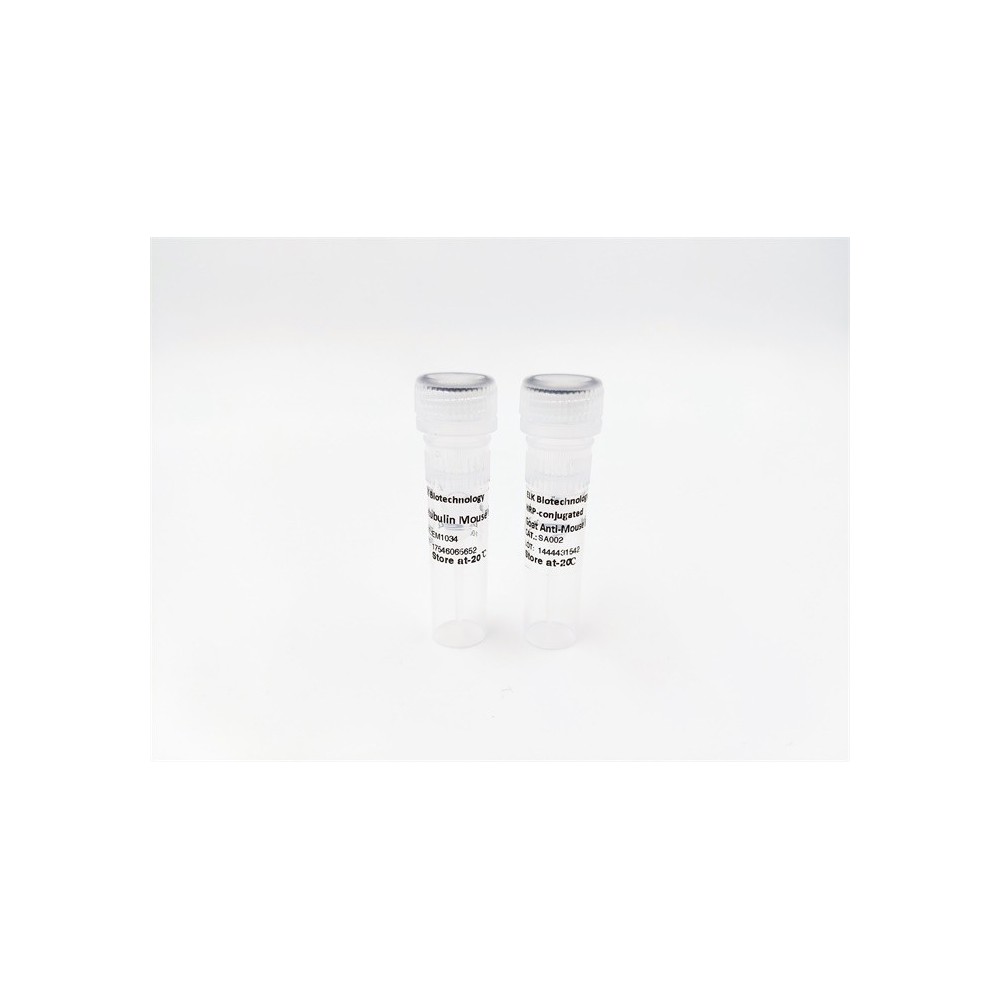

| ELK.No | ES16765 |
| Product name | eIF5A/eIF5A2 rabbit pAb |
| Reactivity | Human; Mouse; Rat |
| Applications | WB; ELISA |
| Other name | Eukaryotic translation initiation factor 5A-1 (eIF-5A-1;eIF-5A1;Eukaryotic initiation factor 5A isoform 1;eIF-5A;Rev-binding factor;eIF-4D) |
| Size | 100μL |
| Unit price ($) | 248 |
| Human gene ID | 1984 |
| Human Swiss-Prot | P63241/Q9GZV4 |
| Source | Rabbit |
| Isotype | IgG |
| Target | eIF5A/eIF5A2 |
| Fields | |
| Gene name | EIF5A |
| Protein name | eIF5A/eIF5A2 |
| Human gene link | |
| Human Swiss link | View Human Swiss-Prot |
| Mouse gene ID | |
| Mouse gene link | |
| Mouse Swiss-Prot | |
| Mouse Swiss link | |
| Rat gene ID | |
| Rat gene link | |
| Rat Swiss-Prot | |
| Rat Swiss link | |
| Immunogen | Synthesized peptide derived from human eIF5A/eIF5A2 |
| Specificity | This antibody detects endogenous levels of human eIF5A/eIF5A2 |
| Formulation | Liquid in PBS containing 50% glycerol, 0.5% BSA and 0.02% sodium azide. |
| Clonality | Polyclonal |
| Dilution | WB 1:500-2000, ELISA(peptide)1:5000-20000 |
| Purification | The antibody was affinity-purified from mouse ascites by affinity-chromatography using specific immunogen. |
| Concentration | 1 mg/ml |
| Storage stability | -20°C/1 year |
| Molecular Weight (Da) | |
| Observed band (KD) | 17kD |
| Background | |
| Function | function:The precise role of eIF-5A in protein biosynthesis is not known but it functions by promoting the formation of the first peptide bond.,PTM:eIF-5A seems to be the only eukaryotic protein to have an hypusine residue which is a post-translational modification of a lysine by the addition of a butylamino group (from spermidine).,similarity:Belongs to the eIF-5A family.,subunit:Found in a complex with Ran and XPO4. The hypusine modification increases the interaction with XPO4.,tissue specificity:Expressed in umbilical vein endothelial cells and several cancer cell lines (at protein level)., |
| Subcellular location | Cytoplasm . Nucleus . Endoplasmic reticulum membrane ; Peripheral membrane protein ; Cytoplasmic side . Hypusine modification promotes the nuclear export and cytoplasmic localization and there was a dynamic shift in the localization from predominantly cytoplasmic to primarily nuclear under apoptotic inducing conditions (PubMed:19379712, PubMed:27306458). Nuclear export of hypusinated protein is mediated by XPO4 (PubMed:10944119, PubMed:27306458). . |
| Expression | Expressed in umbilical vein endothelial cells and several cancer cell lines (at protein level). |


Use collapsible tabs for more detailed information that will help customers make a purchasing decision.
Ex: Shipping and return policies, size guides, and other common questions.