 Français
 English
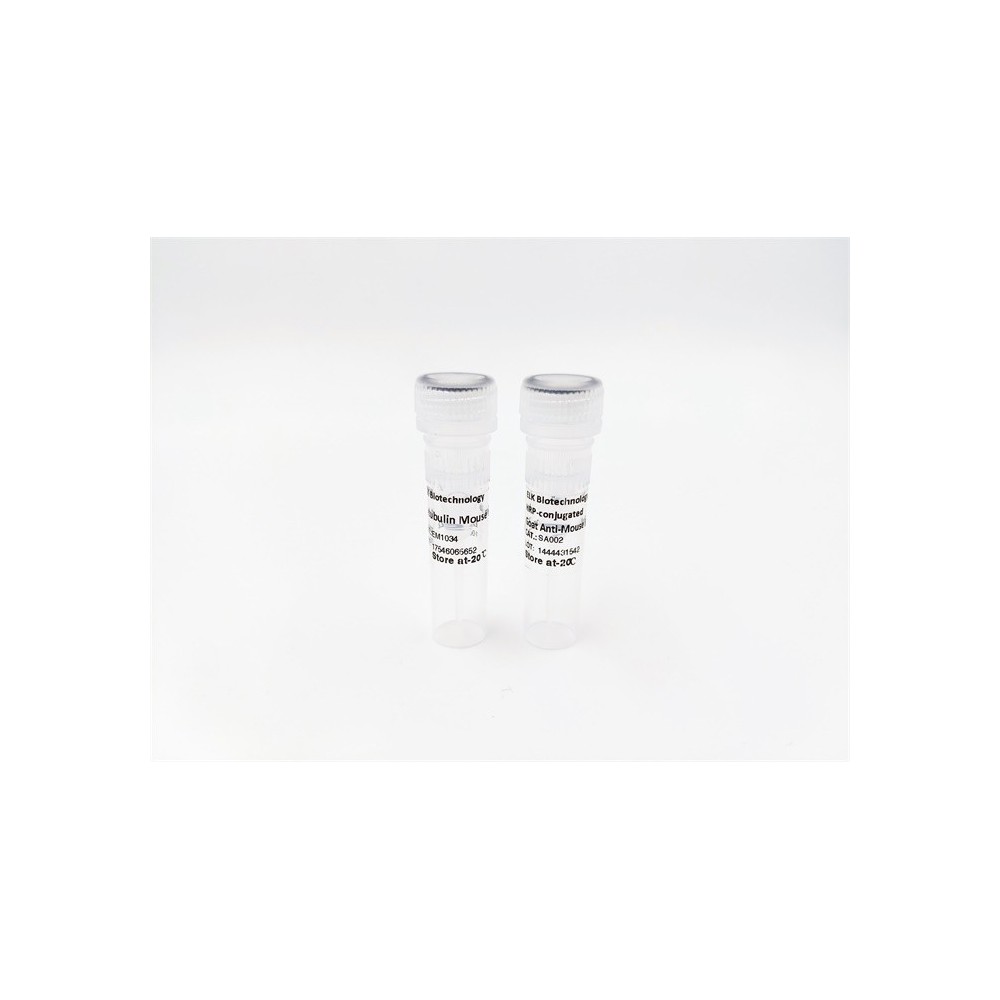

| ELK.No | ES1734 |
| Product name | Atrophin-1 rabbit pAb |
| Reactivity | Human;Mouse;Rat |
| Applications | WB;ELISA |
| Other name | ATN1; D12S755E; DRPLA; Atrophin-1; Dentatorubral-pallidoluysian atrophy protein |
| Size | 100μL |
| Unit price ($) | 248 |
| Human gene ID | 1822 |
| Human Swiss-Prot | P54259 |
| Source | Rabbit |
| Isotype | IgG |
| Target | Atrophin-1 |
| Fields | |
| Gene name | ATN1 |
| Protein name | Atrophin-1 |
| Human gene link | View Human Gene |
| Human Swiss link | View Human Swiss-Prot |
| Mouse gene ID | 13498 |
| Mouse gene link | View Mouse Gene |
| Mouse Swiss-Prot | O35126 |
| Mouse Swiss link | View Mouse Swiss-Prot |
| Rat gene ID | 29515 |
| Rat gene link | View Rat Gene |
| Rat Swiss-Prot | P54258 |
| Rat Swiss link | View Rat Swiss-Prot |
| Immunogen | The antiserum was produced against synthesized peptide derived from human ATN1. AA range:81-130 |
| Specificity | Atrophin-1 Polyclonal Antibody detects endogenous levels of Atrophin-1 protein. |
| Formulation | Liquid in PBS containing 50% glycerol, 0.5% BSA and 0.02% sodium azide. |
| Clonality | Polyclonal |
| Dilution | Western Blot: 1/500 - 1/2000. ELISA: 1/5000. Not yet tested in other applications. |
| Purification | The antibody was affinity-purified from rabbit antiserum by affinity-chromatography using epitope-specific immunogen. |
| Concentration | 1 mg/ml |
| Storage stability | -20°C/1 year |
| Molecular Weight (Da) | |
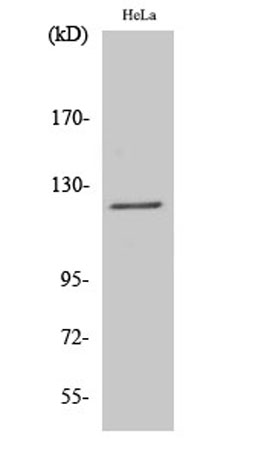
| Observed band (KD) | 130kD |
| Background | Dentatorubral pallidoluysian atrophy (DRPLA) is a rare neurodegenerative disorder characterized by cerebellar ataxia, myoclonic epilepsy, choreoathetosis, and dementia. The disorder is related to the expansion from 7-35 copies to 49-93 copies of a trinucleotide repeat (CAG/CAA) within this gene. The encoded protein includes a serine repeat and a region of alternating acidic and basic amino acids, as well as the variable glutamine repeat. Alternative splicing results in two transcripts variants that encode the same protein. [provided by RefSeq, Jul 2016], |
| Function | disease:Defects in ATN1 are the cause of dentatorubral-pallidoluysian atrophy (DRPLA) [MIM:125370]. DRPLA is an autosomal dominant neurodegenerative disorder characterized by a loss of neurons in the dentate nucleus, rubrum, glogus pallidus and Luys'body. Clinical features are myoclonus epilepsy, dementia, and cerebellar ataxia. Onset of the disease occurs usually in the second decade of life and death in the fourth.,polymorphism:The poly-Gln region of ATN1 is highly polymorphic (7 to 23 repeats) in the normal population and is expanded to about 49-75 repeats in DRPLA and HRS patients. Longer expansions result in earlier onset and more severe clinical manifestations of the disease.,subunit:Interacts with BAIAP2, WWP1, WWP2, WWP3 and RERE.,tissue specificity:Relatively high levels in the brain, ovary, testis and prostate. Lower levels in the liver, thymus and leukocytes., |
| Subcellular location | Nucleus. Cytoplasm, perinuclear region. Cell junction . Shuttles between nucleus and cytoplasm. Colocalizes with FAT1 in the perinuclear area, at cell-cell junctions and leading edges of cells (By similarity). Colocalizes with MTG8 in discrete nuclear dots. Proteolytic fragment F1 appears to remain in nucleus. Fragment F2 is exported into the cytoplasm. Fragment F2 from mutant sequences with longer poly-Gln (polyQ) tracts are additionally located to the cytoplasmic membrane and to certain organelles. . |
| Expression | Widely expressed in various tissues including heart, lung, kidney, ovary, testis, prostate, placenta, skeletal Low levels in the liver, thymus and leukocytes. In the adult brain, broadly expressed in amygdala, caudate nucleus, corpus callosum, hippocampus, hypothalamus, substantia nigra, subthalamic nucleus, and thalamus. High levels in fetal tissues, especially brain. |

Use collapsible tabs for more detailed information that will help customers make a purchasing decision.
Ex: Shipping and return policies, size guides, and other common questions.