 Français
 English
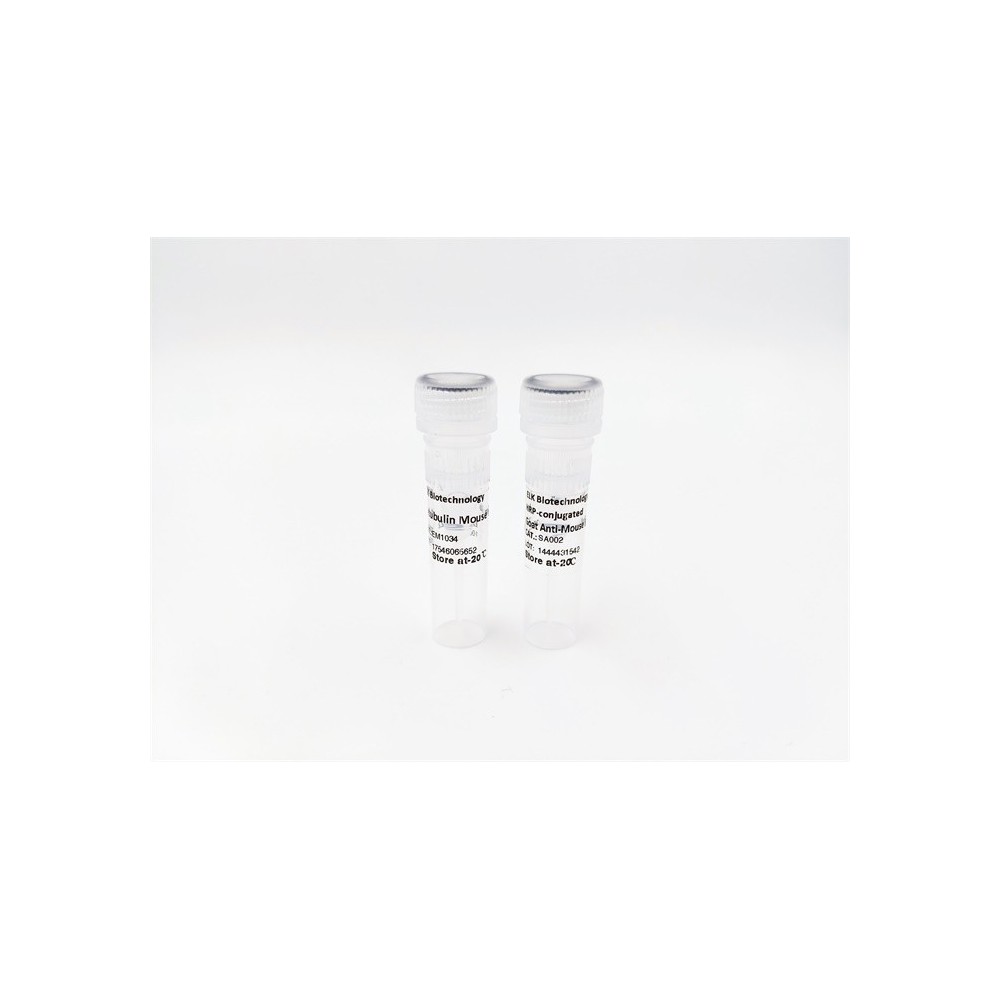

| ELK.No | ES17452 |
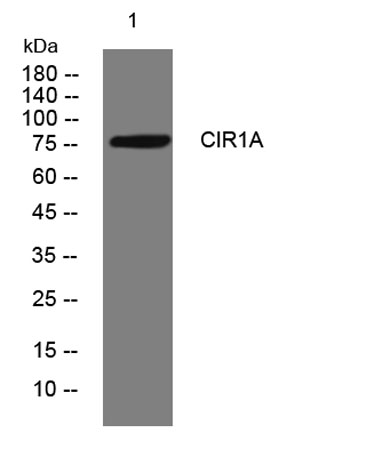
| Product name | CIR1A rabbit pAb |
| Reactivity | Human; Mouse |
| Applications | WB |
| Other name | |
| Size | 50μL |
| Unit price ($) | 148 |
| Human gene ID | 84916 |
| Human Swiss-Prot | Q969X6 |
| Source | Rabbit |
| Isotype | IgG |
| Target | CIR1A |
| Fields | >>Ribosome biogenesis in eukaryotes |
| Gene name | CIRH1A KIAA1988 |
| Protein name | CIR1A |
| Human gene link | View Human Gene |
| Human Swiss link | View Human Swiss-Prot |
| Mouse gene ID | 21771 |
| Mouse gene link | View Mouse Gene |
| Mouse Swiss-Prot | Q8R2N2 |
| Mouse Swiss link | View Mouse Swiss-Prot |
| Rat gene ID | |
| Rat gene link | |
| Rat Swiss-Prot | |
| Rat Swiss link | |
| Immunogen | Synthesized peptide derived from human CIR1A AA range: 313-363 |
| Specificity | This antibody detects endogenous levels of CIR1A at Human/Mouse |
| Formulation | Liquid in PBS containing 50% glycerol, 0.5% BSA and 0.02% sodium azide. |
| Clonality | Polyclonal |
| Dilution | WB 1:500-2000 |
| Purification | The antibody was affinity-purified from rabbit serum by affinity-chromatography using specific immunogen. |
| Concentration | 1 mg/ml |
| Storage stability | -20°C/1 year |
| Molecular Weight (Da) | 75kD |
| Observed band (KD) | |
| Background | This gene encodes a WD40-repeat-containing protein that is localized to the nucleolus. Mutation of this gene causes North American Indian childhood cirrhosis, a severe intrahepatic cholestasis that results in transient neonatal jaundice, and progresses to periportal fibrosis and cirrhosis in childhood and adolescence. Alternative splicing results in multiple transcript variants. [provided by RefSeq, Jan 2016], |
| Function | disease:Defects in CIRH1A are the cause of North American Indian childhood cirrhosis (NAIC) [MIM:604901]. NAIC is a severe autosomal recessive intrahepatic cholestasis, originally described in Ojibway-Cree children from northwestern Quebec. NAIC typically presents with transient neonatal jaundice, in a child who is otherwise healthy, and progresses to biliary cirrhosis and portal hypertension. Biochemical and histopathological features suggest involvement of the bile ducts rather than of the bile canaliculi. They include elevated gamma glutamyltransferase and alkaline phosphatase levels, and, typically, marked fibrosis around bile ducts. Clinically, NAIC is distinct from other nonsyndromic familial cholestases because of its marked cholangiopathic features and severe degree of fibrosis on liver histology.,similarity:Contains 11 WD repeats., |
| Subcellular location | Nucleus, nucleolus . Chromosome . Found predominantly at the fibrillar center. . |
| Expression |

Use collapsible tabs for more detailed information that will help customers make a purchasing decision.
Ex: Shipping and return policies, size guides, and other common questions.