 Français
 English
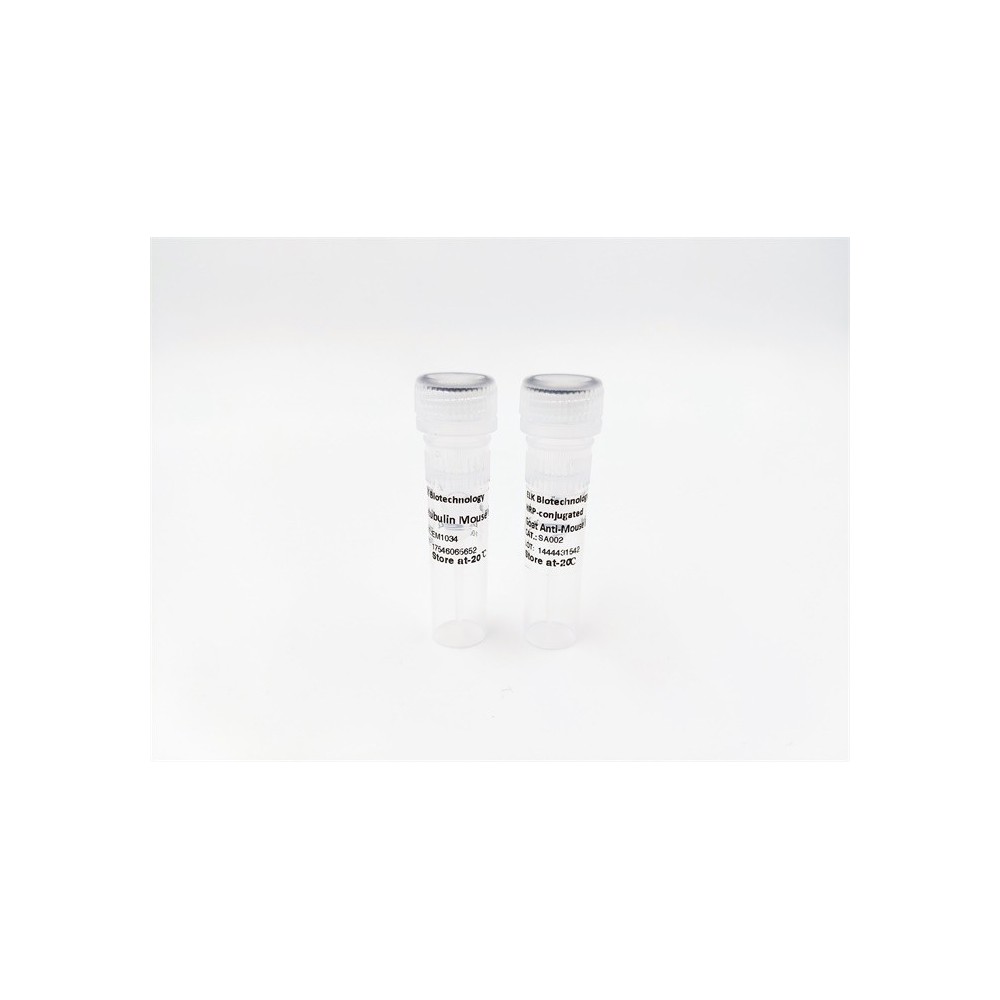

| ELK.No | ES17760 |
| Product name | CCL18 Rabbit pAb |
| Reactivity | Human;Rat;Mouse; |
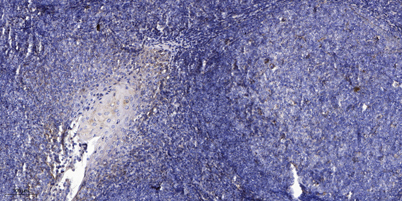
| Applications | IHC; ELISA |
| Other name | C-C motif chemokine 18 (Alternative macrophage activation-associated CC chemokine 1;AMAC-1;CC chemokine PARC;Dendritic cell chemokine 1;DC-CK1;Macrophage inflammatory protein 4;MIP-4;Pulmonary and activation-regulated chemokine;Small-inducible cytokine A18) [Cleaved into: CCL18(1-68); CCL18(3-69); CCL18(4-69)] |
| Size | 100μL |
| Unit price ($) | 248 |
| Human gene ID | 6362 |
| Human Swiss-Prot | P55774 |
| Source | Rabbit |
| Isotype | IgG |
| Target | CCL18 |
| Fields | >>Cytokine-cytokine receptor interaction;>>Viral protein interaction with cytokine and cytokine receptor;>>Chemokine signaling pathway |
| Gene name | CCL18 AMAC1 DCCK1 MIP4 PARC SCYA18 |
| Protein name | CCL18 |
| Human gene link | |
| Human Swiss link | View Human Swiss-Prot |
| Mouse gene ID | |
| Mouse gene link | |
| Mouse Swiss-Prot | |
| Mouse Swiss link | |
| Rat gene ID | |
| Rat gene link | |
| Rat Swiss-Prot | |
| Rat Swiss link | |
| Immunogen | Synthesized peptide derived from human CCL18 AA range: 1-80 |
| Specificity | This antibody detects endogenous levels of human CCL18 |
| Formulation | Liquid in PBS containing 50% glycerol, 0.5% BSA and 0.02% sodium azide. |
| Clonality | Polyclonal |
| Dilution | IHC-p 1:50-200, ELISA(peptide)1:5000-20000 |
| Purification | The antibody was affinity-purified from mouse ascites by affinity-chromatography using specific immunogen. |
| Concentration | 1 mg/ml |
| Storage stability | -20°C/1 year |
| Molecular Weight (Da) | |
| Observed band (KD) | |
| Background | This antimicrobial gene is one of several Cys-Cys (CC) cytokine genes clustered on the q arm of chromosome 17. Cytokines are a family of secreted proteins involved in immunoregulatory and inflammatory processes. The CC cytokines are proteins characterized by two adjacent cysteines. The cytokine encoded by this gene displays chemotactic activity for naive T cells, CD4+ and CD8+ T cells and nonactivated lymphocytes, but not for monocytes or granulocytes. This chemokine attracts naive T lymphocytes toward dendritic cells and activated macrophages in lymph nodes. It may play a role in both humoral and cell-mediated immunity responses. [provided by RefSeq, Sep 2014], |
| Function | function:Chemotactic factor that attracts lymphocytes but not monocytes or granulocytes. May be involved in B-cell migration into B-cell follicles in lymph nodes. Attracts naive T-lymphocytes toward dendritic cells and activated macrophages in lymph nodes, has chemotactic activity for naive T-cells, CD4+ and CD8+ T-cells and thus may play a role in both humoral and cell-mediated immunity responses.,induction:Specifically induced in macrophages by IL-4, IL-13, and IL-10. Expression is inhibited by IFN-gamma while glucocorticoids exert a slightly positive synergistic effect in combination with IL-4. Strongly induced in several human cell lines, including monocytic U937 cells, by phorbol myristate acetate (PMA). Induced in PBMC by staphylococcal enterotoxins SEA and SEB.,mass spectrometry: PubMed:11745396,online information:CCL18 entry,similarity:Belongs to the intercrine beta (chemokine CC |
| Subcellular location | Secreted. |
| Expression | Expressed at high levels in lung, lymph nodes, placenta, bone marrow, dendritic cells present in germinal centers and T-cell areas of secondary lymphoid organs and macrophages derived from peripheral blood monocytes. Not expressed by peripheral blood monocytes and a monocyte-to-macrophage differentiation is a prerequisite for expression. Expressed in synovial fluids from patients with rheumatoid and septic arthritis and in ovarian carcinoma ascitic fluid. |

Use collapsible tabs for more detailed information that will help customers make a purchasing decision.
Ex: Shipping and return policies, size guides, and other common questions.