 Français
 English
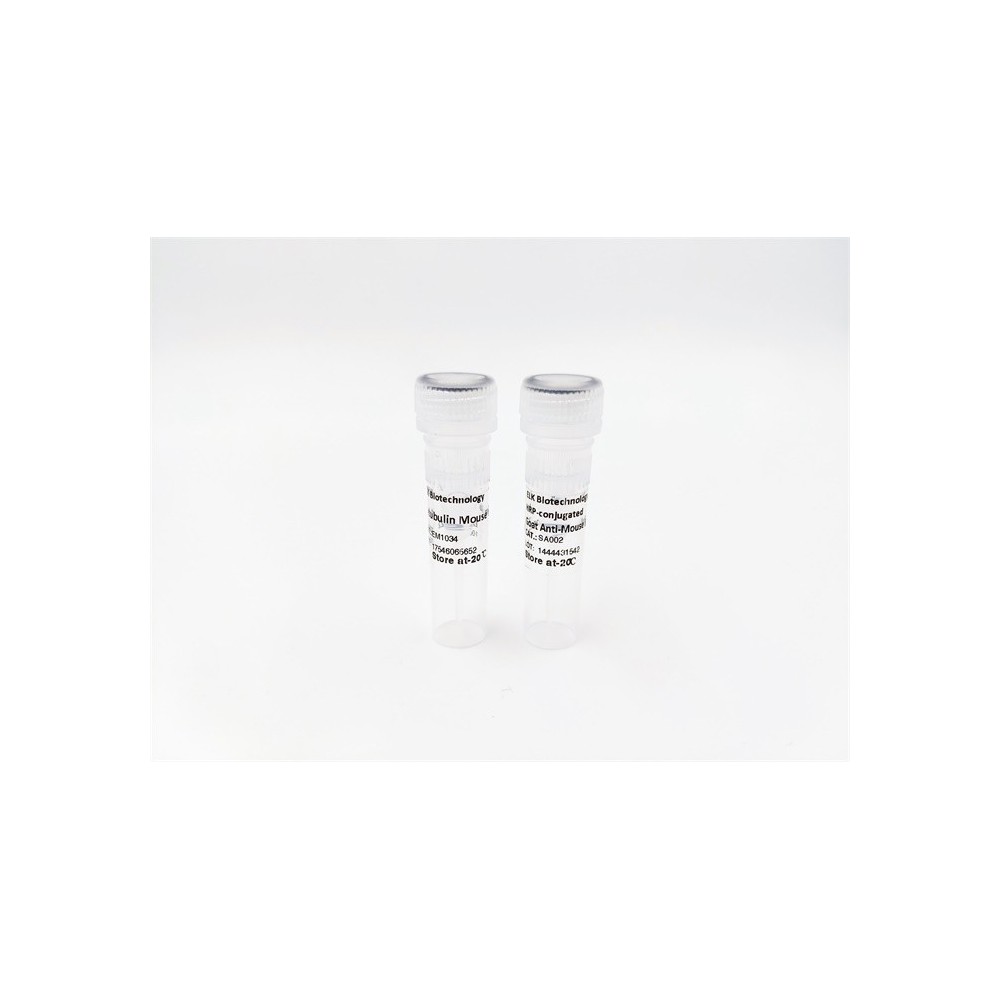

| ELK.No | ES18210 |
| Product name | ATF6A rabbit pAb |
| Reactivity | Human;Rat;Mouse; |
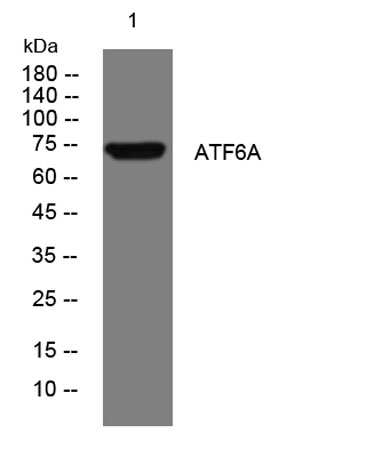
| Applications | WB |
| Other name | |
| Size | 50μL |
| Unit price ($) | 148 |
| Human gene ID | 22926 |
| Human Swiss-Prot | P18850 |
| Source | Rabbit |
| Isotype | IgG |
| Target | ATF6A |
| Fields | >>Protein processing in endoplasmic reticulum;>>Alzheimer disease;>>Parkinson disease;>>Amyotrophic lateral sclerosis;>>Pathways of neurodegeneration - multiple diseases;>>Lipid and atherosclerosis |
| Gene name | ATF6 |
| Protein name | ATF6A |
| Human gene link | View Human Gene |
| Human Swiss link | View Human Swiss-Prot |
| Mouse gene ID | |
| Mouse gene link | |
| Mouse Swiss-Prot | |
| Mouse Swiss link | |
| Rat gene ID | |
| Rat gene link | |
| Rat Swiss-Prot | |
| Rat Swiss link | |
| Immunogen | Synthesized peptide derived from human ATF6A AA range: 221-271 |
| Specificity | This antibody detects endogenous levels of ATF6A at Human |
| Formulation | Liquid in PBS containing 50% glycerol, 0.5% BSA and 0.02% sodium azide. |
| Clonality | Polyclonal |
| Dilution | WB 1:500-2000 |
| Purification | The antibody was affinity-purified from rabbit serum by affinity-chromatography using specific immunogen. |
| Concentration | 1 mg/ml |
| Storage stability | -20°C/1 year |
| Molecular Weight (Da) | |
| Observed band (KD) | 90kD |
| Background | This gene encodes a transcription factor that activates target genes for the unfolded protein response (UPR) during endoplasmic reticulum (ER) stress. Although it is a transcription factor, this protein is unusual in that it is synthesized as a transmembrane protein that is embedded in the ER. It functions as an ER stress sensor/transducer, and following ER stress-induced proteolysis, it functions as a nuclear transcription factor via a cis-acting ER stress response element (ERSE) that is present in the promoters of genes encoding ER chaperones. This protein has been identified as a survival factor for quiescent but not proliferative squamous carcinoma cells. There have been conflicting reports about the association of polymorphisms in this gene with diabetes in different populations, but another polymorphism has been associated with increased plasma cholesterol levels. This gene is also thought to be a potential therapeutic target for cystic fibrosis. [provided by RefSeq, Aug 2011], |
| Function | domain:The basic domain functions as a nuclear localization signal.,domain:The basic leucine-zipper domain is sufficient for association with the NF-Y trimer and binding to ERSE.,function:Transcription factor that acts during endoplasmic reticulum stress by activating unfolded protein response target genes. Binds DNA on the 5'-CCAC[GA]-3'half of the ER stress response element (ERSE) (5'-CCAAT-N(9)-CCAC[GA]-3') and of ERSE II (5'-ATTGG-N-CCACG-3'). Binding to ERSE requires binding of NF-Y to ERSE. Could also be involved in activation of transcription by the serum response factor.,PTM:During unfolded protein response an approximative 50 kDa fragment containing the cytoplasmic transcription factor domain is released by proteolysis. The cleavage seems to be performed sequentially by site-1 and site-2 proteases.,PTM:N-glycosylated.,PTM:Phosphorylated in vitro by MAPK14/P38MAPK.,similarity:Bel |
| Subcellular location | Endoplasmic reticulum membrane ; Single-pass type II membrane protein . Golgi apparatus membrane ; Single-pass type II membrane protein . Translocates from the endoplasmic reticulum to the Golgi, where it is processed. .; [Processed cyclic AMP-dependent transcription factor ATF-6 alpha]: Nucleus . Under ER stress the cleaved N-terminal cytoplasmic domain translocates into the nucleus (PubMed:10564271, PubMed:12782636). THBS4 promotes its nuclear shuttling (By similarity). . |
| Expression | Ubiquitous. |

Use collapsible tabs for more detailed information that will help customers make a purchasing decision.
Ex: Shipping and return policies, size guides, and other common questions.