 Français
 English
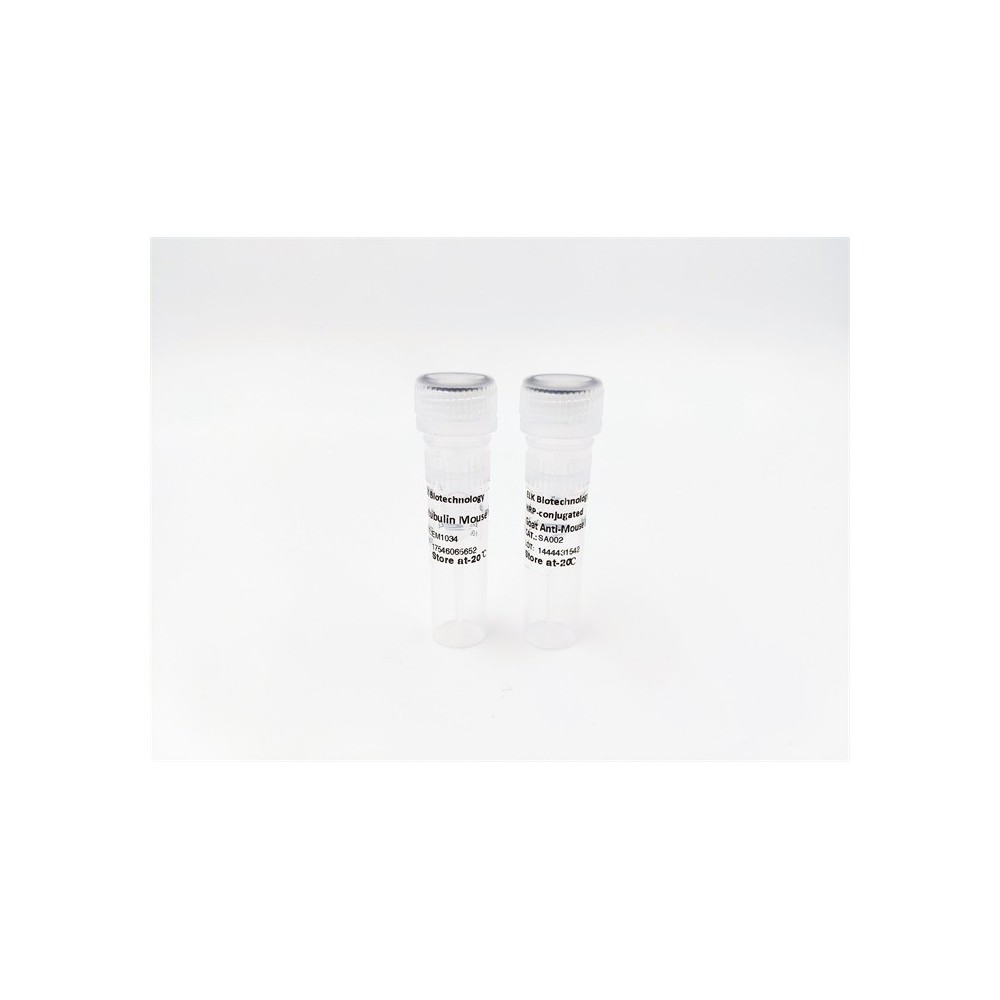

| ELK.No | ES18338 |
| Product name | ANO3 rabbit pAb |
| Reactivity | Human; Mouse |
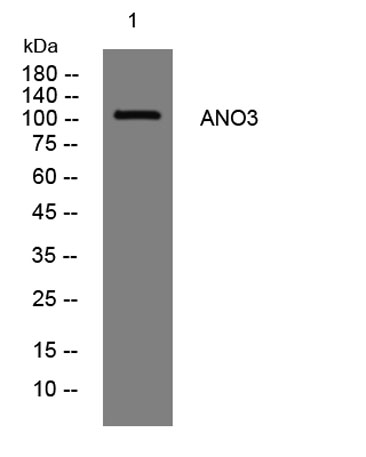
| Applications | WB |
| Other name | |
| Size | 100μL |
| Unit price ($) | 248 |
| Human gene ID | 63982 |
| Human Swiss-Prot | Q9BYT9 |
| Source | Rabbit |
| Isotype | IgG |
| Target | ANO3 |
| Fields | |
| Gene name | ANO3 C11orf25 TMEM16C GENX-3947 |
| Protein name | ANO3 |
| Human gene link | View Human Gene |
| Human Swiss link | View Human Swiss-Prot |
| Mouse gene ID | 228432 |
| Mouse gene link | View Mouse Gene |
| Mouse Swiss-Prot | A2AHL1 |
| Mouse Swiss link | View Mouse Swiss-Prot |
| Rat gene ID | |
| Rat gene link | |
| Rat Swiss-Prot | |
| Rat Swiss link | |
| Immunogen | Synthesized peptide derived from human ANO3 AA range: 518-568 |
| Specificity | This antibody detects endogenous levels of ANO3 at Human/Mouse |
| Formulation | Liquid in PBS containing 50% glycerol, 0.5% BSA and 0.02% sodium azide. |
| Clonality | Polyclonal |
| Dilution | WB 1:500-2000 |
| Purification | The antibody was affinity-purified from rabbit serum by affinity-chromatography using specific immunogen. |
| Concentration | 1 mg/ml |
| Storage stability | -20°C/1 year |
| Molecular Weight (Da) | 108kD |
| Observed band (KD) | |
| Background | The protein encoded by this gene belongs to the TMEM16 family of predicted membrane proteins, that are also known as anoctamins. While little is known about the function of this gene, mutations in this gene have been associated with some cases of autosomal dominant craniocervical dystonia. Cells from individuals with a mutation in this gene exhibited abnormalities in endoplasmic reticulum-dependent calcium signaling. Studies in rat show that the rat ortholog of this protein interacts with, and modulates the activity of a sodium-activated potassium channel. Deletion of this gene caused increased pain sensitivity in the rat model system. Alternative splicing results in multiple transcript variants encoding different isoforms. [provided by RefSeq, Aug 2015], |
| Function | function:May act as a calcium-activated chloride channel.,similarity:Belongs to the anoctamin family., |
| Subcellular location | Cell membrane ; Multi-pass membrane protein . Shows an intracellular localization. . |
| Expression | Highly expressed in the forebrain striatum. |

Use collapsible tabs for more detailed information that will help customers make a purchasing decision.
Ex: Shipping and return policies, size guides, and other common questions.