 Français
 English
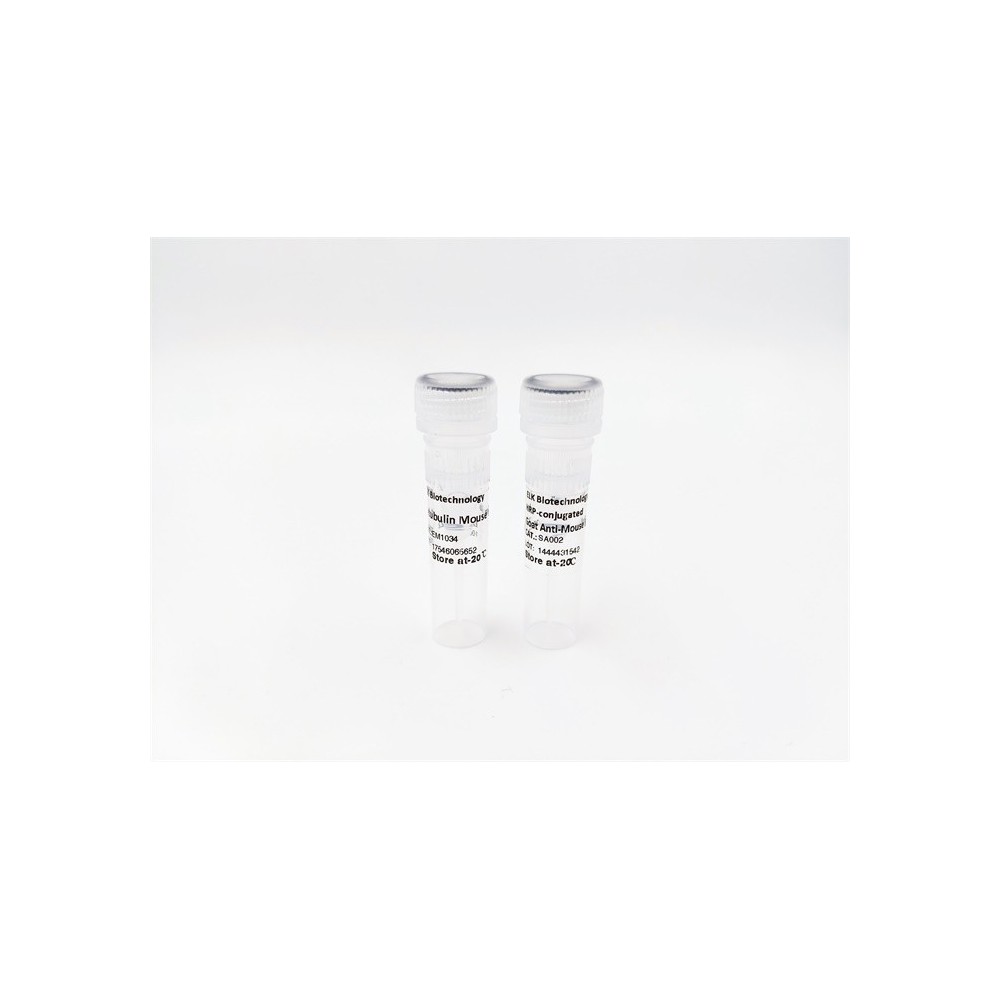

| ELK.No | ES18426 |
| Product name | AK1BA rabbit pAb |
| Reactivity | Human;Rat;Mouse; |
| Applications | WB |
| Other name | |
| Size | 100μL |
| Unit price ($) | 248 |
| Human gene ID | 57016 |
| Human Swiss-Prot | O60218 |
| Source | Rabbit |
| Isotype | IgG |
| Target | AK1BA |
| Fields | >>Pentose and glucuronate interconversions;>>Fructose and mannose metabolism;>>Galactose metabolism;>>Glycerolipid metabolism;>>Folate biosynthesis;>>Metabolic pathways |
| Gene name | AKR1B10 AKR1B11 |
| Protein name | AK1BA |
| Human gene link | View Human Gene |
| Human Swiss link | View Human Swiss-Prot |
| Mouse gene ID | |
| Mouse gene link | |
| Mouse Swiss-Prot | |
| Mouse Swiss link | |
| Rat gene ID | |
| Rat gene link | |
| Rat Swiss-Prot | |
| Rat Swiss link | |
| Immunogen | Synthesized peptide derived from human AK1BA AA range: 124-174 |
| Specificity | This antibody detects endogenous levels of AK1BA at Human |
| Formulation | Liquid in PBS containing 50% glycerol, 0.5% BSA and 0.02% sodium azide. |
| Clonality | Polyclonal |
| Dilution | WB 1:500-2000 |
| Purification | The antibody was affinity-purified from rabbit serum by affinity-chromatography using specific immunogen. |
| Concentration | 1 mg/ml |
| Storage stability | -20°C/1 year |
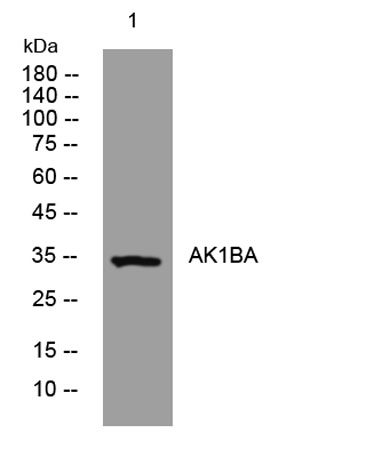
| Molecular Weight (Da) | 35kD |
| Observed band (KD) | |
| Background | This gene encodes a member of the aldo/keto reductase superfamily, which consists of more than 40 known enzymes and proteins. This member can efficiently reduce aliphatic and aromatic aldehydes, and it is less active on hexoses. It is highly expressed in adrenal gland, small intestine, and colon, and may play an important role in liver carcinogenesis. [provided by RefSeq, Jul 2008], |
| Function | enzyme regulation:Inhibited by tolrestat.,function:Acts as all-trans-retinaldehyde reductase. Can efficiently reduce aliphatic and aromatic aldehydes, and is less active on hexoses (in vitro). May be responsible for detoxification of reactive aldehydes in the digested food before the nutrients are passed on to other organs.,similarity:Belongs to the aldo/keto reductase family.,tissue specificity:Found in many tissues. Highly expressed in small intestine, colon and adrenal gland., |
| Subcellular location | Lysosome . Secreted . Secreted through a lysosome-mediated non-classical pathway. |
| Expression | Found in many tissues. Highly expressed in small intestine, colon and adrenal gland. |

Use collapsible tabs for more detailed information that will help customers make a purchasing decision.
Ex: Shipping and return policies, size guides, and other common questions.