 Français
 English
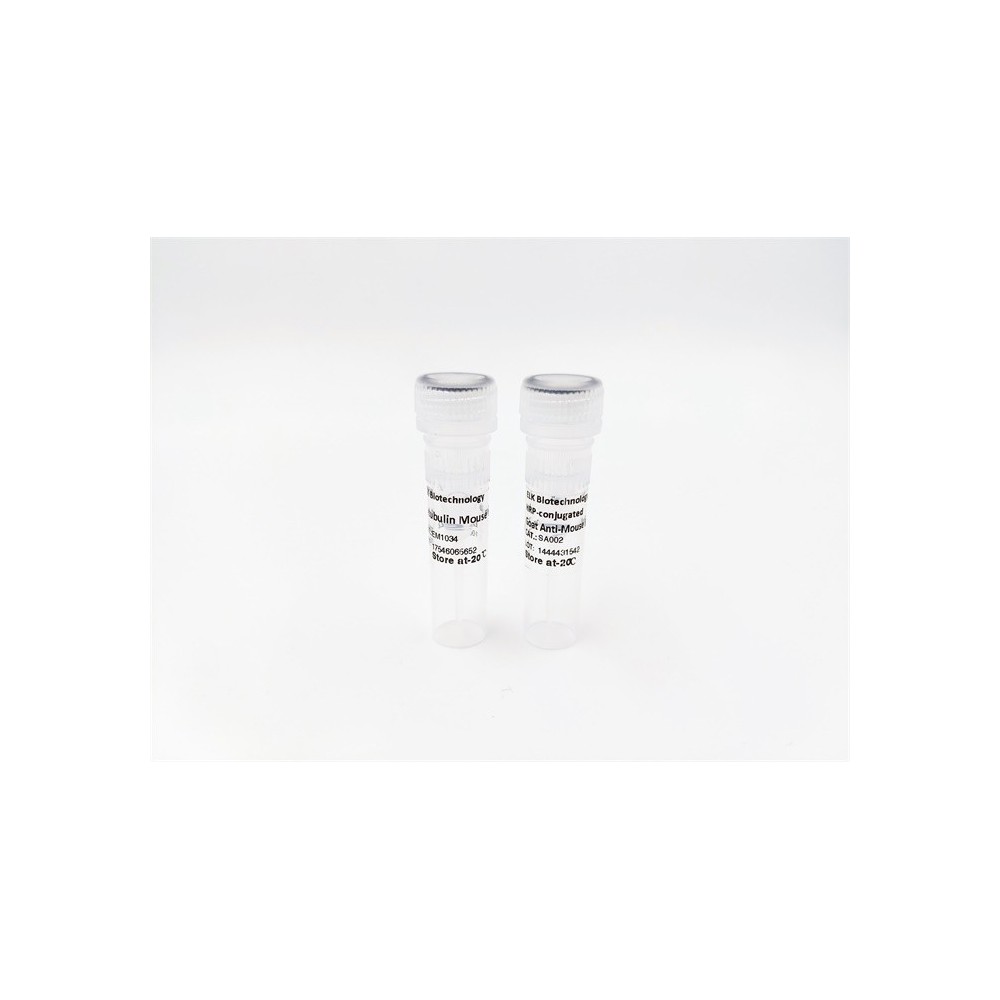

| ELK.No | ES18464 |
| Product name | ACY2 rabbit pAb |
| Reactivity | Human; Mouse;Rat |
| Applications | WB |
| Other name | |
| Size | 50μL |
| Unit price ($) | 148 |
| Human gene ID | 443 |
| Human Swiss-Prot | P45381 |
| Source | Rabbit |
| Isotype | IgG |
| Target | ACY2 |
| Fields | >>Alanine, aspartate and glutamate metabolism;>>Histidine metabolism;>>Metabolic pathways |
| Gene name | ASPA ACY2 ASP |
| Protein name | ACY2 |
| Human gene link | View Human Gene |
| Human Swiss link | View Human Swiss-Prot |
| Mouse gene ID | 11484 |
| Mouse gene link | View Mouse Gene |
| Mouse Swiss-Prot | Q8R3P0 |
| Mouse Swiss link | View Mouse Swiss-Prot |
| Rat gene ID | 79251 |
| Rat gene link | View Rat Gene |
| Rat Swiss-Prot | Q9R1T5 |
| Rat Swiss link | View Rat Swiss-Prot |
| Immunogen | Synthesized peptide derived from human ACY2 AA range: 67-117 |
| Specificity | This antibody detects endogenous levels of ACY2 at Human/Mouse/Rat |
| Formulation | Liquid in PBS containing 50% glycerol, 0.5% BSA and 0.02% sodium azide. |
| Clonality | Polyclonal |
| Dilution | WB 1:500-2000 |
| Purification | The antibody was affinity-purified from rabbit serum by affinity-chromatography using specific immunogen. |
| Concentration | 1 mg/ml |
| Storage stability | -20°C/1 year |
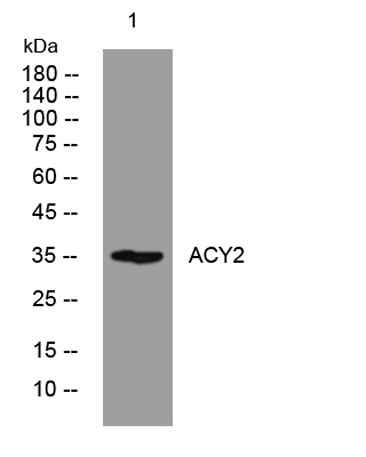
| Molecular Weight (Da) | 34kD |
| Observed band (KD) | |
| Background | This gene encodes an enzyme that catalyzes the conversion of N-acetyl_L-aspartic acid (NAA) to aspartate and acetate. NAA is abundant in the brain where hydrolysis by aspartoacylase is thought to help maintain white matter. This protein is an NAA scavenger in other tissues. Mutations in this gene cause Canavan disease. Alternatively spliced transcript variants have been found for this gene. [provided by RefSeq, Jul 2008], |
| Function | catalytic activity:N-acyl-L-aspartate + H(2)O = a carboxylate + L-aspartate.,cofactor:Binds 1 zinc ion per subunit.,disease:Defects in ASPA are the cause of Canavan disease (CAND) [MIM:271900]; also known as spongy degeneration of the brain. CAND is a rare neurodegenerative condition of infancy or childhood characterized by white matter vacuolization and demeylination that gives rise to a spongy appearance. The clinical features are onset in early infancy, atonia of neck muscles, hypotonia, hyperextension of legs and flexion of arms, blindness, severe mental defect, megalocephaly, and death by 18 months on the average.,function:Catalyzes the deacetylation of N-acetylaspartic acid (NAA) to produce acetate and L-aspartate. NAA occurs in high concentration in brain and its hydrolysis NAA plays a significant part in the maintenance of intact white matter. In other tissues it act as a scaveng |
| Subcellular location | Cytoplasm. Nucleus . |
| Expression | Brain white matter, skeletal muscle, kidney, adrenal glands, lung and liver. |

Use collapsible tabs for more detailed information that will help customers make a purchasing decision.
Ex: Shipping and return policies, size guides, and other common questions.