 Français
 English
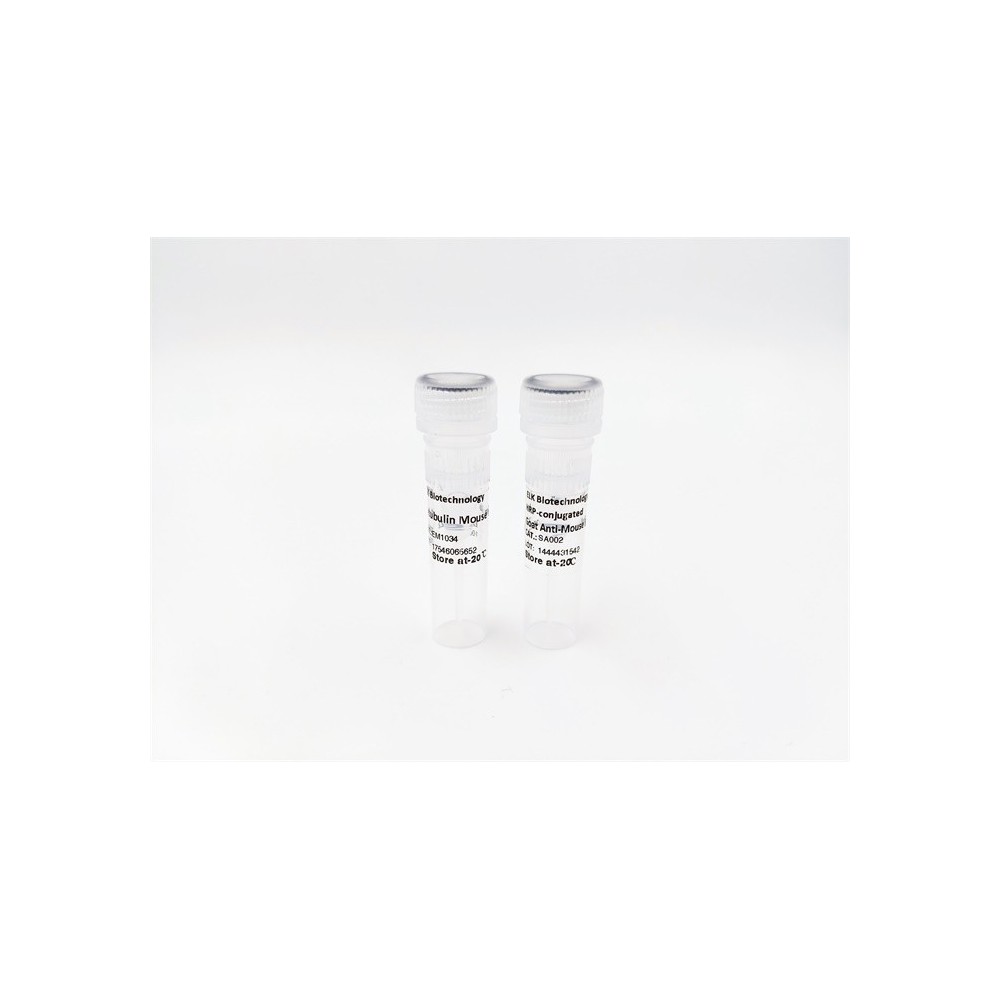

| ELK.No | ES1891 |
| Product name | CCRL1 rabbit pAb |
| Reactivity | Human;Mouse |
| Applications | WB;IF;ELISA |
| Other name | CCRL1; CCBP2; CCR11; VSHK1; C-C chemokine receptor type 11; C-C CKR-11; CC-CKR-11; CCR-11; CC chemokine receptor-like 1; CCRL1; CCX CKR |
| Size | 100μL |
| Unit price ($) | 248 |
| Human gene ID | 51554 |
| Human Swiss-Prot | Q9NPB9 |
| Source | Rabbit |
| Isotype | IgG |
| Target | CCRL1 |
| Fields | >>Cytokine-cytokine receptor interaction;>>Viral protein interaction with cytokine and cytokine receptor |
| Gene name | CCRL1 |
| Protein name | C-C chemokine receptor type 11 |
| Human gene link | View Human Gene |
| Human Swiss link | View Human Swiss-Prot |
| Mouse gene ID | 252837 |
| Mouse gene link | View Mouse Gene |
| Mouse Swiss-Prot | Q924I3 |
| Mouse Swiss link | View Mouse Swiss-Prot |
| Rat gene ID | |
| Rat gene link | |
| Rat Swiss-Prot | |
| Rat Swiss link | |
| Immunogen | The antiserum was produced against synthesized peptide derived from human CCRL1. AA range:291-340 |
| Specificity | CCRL1 Polyclonal Antibody detects endogenous levels of CCRL1 protein. |
| Formulation | Liquid in PBS containing 50% glycerol, 0.5% BSA and 0.02% sodium azide. |
| Clonality | Polyclonal |
| Dilution | Western Blot: 1/500 - 1/2000. Immunofluorescence: 1/200 - 1/1000. ELISA: 1/40000. Not yet tested in other applications. |
| Purification | The antibody was affinity-purified from rabbit antiserum by affinity-chromatography using epitope-specific immunogen. |
| Concentration | 1 mg/ml |
| Storage stability | -20°C/1 year |
| Molecular Weight (Da) | |
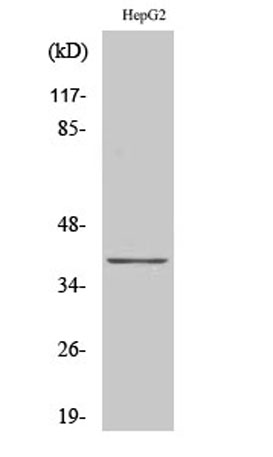
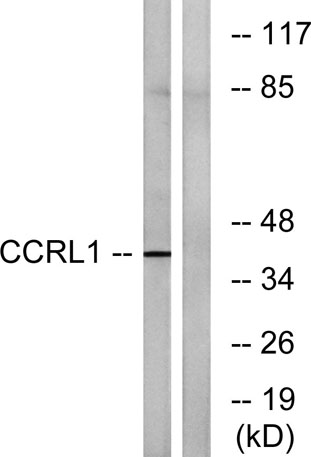
| Observed band (KD) | 40kD |
| Background | The protein encoded by this gene is a member of the G protein-coupled receptor family, and is a receptor for C-C type chemokines. This receptor has been shown to bind dendritic cell- and T cell-activated chemokines including CCL19/ELC, CCL21/SLC, and CCL25/TECK. A pseudogene of this gene is found on chromosome 6. Alternatively spliced transcript variants encoding the same protein have been described. [provided by RefSeq, Jul 2013], |
| Function | function:Receptor for CCL2, CCL8, CCL13, CCL19, CCL21 and CCL25.,similarity:Belongs to the G-protein coupled receptor 1 family.,tissue specificity:Predominantly expressed in heart. Lower expression in lung, pancreas, spleen, colon, skeletal muscle and small intestine., |
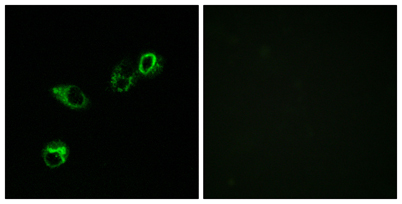
| Subcellular location | Early endosome . Recycling endosome . Cell membrane ; Multi-pass membrane protein . Predominantly localizes to endocytic vesicles, and upon stimulation by the ligand is internalized via caveolae. Once internalized, the ligand dissociates from the receptor, and is targeted to degradation while the receptor is recycled back to the cell membrane. |
| Expression | Predominantly expressed in heart. Lower expression in lung, pancreas, spleen, colon, skeletal muscle and small intestine. |

Use collapsible tabs for more detailed information that will help customers make a purchasing decision.
Ex: Shipping and return policies, size guides, and other common questions.