 Français
 English
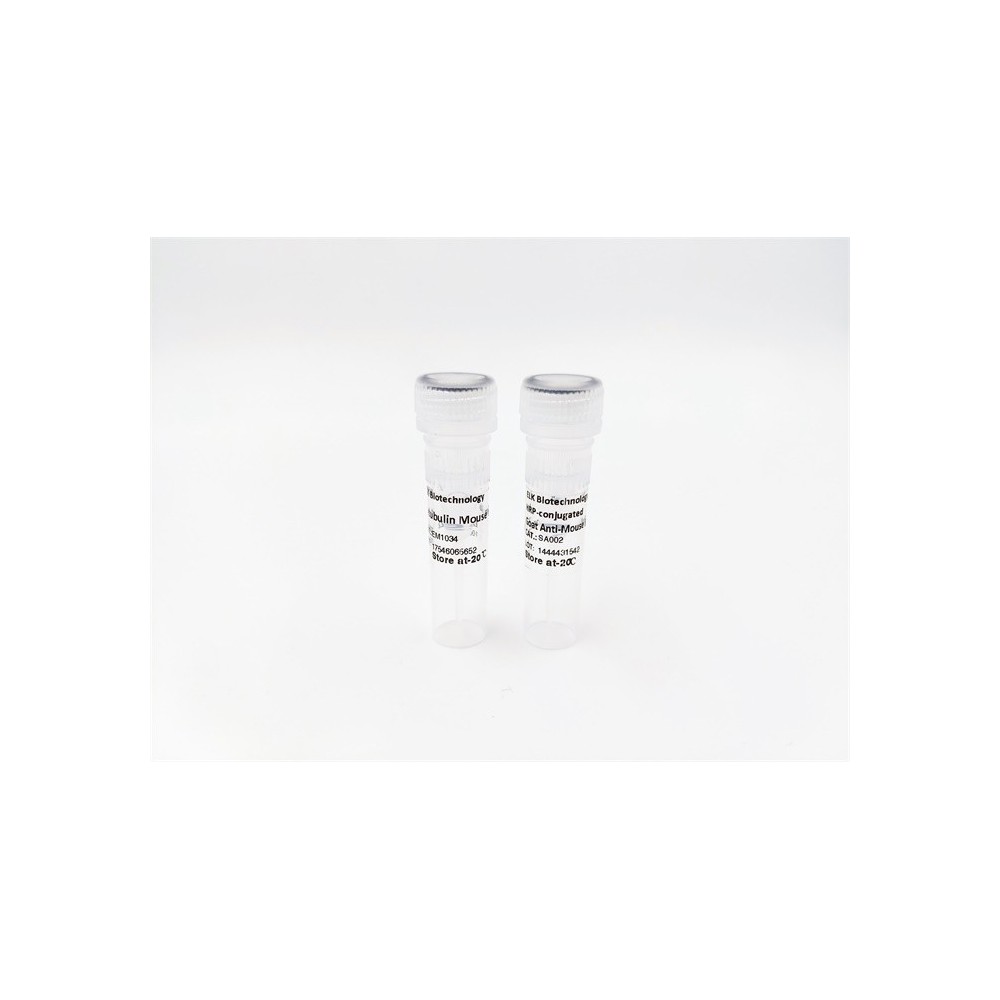

| ELK.No | ES20790 |
| Product name | CCKBR rabbit pAb |
| Reactivity | Human;Rat;Mouse |
| Applications | WB |
| Other name | CCKBR; CCKRB; Gastrin/cholecystokinin type B receptor; CCK-B receptor; CCK-BR; Cholecystokinin-2 receptor; CCK2-R |
| Size | 100μL |
| Unit price ($) | 248 |
| Human gene ID | 887 |
| Human Swiss-Prot | P32239 |
| Source | Rabbit |
| Isotype | IgG |
| Target | CCKBR |
| Fields | >>Calcium signaling pathway;>>Neuroactive ligand-receptor interaction;>>Gastric acid secretion |
| Gene name | CCKBR |
| Protein name | Gastrin/cholecystokinin type B receptor (CCK-B receptor) (CCK-BR) (Cholecystokinin-2 receptor) (CCK2-R) |
| Human gene link | View Human Gene |
| Human Swiss link | View Human Swiss-Prot |
| Mouse gene ID | |
| Mouse gene link | |
| Mouse Swiss-Prot | P56481 |
| Mouse Swiss link | View Mouse Swiss-Prot |
| Rat gene ID | |
| Rat gene link | |
| Rat Swiss-Prot | P30553 |
| Rat Swiss link | View Rat Swiss-Prot |
| Immunogen | Synthetic Peptide of CCKBR AA range: 306-356 |
| Specificity | CCKBR protein(A214) detects endogenous levels of CCKBR |
| Formulation | Liquid in PBS containing 50% glycerol, 0.5% BSA and 0.02% sodium azide. |
| Clonality | Polyclonal |
| Dilution | WB 1:1000-2000 |
| Purification | The antibody was affinity-purified from rabbit antiserum by affinity-chromatography using specific immunogen. |
| Concentration | 1 mg/ml |
| Storage stability | -20°C/1 year |
| Molecular Weight (Da) | |
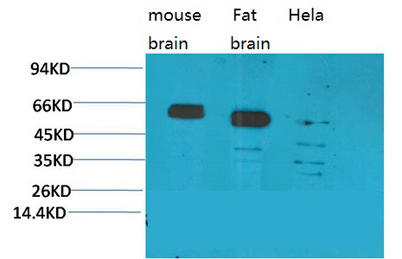
| Observed band (KD) | 50kD |
| Background | This gene encodes a G-protein coupled receptor for gastrin and cholecystokinin (CCK), regulatory peptides of the brain and gastrointestinal tract. This protein is a type B gastrin receptor, which has a high affinity for both sulfated and nonsulfated CCK analogs and is found principally in the central nervous system and the gastrointestinal tract. Alternative splicing results in multiple transcript variants. A misspliced transcript variant including an intron has been observed in cells from colorectal and pancreatic tumors. [provided by RefSeq, Dec 2015], |
| Function | function:Receptor for gastrin and cholecystokinin. The CKK-B receptors occur throughout the central nervous system where they modulate anxiety, analgesia, arousal, and neuroleptic activity. This receptor mediates its action by association with G proteins that activate a phosphatidylinositol-calcium second messenger system. Isoform 2 may regulate cancer cell proliferation via a gastrin-independent mechanism.,online information:Cholecystokinin receptor entry,similarity:Belongs to the G-protein coupled receptor 1 family.,tissue specificity:Isoform 1 is expressed in brain, pancreas, stomach, the colon cancer cell line LoVo and the T-lymphoblastoma Jurkat, but not in heart, placenta, liver, lung, skeletal muscle, kidney or the stomach cancer cell line AGS. Expressed at high levels in the small cell lung cancer cell line H510, at lower levels in H345, H69 and GLC28, not expressed in GLC19. Wit |
| Subcellular location | Cell membrane; Multi-pass membrane protein. |
| Expression | Isoform 1 is expressed in brain, pancreas, stomach, the colon cancer cell line LoVo and the T-lymphoblastoma Jurkat, but not in heart, placenta, liver, lung, skeletal muscle, kidney or the stomach cancer cell line AGS. Expressed at high levels in the small cell lung cancer cell line NCI-H510, at lower levels in NCI-H345, NCI-H69 and GLC-28 cell lines, not expressed in GLC-19 cell line. Within the stomach, expressed at high levels in the mucosa of the gastric fundus and at low levels in the antrum and duodenum. Isoform 2 is present in pancreatic cancer cells and colorectal cancer cells, but not in normal pancreas or colonic mucosa. Isoform 3 is expressed in brain, pancreas, stomach, the stomach cancer cell line AGS and the colon cancer cell line LoVo. |

Use collapsible tabs for more detailed information that will help customers make a purchasing decision.
Ex: Shipping and return policies, size guides, and other common questions.