 Français
 English
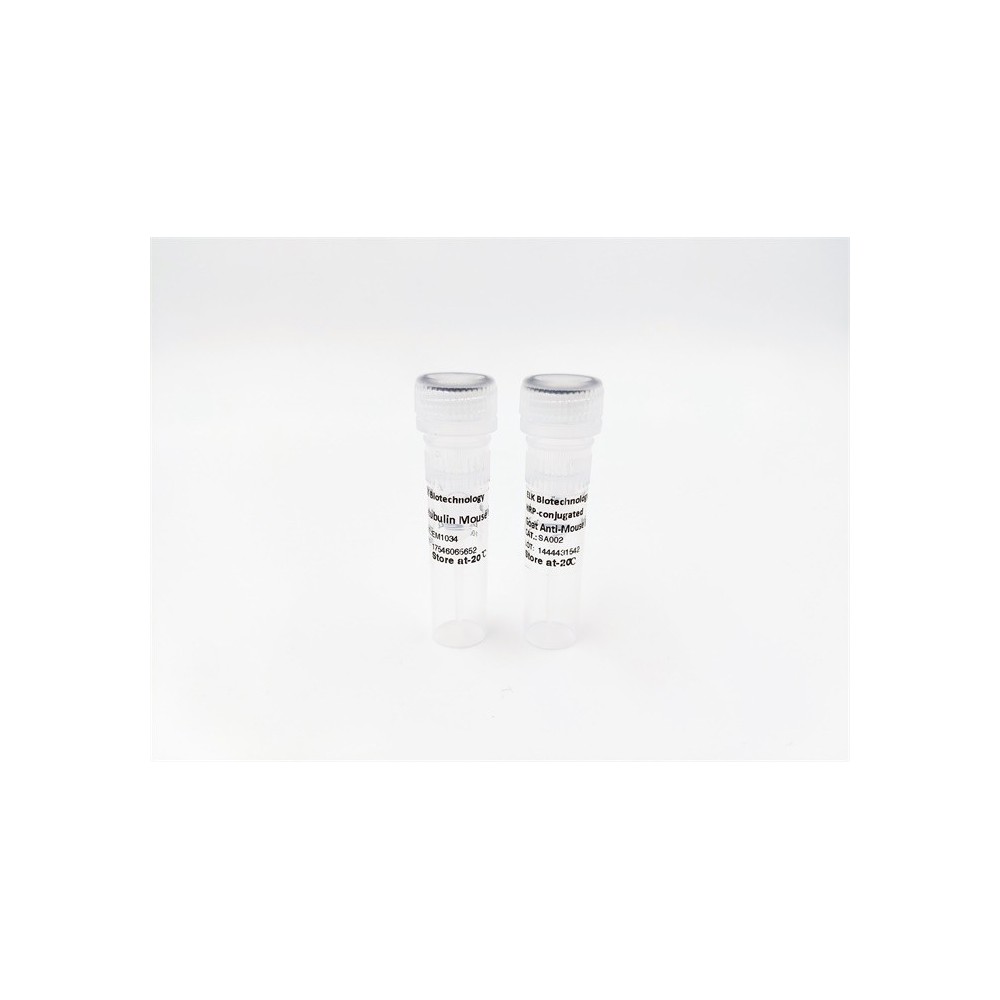

| ELK.No | ES20844 |
| Product name | Acetyl Kine rabbit pAb |
| Reactivity | Species independent |
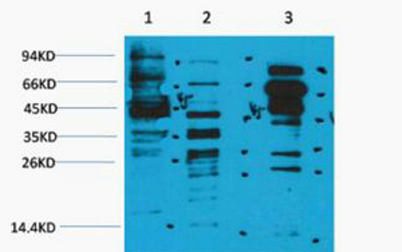
| Applications | WB |
| Other name | YM3306 |
| Size | 100μL |
| Unit price ($) | 248 |
| Human gene ID | |
| Human Swiss-Prot | |
| Source | Rabbit |
| Isotype | IgG |
| Target | Acetyl Kine |
| Fields | |
| Gene name | |
| Protein name | |
| Human gene link | |
| Human Swiss link | |
| Mouse gene ID | |
| Mouse gene link | |
| Mouse Swiss-Prot | |
| Mouse Swiss link | |
| Rat gene ID | |
| Rat gene link | |
| Rat Swiss-Prot | |
| Rat Swiss link | |
| Immunogen | Recombinant Protein of Acetyl Kine |
| Specificity | The antibody detects endogenous Lysine Acetylated protein. |
| Formulation | PBS, pH 7.4, containing 0.5%BSA, 0.02% sodium azide as Preservative and 50% Glycerol. |
| Clonality | Polyclonal |
| Dilution | WB: 1:1000-2000 |
| Purification | The antibody was affinity-purified from rabbit antiserum by affinity-chromatography using specific immunogen. |
| Concentration | |
| Storage stability | -20°C/1 year |
| Molecular Weight (Da) | |
| Observed band (KD) | |
| Background | Acetylation of lysine, like phosphorylation of serine, threonine or tyrosine, is an important reversible modification controlling protein activity. The conserved amino-terminal domains of the four core histones (H2A, H2B, H3, and H4) contain lysines that are acetylated by histone acetyltransferases (HATs) and deacetylated by histone deacetylases (HDACs) .Signaling resulting in acetylation/deacetylation of histones, transcription factors, and other proteins affects a diverse array of cellular processes including chromatin structure and gene activity, cell growth, differentiation, and apoptosis.Recent proteomic surveys suggest that acetylation of lysine residues may be a widespread and important form of posttranslational protein modification that affects thousands of proteins involved in control of cell cycle and metabolism, longevity, actin polymerization, and nuclear transport.The regulation of protein acetylation status is impaired in cancer and polyglutamine diseases, and HDACs have become promising targets for anti-cancer drugs currently in development. |
| Function | |
| Subcellular location | |
| Expression |

Use collapsible tabs for more detailed information that will help customers make a purchasing decision.
Ex: Shipping and return policies, size guides, and other common questions.