 Français
 English

| ELK.No | ES2087 |
| Product name | Cyclin L1 rabbit pAb |
| Reactivity | Human;Mouse;Rat |
| Applications | WB;IHC;IF;ELISA |
| Other name | CCNL1; BM-001; Cyclin-L1; Cyclin-L |
| Size | 50μL |
| Unit price ($) | 148 |
| Human gene ID | 57018 |
| Human Swiss-Prot | Q9UK58 |
| Source | Rabbit |
| Isotype | IgG |
| Target | Cyclin L1 |
| Fields | |
| Gene name | CCNL1 |
| Protein name | Cyclin-L1 |
| Human gene link | View Human Gene |
| Human Swiss link | View Human Swiss-Prot |
| Mouse gene ID | 56706 |
| Mouse gene link | View Mouse Gene |
| Mouse Swiss-Prot | Q52KE7 |
| Mouse Swiss link | View Mouse Swiss-Prot |
| Rat gene ID | 1.0091e+008 |
| Rat gene link | View Rat Gene |
| Rat Swiss-Prot | Q9R1Q2 |
| Rat Swiss link | View Rat Swiss-Prot |
| Immunogen | The antiserum was produced against synthesized peptide derived from human Cyclin L1. AA range:461-510 |
| Specificity | Cyclin L1 Polyclonal Antibody detects endogenous levels of Cyclin L1 protein. |
| Formulation | Liquid in PBS containing 50% glycerol, 0.5% BSA and 0.02% sodium azide. |
| Clonality | Polyclonal |
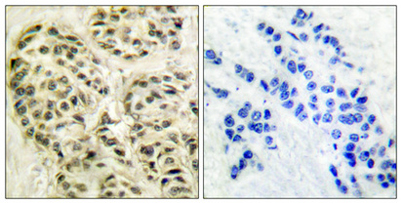
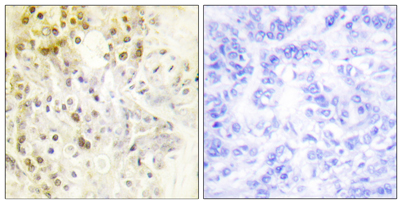
| Dilution | Western Blot: 1/500 - 1/2000. Immunohistochemistry: 1/100 - 1/300. ELISA: 1/10000. Not yet tested in other applications. |
| Purification | The antibody was affinity-purified from rabbit antiserum by affinity-chromatography using epitope-specific immunogen. |
| Concentration | 1 mg/ml |
| Storage stability | -20°C/1 year |
| Molecular Weight (Da) | |
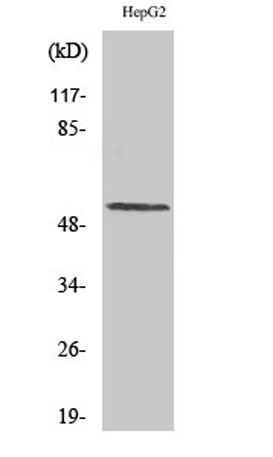
| Observed band (KD) | 60kD |
| Background | alternative products:Ccnl1 is an immediate-early gene with independently regulated isoforms,domain:Contains a RS region (arginine-serine dipeptide repeat) within the C-terminal domain which is the hallmark of the SR family of splicing factors. This region probably plays a role in protein-protein interactions.,function:Transcriptional regulator which participates in regulating the pre-mRNA splicing process. Seems to be involved in the regulation of RNA polymerase II (pol II). Functions in association with cyclin-dependent kinases (CDKs) and has a role in the second step of splicing. May be a candidate proto-oncogene in head and neck squamous cell carcinomas (HNSCC). Inhibited by the CDK-specific inhibitor p21.,miscellaneous:CCNL1 is amplified in several HNSCC. May play a critical role in the formation of loco-regional metastases and an unfavorable clinical outcome of HNSCC.,sequence caution:Probable cloning artifact.,similarity:Belongs to the cyclin family. Cyclin L subfamily.,subcellular location:More specifically found in nuclear intrachromatin granules clusters (IGC), also called nuclear speckles, which are storage compartments for nuclear proteins involved in mRNA processing.,subunit:Interacts with POLR2A via its hyperphosphorylated C-terminal domain (CTD) (By similarity). Interacts with CDC2L1 or CDC2L2, and SFRS2.,tissue specificity:Ubiquitous with higher level in thymus. Overexpression in primary tumors of head and neck squamous cell carcinomas (HNSCC)., |
| Function | alternative products:Ccnl1 is an immediate-early gene with independently regulated isoforms,domain:Contains a RS region (arginine-serine dipeptide repeat) within the C-terminal domain which is the hallmark of the SR family of splicing factors. This region probably plays a role in protein-protein interactions.,function:Transcriptional regulator which participates in regulating the pre-mRNA splicing process. Seems to be involved in the regulation of RNA polymerase II (pol II). Functions in association with cyclin-dependent kinases (CDKs) and has a role in the second step of splicing. May be a candidate proto-oncogene in head and neck squamous cell carcinomas (HNSCC). Inhibited by the CDK-specific inhibitor p21.,miscellaneous:CCNL1 is amplified in several HNSCC. May play a critical role in the formation of loco-regional metastases and an unfavorable clinical outcome of HNSCC.,sequence cauti |
| Subcellular location | Nucleus speckle . Nucleus, nucleoplasm . Found in nuclear intrachromatin granules clusters (IGC), also called nuclear speckles, which are storage compartments for nuclear proteins involved in mRNA processing. . |
| Expression | Widely expressed. Overexpression in primary tumors of head and neck squamous cell carcinomas (HNSCC). |

Use collapsible tabs for more detailed information that will help customers make a purchasing decision.
Ex: Shipping and return policies, size guides, and other common questions.