 Français
 English
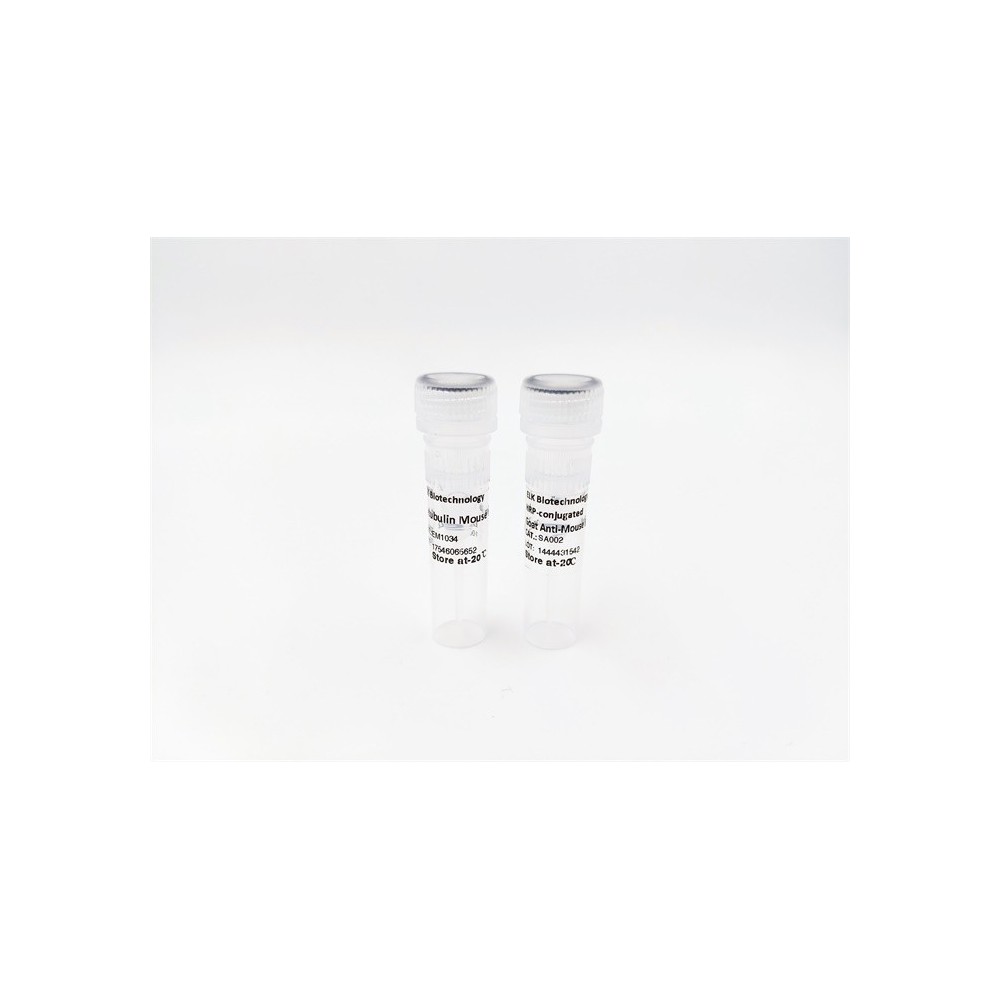

| ELK.No | ES2242 |
| Product name | EID-1 rabbit pAb |
| Reactivity | Human;Rat;Mouse; |
| Applications | WB;IHC;IF;ELISA |
| Other name | EID1; C15orf3; CRI1; RBP21; PNAS-22; PTD014; EP300-interacting inhibitor of differentiation 1; 21 kDa pRb-associated protein; CREBBP/EP300 inhibitory protein 1; E1A-like inhibitor of differentiation 1; EID-1 |
| Size | 50μL |
| Unit price ($) | 148 |
| Human gene ID | 23741 |
| Human Swiss-Prot | Q9Y6B2 |
| Source | Rabbit |
| Isotype | IgG |
| Target | EID-1 |
| Fields | |
| Gene name | EID1 |
| Protein name | EP300-interacting inhibitor of differentiation 1 |
| Human gene link | View Human Gene |
| Human Swiss link | View Human Swiss-Prot |
| Mouse gene ID | |
| Mouse gene link | |
| Mouse Swiss-Prot | Q9DCR4 |
| Mouse Swiss link | View Mouse Swiss-Prot |
| Rat gene ID | |
| Rat gene link | |
| Rat Swiss-Prot | |
| Rat Swiss link | |
| Immunogen | The antiserum was produced against synthesized peptide derived from human EID1. AA range:71-120 |
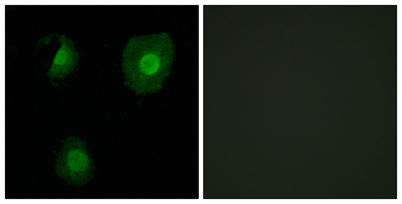
| Specificity | EID-1 Polyclonal Antibody detects endogenous levels of EID-1 protein. |
| Formulation | Liquid in PBS containing 50% glycerol, 0.5% BSA and 0.02% sodium azide. |
| Clonality | Polyclonal |
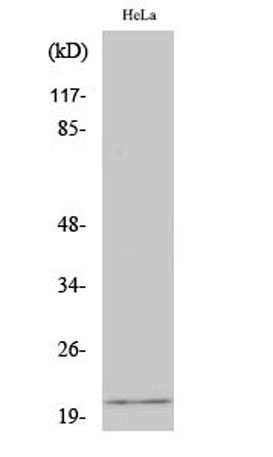
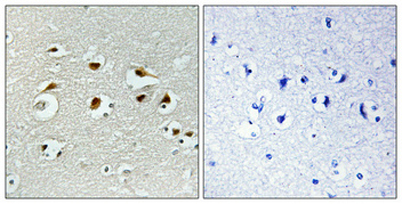
| Dilution | Western Blot: 1/500 - 1/2000. Immunohistochemistry: 1/100 - 1/300. Immunofluorescence: 1/200 - 1/1000. ELISA: 1/10000. Not yet tested in other applications. |
| Purification | The antibody was affinity-purified from rabbit antiserum by affinity-chromatography using epitope-specific immunogen. |
| Concentration | 1 mg/ml |
| Storage stability | -20°C/1 year |
| Molecular Weight (Da) | |
| Observed band (KD) | 21kD |
| Background | developmental stage:Expression decreased with development in ventricular tissue while remaining highly expressed in adult atrial tissue. In primary cultures of human skeletal myocytes, expression decreased during myogenic differentiation (at protein level).,function:Interacts with RB1 and EP300 and acts as a repressor of MYOD1 transactivation. Inhibits EP300 and CBP histone acetyltransferase activity. May be involved in coupling cell cycle exit to the transcriptional activation of genes required for cellular differentiation. May act as a candidate coinhibitory factor for NR0B2 that can be directly linked to transcription inhibitory mechanisms.,induction:Down-regulated in differentiating U937 leukemia cells.,miscellaneous:Inhibition of MYOD1 may be partly due to the ability of EID1 to bind and inhibit EP300 histone acetyltransferase activity.,PTM:Ubiquitinated in U-2OS osteosarcoma cells and is rapidly degraded by proteasome as cells exit the cell cycle exit.,subcellular location:May shuttle between nucleus and cytoplasm.,subunit:Interacts via its LXCXE motif with the entire pocket region of RB1. Interacts with EP300, NR0B2 and TRIM27.,tissue specificity:Widely expressed. Most abundantly expressed in heart, skeletal muscle, pancreas, brain and testis. Expressed at much lower levels in placenta and peripheral blood leukocyte. Barely detectable in lung. Also weakly expressed in lung carcinoma A549 and various leukemia cell lines., |
| Function | developmental stage:Expression decreased with development in ventricular tissue while remaining highly expressed in adult atrial tissue. In primary cultures of human skeletal myocytes, expression decreased during myogenic differentiation (at protein level).,function:Interacts with RB1 and EP300 and acts as a repressor of MYOD1 transactivation. Inhibits EP300 and CBP histone acetyltransferase activity. May be involved in coupling cell cycle exit to the transcriptional activation of genes required for cellular differentiation. May act as a candidate coinhibitory factor for NR0B2 that can be directly linked to transcription inhibitory mechanisms.,induction:Down-regulated in differentiating U937 leukemia cells.,miscellaneous:Inhibition of MYOD1 may be partly due to the ability of EID1 to bind and inhibit EP300 histone acetyltransferase activity.,PTM:Ubiquitinated in U-2OS osteosarcoma cells |
| Subcellular location | Nucleus . Cytoplasm . May shuttle between nucleus and cytoplasm. . |
| Expression | Widely expressed. Most abundantly expressed in heart, skeletal muscle, pancreas, brain and testis. Expressed at much lower levels in placenta and peripheral blood leukocyte. Barely detectable in lung. Also weakly expressed in lung carcinoma A-549 and various leukemia cell lines. |

Use collapsible tabs for more detailed information that will help customers make a purchasing decision.
Ex: Shipping and return policies, size guides, and other common questions.