 Français
 English



| ELK.No | ES2261 |
| Product name | Endo180 rabbit pAb |
| Reactivity | Human;Mouse;Rat |
| Applications | WB;IHC;IF;ELISA |
| Other name | MRC2; CLEC13E; ENDO180; KIAA0709; UPARAP; C-type mannose receptor 2; C-type lectin domain family 13 member E; Endocytic receptor 180; Macrophage mannose receptor 2; Urokinase-type plasminogen activator receptor-associated protein; UPAR-asso |
| Size | 50μL |
| Unit price ($) | 148 |
| Human gene ID | 9902 |
| Human Swiss-Prot | Q9UBG0 |
| Source | Rabbit |
| Isotype | IgG |
| Target | Endo180 |
| Fields | >>Phagosome;>>Tuberculosis |
| Gene name | MRC2 |
| Protein name | C-type mannose receptor 2 |
| Human gene link | View Human Gene |
| Human Swiss link | View Human Swiss-Prot |
| Mouse gene ID | 17534 |
| Mouse gene link | View Mouse Gene |
| Mouse Swiss-Prot | Q64449 |
| Mouse Swiss link | View Mouse Swiss-Prot |
| Rat gene ID | 498011 |
| Rat gene link | View Rat Gene |
| Rat Swiss-Prot | Q4TU93 |
| Rat Swiss link | View Rat Swiss-Prot |
| Immunogen | The antiserum was produced against synthesized peptide derived from human MRC2. AA range:121-170 |
| Specificity | Endo180 Polyclonal Antibody detects endogenous levels of Endo180 protein. |
| Formulation | Liquid in PBS containing 50% glycerol, 0.5% BSA and 0.02% sodium azide. |
| Clonality | Polyclonal |
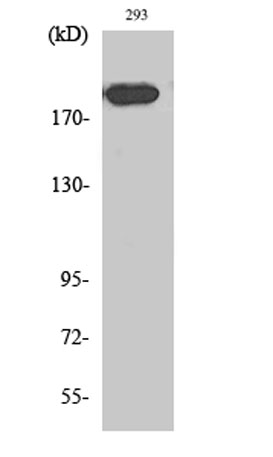
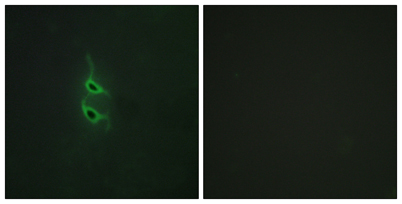
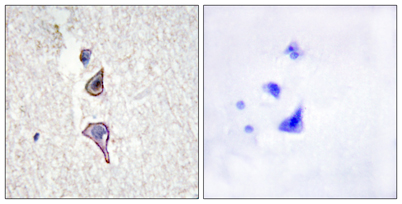
| Dilution | Western Blot: 1/500 - 1/2000. Immunohistochemistry: 1/100 - 1/300. Immunofluorescence: 1/200 - 1/1000. ELISA: 1/20000. Not yet tested in other applications. |
| Purification | The antibody was affinity-purified from rabbit antiserum by affinity-chromatography using epitope-specific immunogen. |
| Concentration | 1 mg/ml |
| Storage stability | -20°C/1 year |
| Molecular Weight (Da) | |
| Observed band (KD) | 167kD |
| Background | mannose receptor C type 2(MRC2) Homo sapiens This gene encodes a member of the mannose receptor family of proteins that contain a fibronectin type II domain and multiple C-type lectin-like domains. The encoded protein plays a role in extracellular matrix remodeling by mediating the internalization and lysosomal degradation of collagen ligands. Expression of this gene may play a role in the tumorigenesis and metastasis of several malignancies including breast cancer, gliomas and metastatic bone disease. [provided by RefSeq, Feb 2012], |
| Function | domain:C-type lectin domains 3 to 8 are not required for calcium-dependent binding of mannose, fucose and N-acetylglucosamine. C-type lectin domain 2 is responsible for sugar-binding in a calcium-dependent manner.,domain:Fibronectin type-II domain mediates collagen-binding.,domain:Ricin B-type lectin domain contacts with the second C-type lectin domain.,function:May play a role as endocytotic lectin receptor displaying calcium-dependent lectin activity. Internalizes glycosylated ligands from the extracellular space for release in an endosomal compartment via clathrin-mediated endocytosis. May be involved in plasminogen activation system controlling the extracellular level of PLAUR/PLAU, and thus may regulate protease activity at the cell surface. May contribute to cellular uptake, remodeling and degradation of extracellular collagen matrices. May play a role during cancer progression as |
| Subcellular location | Membrane; Single-pass type I membrane protein. |
| Expression | Ubiquitous with low expression in brain, placenta, lung, kidney, pancreas, spleen, thymus and colon. Expressed in endothelial cells, fibroblasts and macrophages. Highly expressed in fetal lung and kidney. |

Use collapsible tabs for more detailed information that will help customers make a purchasing decision.
Ex: Shipping and return policies, size guides, and other common questions.