 Français
 English
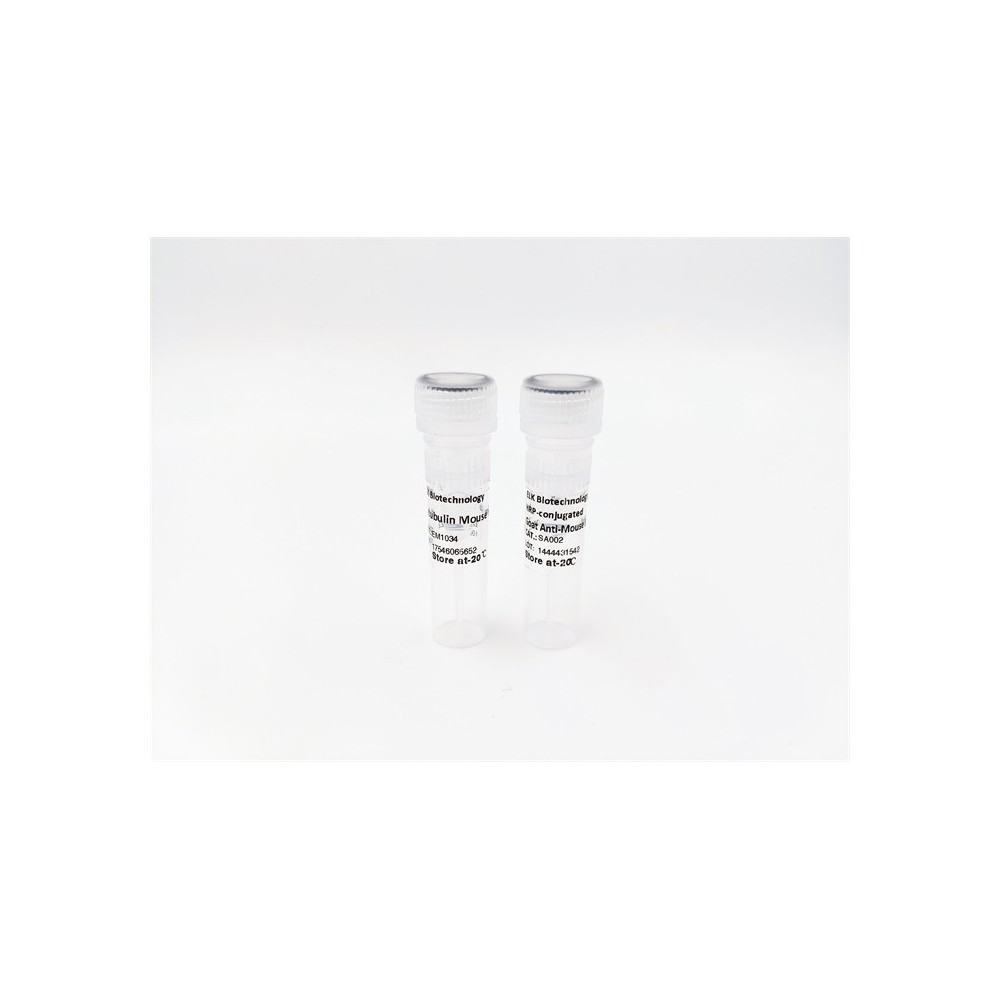

| ELK.No | ES2308 |
| Product name | EWS rabbit pAb |
| Reactivity | Human;Mouse;Rat |
| Applications | WB;ELISA |
| Other name | EWSR1; EWS; RNA-binding protein EWS; EWS oncogene; Ewing sarcoma breakpoint region 1 protein |
| Size | 50μL |
| Unit price ($) | 148 |
| Human gene ID | 2130 |
| Human Swiss-Prot | Q01844 |
| Source | Rabbit |
| Isotype | IgG |
| Target | EWS |
| Fields | >>Transcriptional misregulation in cancer |
| Gene name | EWSR1 |
| Protein name | RNA-binding protein EWS |
| Human gene link | View Human Gene |
| Human Swiss link | View Human Swiss-Prot |
| Mouse gene ID | 14030 |
| Mouse gene link | View Mouse Gene |
| Mouse Swiss-Prot | Q61545 |
| Mouse Swiss link | View Mouse Swiss-Prot |
| Rat gene ID | |
| Rat gene link | |
| Rat Swiss-Prot | |
| Rat Swiss link | |
| Immunogen | The antiserum was produced against synthesized peptide derived from human EWSR1. AA range:403-452 |
| Specificity | EWS Polyclonal Antibody detects endogenous levels of EWS protein. |
| Formulation | Liquid in PBS containing 50% glycerol, 0.5% BSA and 0.02% sodium azide. |
| Clonality | Polyclonal |
| Dilution | Western Blot: 1/500 - 1/2000. ELISA: 1/10000. Not yet tested in other applications. |
| Purification | The antibody was affinity-purified from rabbit antiserum by affinity-chromatography using epitope-specific immunogen. |
| Concentration | 1 mg/ml |
| Storage stability | -20°C/1 year |
| Molecular Weight (Da) | |
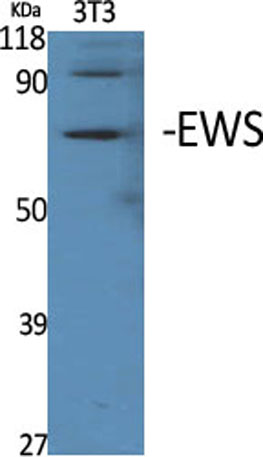
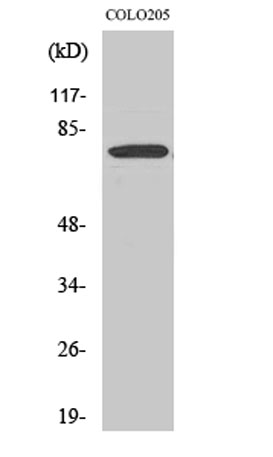
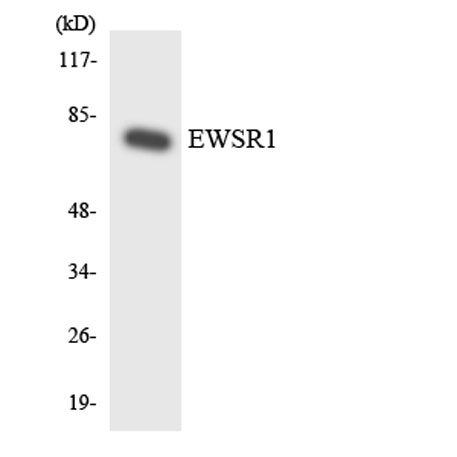
| Observed band (KD) | 68kD |
| Background | This gene encodes a multifunctional protein that is involved in various cellular processes, including gene expression, cell signaling, and RNA processing and transport. The protein includes an N-terminal transcriptional activation domain and a C-terminal RNA-binding domain. Chromosomal translocations between this gene and various genes encoding transcription factors result in the production of chimeric proteins that are involved in tumorigenesis. These chimeric proteins usually consist of the N-terminal transcriptional activation domain of this protein fused to the C-terminal DNA-binding domain of the transcription factor protein. Mutations in this gene, specifically a t(11;22)(q24;q12) translocation, are known to cause Ewing sarcoma as well as neuroectodermal and various other tumors. Alternative splicing of this gene results in multiple transcript variants. Related pseudogenes have been id |
| Function | disease:A chromosomal aberration involving EWSR1 is associated with desmoplastic small round cell tumor (DSRCT). Translocation t(11;22)(p13;q12) with WT1.,disease:A chromosomal aberration involving EWSR1 is associated with malignant melanoma of soft parts (MMSP). Translocation t(12;22)(q13;q12) with ATF-1. Malignant melanoma of soft parts, also known as soft tissue clear cell sarcoma, is a rare tumor developing in tendons and aponeuroses.,disease:A chromosomal aberration involving EWSR1 is associated with small round cell sarcoma. Translocation t(11;22)(p36.1;q12) with PATZ1.,disease:Chromosomal aberrations involving EWSR1 are a cause of Ewing sarcoma [MIM:133450]. Translocation t(11;22)(q24;q12) with FLI1; translocation t(7;22)(p22;q12) with ETV1; translocation t(21;22)(q22;q12) with ERG; translocation t(9;22)(q22-31;q11-12) with NR4A3. Translocation t(2;21;22)(q23;q22;q12) that forms a |
| Subcellular location | Nucleus . Cytoplasm . Cell membrane . Relocates from cytoplasm to ribosomes upon PTK2B/FAK2 activation. |
| Expression | Ubiquitous. |

Use collapsible tabs for more detailed information that will help customers make a purchasing decision.
Ex: Shipping and return policies, size guides, and other common questions.