 Français
 English

| ELK.No | ES2428 |
| Product name | GK1 rabbit pAb |
| Reactivity | Human;Mouse;Rat |
| Applications | WB;IF;ELISA |
| Other name | GK; Glycerol kinase; GK; Glycerokinase; ATP:glycerol 3-phosphotransferase |
| Size | 50μL |
| Unit price ($) | 148 |
| Human gene ID | 2710 |
| Human Swiss-Prot | P32189 |
| Source | Rabbit |
| Isotype | IgG |
| Target | GK1 |
| Fields | >>Glycerolipid metabolism;>>Metabolic pathways;>>PPAR signaling pathway |
| Gene name | GK |
| Protein name | Glycerol kinase |
| Human gene link | View Human Gene |
| Human Swiss link | View Human Swiss-Prot |
| Mouse gene ID | 14933 |
| Mouse gene link | View Mouse Gene |
| Mouse Swiss-Prot | Q64516 |
| Mouse Swiss link | View Mouse Swiss-Prot |
| Rat gene ID | 79223 |
| Rat gene link | View Rat Gene |
| Rat Swiss-Prot | Q63060 |
| Rat Swiss link | View Rat Swiss-Prot |
| Immunogen | The antiserum was produced against synthesized peptide derived from human GK. AA range:461-510 |
| Specificity | GK1 Polyclonal Antibody detects endogenous levels of GK1 protein. |
| Formulation | Liquid in PBS containing 50% glycerol, 0.5% BSA and 0.02% sodium azide. |
| Clonality | Polyclonal |
| Dilution | Western Blot: 1/500 - 1/2000. Immunofluorescence: 1/200 - 1/1000. ELISA: 1/20000. Not yet tested in other applications. |
| Purification | The antibody was affinity-purified from rabbit antiserum by affinity-chromatography using epitope-specific immunogen. |
| Concentration | 1 mg/ml |
| Storage stability | -20°C/1 year |
| Molecular Weight (Da) | |
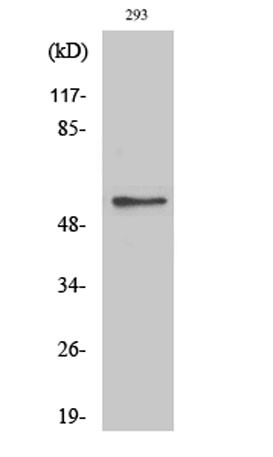
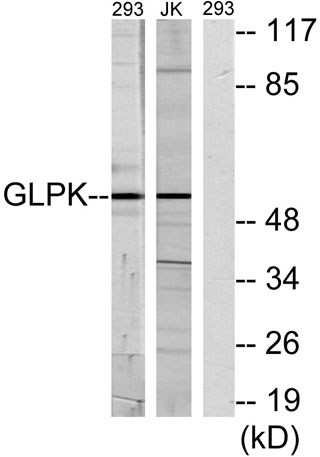
| Observed band (KD) | 57kD |
| Background | The protein encoded by this gene belongs to the FGGY kinase family. This protein is a key enzyme in the regulation of glycerol uptake and metabolism. It catalyzes the phosphorylation of glycerol by ATP, yielding ADP and glycerol-3-phosphate. Mutations in this gene are associated with glycerol kinase deficiency (GKD). Alternatively spliced transcript variants encoding different isoforms have been found for this gene. [provided by RefSeq, Mar 2011], |
| Function | catalytic activity:ATP + glycerol = ADP + sn-glycerol 3-phosphate.,caution:The sequence shown here is derived from an Ensembl automatic analysis pipeline and should be considered as preliminary data.,disease:Defects in GK are the cause of GK deficiency (GKD) [MIM:307030]. This disease can be either symptomatic with episodic metabolic and CNS decompensation or asymptomatic with hyperglycerolemia and hyperglyceroluria only.,function:Key enzyme in the regulation of glycerol uptake and metabolism.,pathway:Polyol metabolism; glycerol degradation via glycerol kinase pathway; sn-glycerol 3-phosphate from glycerol: step 1/1.,similarity:Belongs to the FGGY kinase family.,subcellular location:In sperm and fetal tissues, the majority of the enzyme is bound to mitochondria, but in adult tissues, such as liver found in the cytoplasm.,tissue specificity:Highly expressed in the liver, kidney and testis |
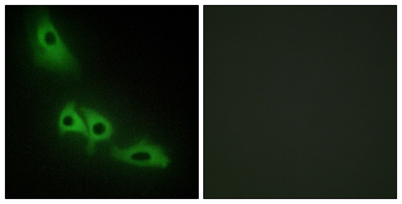
| Subcellular location | Mitochondrion outer membrane; Peripheral membrane protein; Cytoplasmic side. Cytoplasm. In sperm and fetal tissues, the majority of the enzyme is bound to mitochondria, but in adult tissues, such as liver found in the cytoplasm. |
| Expression | Highly expressed in the liver, kidney and testis. Isoform 2 and isoform 3 are expressed specifically in testis and fetal liver, but not in the adult liver. |

Use collapsible tabs for more detailed information that will help customers make a purchasing decision.
Ex: Shipping and return policies, size guides, and other common questions.