 Français
 English
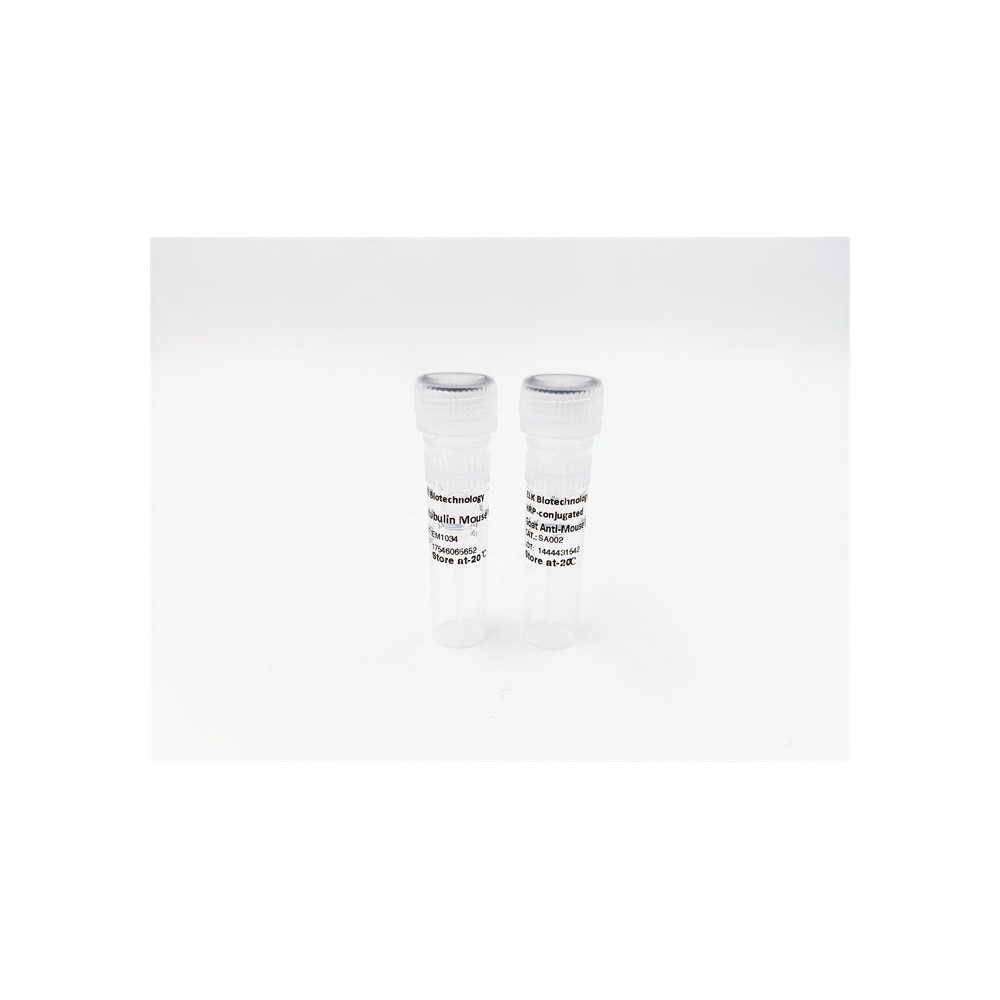

| ELK.No | ES2451 |
| Product name | GPR120 rabbit pAb |
| Reactivity | Human;Mouse;Rat |
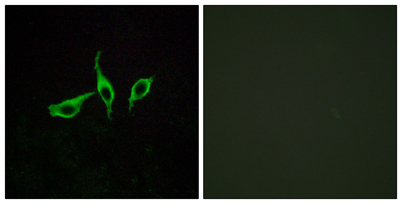
| Applications | WB;IF;ELISA |
| Other name | O3FAR1; GPR120; GPR129; PGR4; Omega-3 fatty acid receptor 1; G-protein coupled receptor 120; G-protein coupled receptor 129; G-protein coupled receptor GT01; G-protein coupled receptor PGR4 |
| Size | 50μL |
| Unit price ($) | 148 |
| Human gene ID | 338557 |
| Human Swiss-Prot | Q5NUL3 |
| Source | Rabbit |
| Isotype | IgG |
| Target | GPR120 |
| Fields | |
| Gene name | O3FAR1 |
| Protein name | Omega-3 fatty acid receptor 1 |
| Human gene link | View Human Gene |
| Human Swiss link | View Human Swiss-Prot |
| Mouse gene ID | 107221 |
| Mouse gene link | View Mouse Gene |
| Mouse Swiss-Prot | Q7TMA4 |
| Mouse Swiss link | View Mouse Swiss-Prot |
| Rat gene ID | 294075 |
| Rat gene link | View Rat Gene |
| Rat Swiss-Prot | Q2AC31 |
| Rat Swiss link | View Rat Swiss-Prot |
| Immunogen | The antiserum was produced against synthesized peptide derived from human GPR120. AA range:221-270 |
| Specificity | GPR120 Polyclonal Antibody detects endogenous levels of GPR120 protein. |
| Formulation | Liquid in PBS containing 50% glycerol, 0.5% BSA and 0.02% sodium azide. |
| Clonality | Polyclonal |
| Dilution | Western Blot: 1/500 - 1/2000. Immunofluorescence: 1/200 - 1/1000. ELISA: 1/5000. Not yet tested in other applications. |
| Purification | The antibody was affinity-purified from rabbit antiserum by affinity-chromatography using epitope-specific immunogen. |
| Concentration | 1 mg/ml |
| Storage stability | -20°C/1 year |
| Molecular Weight (Da) | |
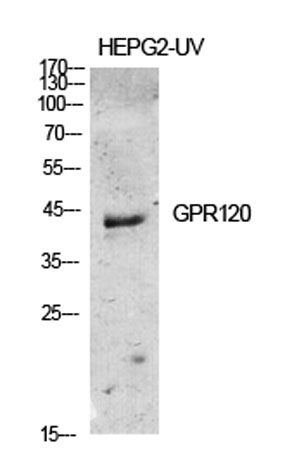
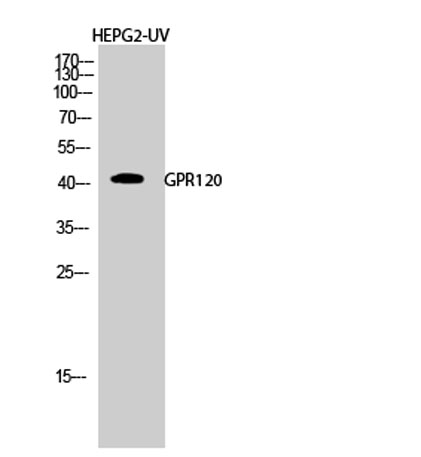
| Observed band (KD) | 38kD |
| Background | This gene encodes a G protein-coupled receptor (GPR) which belongs to the rhodopsin family of GPRs. The encoded protein functions as a receptor for free fatty acids, including omega-3, and participates in suppressing anti-inflammatory responses and insulin sensitizing. Multiple transcript variants encoding different isoforms have been found for this gene. [provided by RefSeq, Feb 2012], |
| Function | function:Receptor for unsaturated long-chain free fatty acid (FAA). Binding of the ligand promotes the secretion of glucagon-like peptide-1 from the gastro-intestinal tract.,similarity:Belongs to the G-protein coupled receptor 1 family.,tissue specificity:Abundant expression in the intestinal tract., |
| Subcellular location | [Isoform 1]: Cell membrane ; Multi-pass membrane protein . Endosome membrane ; Multi-pass membrane protein . Lysosome membrane ; Multi-pass membrane protein . Sorted to late endosome/lysosome compartments upon internalization. .; [Isoform 2]: Cell membrane ; Multi-pass membrane protein . Endosome membrane ; Multi-pass membrane protein . Lysosome membrane ; Multi-pass membrane protein . Cell projection, cilium membrane ; Multi-pass membrane protein . Sorted to late endosome/lysosome compartments upon internalization (PubMed:22282525). Specifically localizes to the primary cilium of undifferentiated adipocytes. Ciliary trafficking is TULP3-dependent. As the cilium is lost during adipogenesis, moves to the plasma membrane (Probable). . |
| Expression | [Isoform 2]: The predominant isoform in human tissues. Expressed in adipose tissue, pancreatic islets, lung and brain. Expressed in alpha cells of pancreatic islets (PubMed:24742677). Expressed in primary cilia of perivascular preadipocytes of white adipose tissue (at protein level) (PubMed:31761534). ; Abundant expression in the intestinal tract. Expressed in colonic intraepithelial neuroendocrine cells. |

Use collapsible tabs for more detailed information that will help customers make a purchasing decision.
Ex: Shipping and return policies, size guides, and other common questions.