 Français
 English
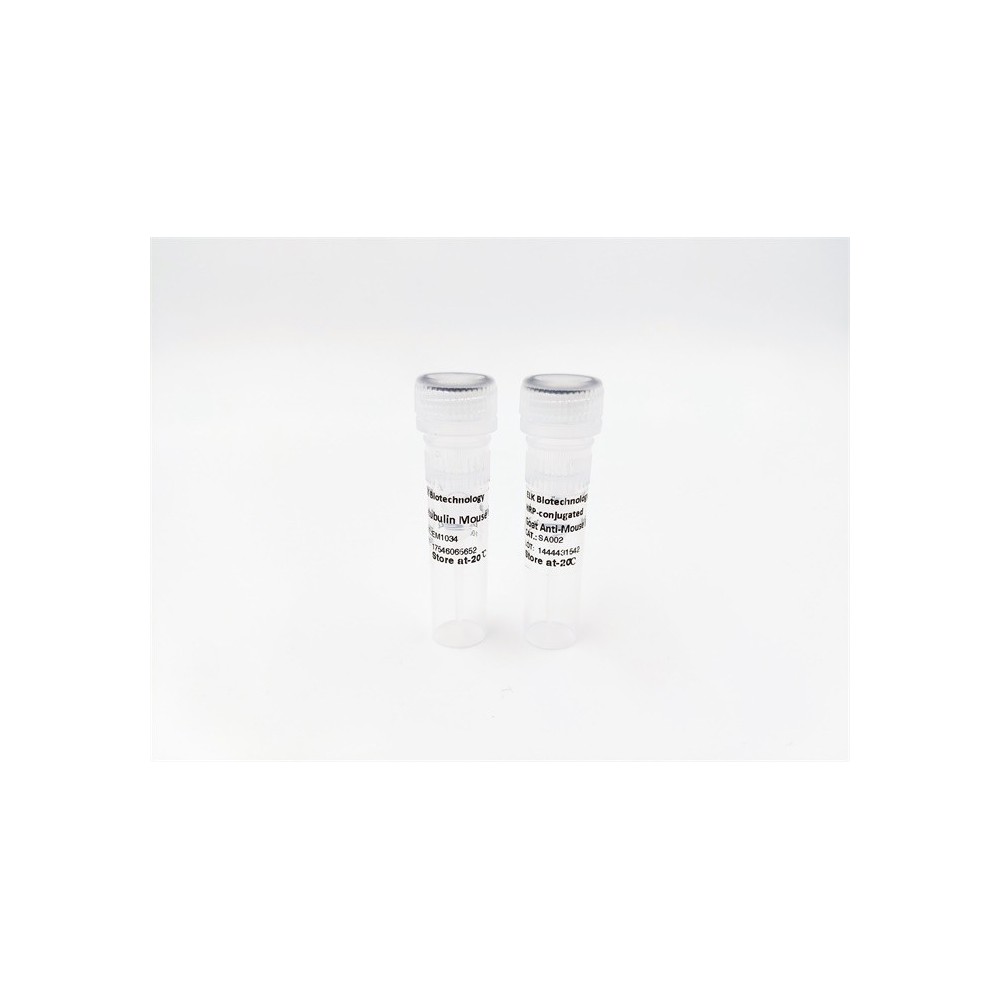

| ELK.No | ES2637 |
| Product name | iPLA2γ rabbit pAb |
| Reactivity | Human;Mouse |
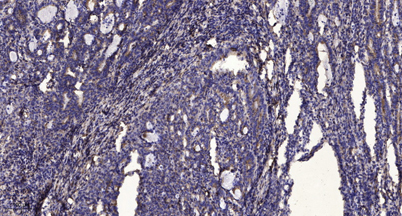
| Applications | WB;IHC |
| Other name | PNPLA8; IPLA22; IPLA2G; BM-043; Calcium-independent phospholipase A2-gamma; Intracellular membrane-associated calcium-independent phospholipase A2 gamma; iPLA2-gamma; PNPLA-gamma; Patatin-like phospholipase domain-containing protein 8; iPLA |
| Size | 50μL |
| Unit price ($) | 148 |
| Human gene ID | 50640 |
| Human Swiss-Prot | Q9NP80 |
| Source | Rabbit |
| Isotype | IgG |
| Target | iPLA2γ |
| Fields | |
| Gene name | PNPLA8 |
| Protein name | Calcium-independent phospholipase A2-gamma |
| Human gene link | View Human Gene |
| Human Swiss link | View Human Swiss-Prot |
| Mouse gene ID | 67452 |
| Mouse gene link | View Mouse Gene |
| Mouse Swiss-Prot | Q8K1N1 |
| Mouse Swiss link | View Mouse Swiss-Prot |
| Rat gene ID | |
| Rat gene link | |
| Rat Swiss-Prot | |
| Rat Swiss link | |
| Immunogen | The antiserum was produced against synthesized peptide derived from human PNPLA8. AA range:691-740 |
| Specificity | iPLA2γ Polyclonal Antibody detects endogenous levels of iPLA2γ protein. |
| Formulation | Liquid in PBS containing 50% glycerol, 0.5% BSA and 0.02% sodium azide. |
| Clonality | Polyclonal |
| Dilution | WB 1:500-2000;IHC-p 1:50-300 |
| Purification | The antibody was affinity-purified from rabbit antiserum by affinity-chromatography using epitope-specific immunogen. |
| Concentration | 1 mg/ml |
| Storage stability | -20°C/1 year |
| Molecular Weight (Da) | |
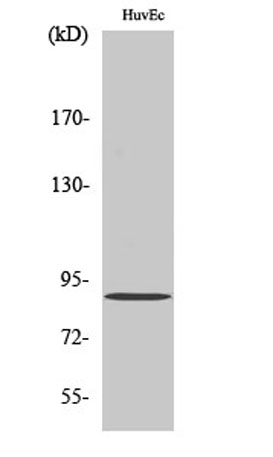
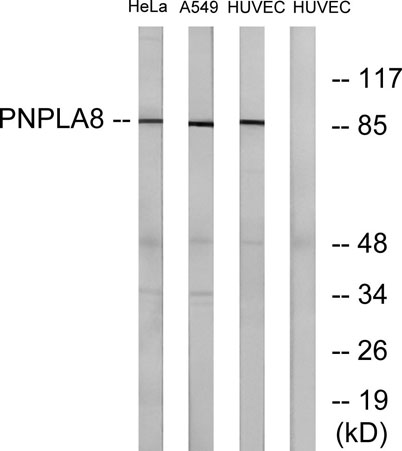
| Observed band (KD) | 88kD |
| Background | This gene encodes a member of the patatin-like phospholipase domain containing protein family. Members of this family are phospholipases which catalyze the cleavage of fatty acids from membrane phospholipids. The product of this gene is a calcium-independent phospholipase. Mutations in this gene have been associated with mitochondrial myopathy with lactic acidosis. Multiple transcript variants encoding different isoforms have been found for this gene. [provided by RefSeq, May 2015], |
| Function | catalytic activity:2-lysophosphatidylcholine + H(2)O = glycerophosphocholine + a carboxylate.,enzyme regulation:Inhibited by E-6-bromomethylene-3-1-naphthalenyl-2H-tetrahydropyran-2-one (BEL).,function:Calcium-independent phospholipase A2, which catalyzes the hydrolysis of the sn-2 position of glycerophospholipids, PtdSer and to a lower extent PtdCho. Cleaves membrane phospholipids.,similarity:Contains 1 patatin domain.,tissue specificity:Expressed in parenchymal tissues including heart, skeletal muscle, placenta, brain, liver and pancreas. Also expressed in bronchial epithelial cells and kidney. Highest expression is observed in skeletal muscle and heart., |
| Subcellular location | Endoplasmic reticulum membrane ; Single-pass membrane protein . Mitochondrion membrane ; Single-pass membrane protein . Peroxisome membrane ; Single-pass membrane protein . |
| Expression | Expressed in parenchymal tissues including heart, skeletal muscle, placenta, brain, liver and pancreas. Also expressed in bronchial epithelial cells and kidney. Highest expression is observed in skeletal muscle and heart. |

Use collapsible tabs for more detailed information that will help customers make a purchasing decision.
Ex: Shipping and return policies, size guides, and other common questions.