 Français
 English

| ELK.No | ES2670 |
| Product name | KCNQ4 rabbit pAb |
| Reactivity | Human;Mouse |
| Applications | WB;ELISA;IHC |
| Other name | KCNQ4; Potassium voltage-gated channel subfamily KQT member 4; KQT-like 4; Potassium channel subunit alpha KvLQT4; Voltage-gated potassium channel subunit Kv7.4 |
| Size | 100μL |
| Unit price ($) | 248 |
| Human gene ID | 9132 |
| Human Swiss-Prot | P56696 |
| Source | Rabbit |
| Isotype | IgG |
| Target | KCNQ4 |
| Fields | >>Cholinergic synapse |
| Gene name | KCNQ4 |
| Protein name | Potassium voltage-gated channel subfamily KQT member 4 |
| Human gene link | View Human Gene |
| Human Swiss link | View Human Swiss-Prot |
| Mouse gene ID | 60613 |
| Mouse gene link | View Mouse Gene |
| Mouse Swiss-Prot | Q9JK97 |
| Mouse Swiss link | View Mouse Swiss-Prot |
| Rat gene ID | |
| Rat gene link | |
| Rat Swiss-Prot | |
| Rat Swiss link | |
| Immunogen | The antiserum was produced against synthesized peptide derived from human KCNQ4. AA range:644-693 |
| Specificity | KCNQ4 Polyclonal Antibody detects endogenous levels of KCNQ4 protein. |
| Formulation | Liquid in PBS containing 50% glycerol, 0.5% BSA and 0.02% sodium azide. |
| Clonality | Polyclonal |
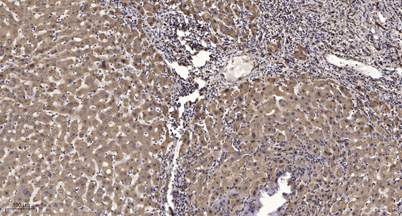
| Dilution | WB 1:500-2000;IHC-p 1:50-300; ELISA 2000-20000 |
| Purification | The antibody was affinity-purified from rabbit antiserum by affinity-chromatography using epitope-specific immunogen. |
| Concentration | 1 mg/ml |
| Storage stability | -20°C/1 year |
| Molecular Weight (Da) | |
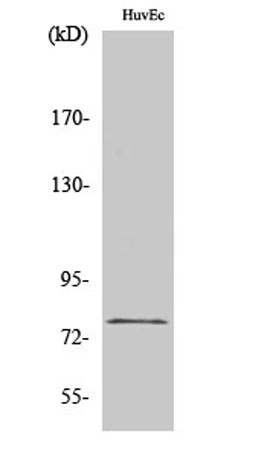
| Observed band (KD) | 80kD |
| Background | The protein encoded by this gene forms a potassium channel that is thought to play a critical role in the regulation of neuronal excitability, particularly in sensory cells of the cochlea. The current generated by this channel is inhibited by M1 muscarinic acetylcholine receptors and activated by retigabine, a novel anti-convulsant drug. The encoded protein can form a homomultimeric potassium channel or possibly a heteromultimeric channel in association with the protein encoded by the KCNQ3 gene. Defects in this gene are a cause of nonsyndromic sensorineural deafness type 2 (DFNA2), an autosomal dominant form of progressive hearing loss. Two transcript variants encoding different isoforms have been found for this gene. [provided by RefSeq, Jul 2008], |
| Function | alternative products:Additional isoforms seem to exist,disease:Defects in KCNQ4 are the cause of non-syndromic sensorineural deafness autosomal dominant type 2 (DFNA2A) [MIM:600101]. DFNA2A is a form of sensorineural hearing loss. Sensorineural deafness results from damage to the neural receptors of the inner ear, the nerve pathways to the brain, or the area of the brain that receives sound information.,domain:The segment S4 is probably the voltage-sensor and is characterized by a series of positively charged amino acids at every third position.,function:Probably important in the regulation of neuronal excitability. May underlie a potassium current involved in regulating the excitability of sensory cells of the cochlea. KCNQ4 channels are blocked by linopirdin, XE991 and bepridil, whereas clofilium is without significant effect. Muscarinic agonist oxotremorine-M strongly suppress KCNQ4 c |
| Subcellular location | Basal cell membrane; Multi-pass membrane protein. Situated at the basal membrane of cochlear outer hair cells. . |
| Expression | Expressed in the outer, but not the inner, sensory hair cells of the cochlea. Slightly expressed in heart, brain and skeletal muscle. |

Use collapsible tabs for more detailed information that will help customers make a purchasing decision.
Ex: Shipping and return policies, size guides, and other common questions.